Prayers for a Christmas & New Year filled with His peace.
Love, JOYfilledfamily
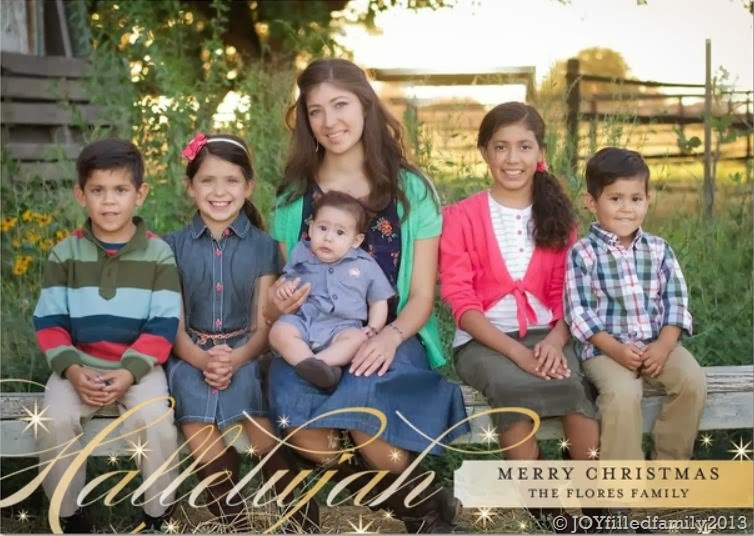
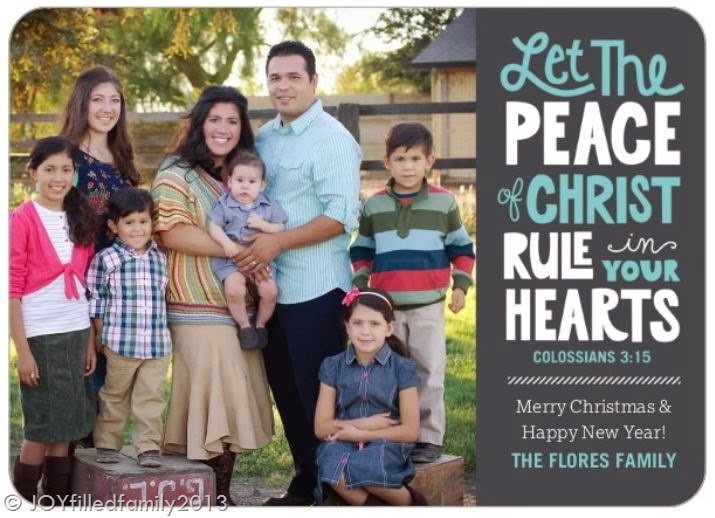
striving to radiate Him always
Prayers for a Christmas & New Year filled with His peace.
Love, JOYfilledfamily
repost from 2012



In His JOY, 
The “Rorate Mass,” so called because it begins with the words of Isaiah 45:8, “Rorate caeli desuper, et nubes pluant iustum…” (Drop down dew, ye heavens, from above, and let the clouds rain the Just One…), is a votive Mass offered within the season of Advent in honor of the Blessed Virgin Mary. Celebrated by candlelight, and traditionally held before dawn.
As the Mass ends the sky is just starting to glow with the new day and we journey from darkness to light and the coming of the Word Made Flesh in the womb of the Virgin Mother is upon us.
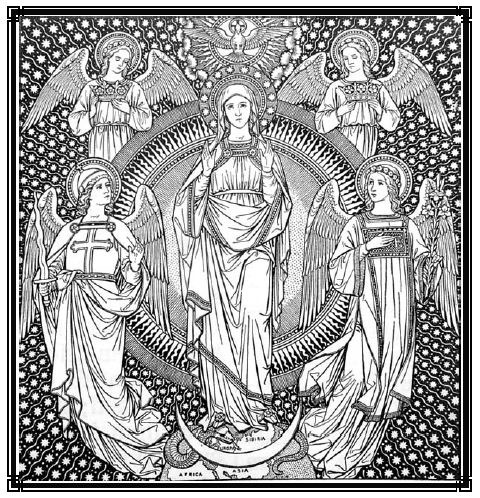
Will we be the darkness who receive Him not or will we be children of the light?
~~~
The Rorate Mass is lit only by candlelight. Because it is a votive Mass in Mary’s honor, white vestments are worn instead of Advent violet. In the dimly lit setting, priests and faithful prepare to honor the Light of the world, Who is soon to be born, and offer praise to God for the gift of Our Lady. As the Mass proceeds and sunrise approaches, the church becomes progressively brighter, illumined by the sun as our Faith is illumined by Christ.
The readings and prayers of the Mass foretell the prophecy of the Virgin who would bear a Son called Emmanuel, and call on all to raise the gates of their hearts and their societies to let Christ the King enter; asking for the grace to receive eternal life by the merits of the Incarnation and saving Resurrection of Our Lord.
Solemn Rorate Mass from December 15th, 2012, at St. Stephen the First Martyr Parish. The Rorate Mass is a special votive mass for Our Lady during Advent, traditionally celebrated by candlelight in the early morning. St. Stephen’s is a parish run by the Priestly Fraternity of St. Peter.
The piece is “Gabriel’s Message,” a traditional Basque Advent carol, sung by the Choir and Choristers of St. Stephen the First Martyr Parish on the album “The Little Road to Bethlehem.”
This video was created by a talented parishioner, Jennifer Rego.
~~~
Resources:
~~~
Rorate, caeli, desuper, et nubes pluant justum, aperiatur terra, et germinet Salvatorem.” ~ Isaiah 45:8
“Drop down dew, ye heavens, from above, and let the clouds rain the just: let the earth be opened and bud forth a Saviour.”
Repost with updates.
O God, who by Thy gracious Advent hast brought joy into this world, grant us, we beseech Thee, Thy grace to prepare ourselves by sincere penance for its celebration and for the Last Judgment. Amen.
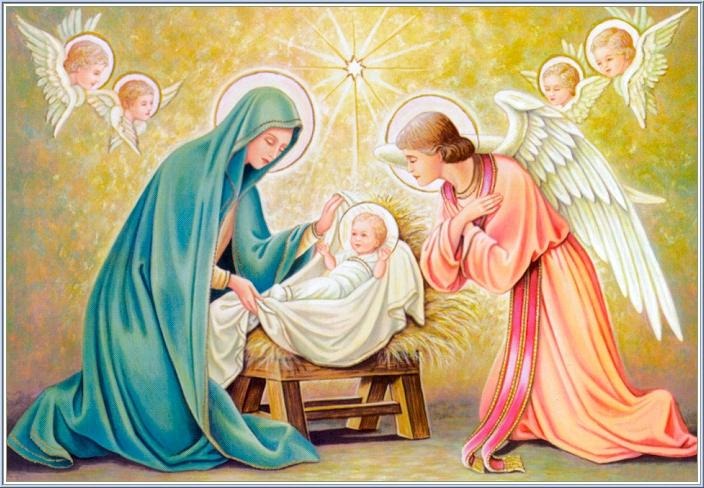
Keeping our eyes on Christ is my family’s daily goal. During Advent it becomes even more important for us to work on keeping Christ in Christmas.
Our primary objective for keeping Christ in Christmas is to observe each liturgical season in it’s entirety.
Here are a few examples on how we try to keep the focus on Him during Advent & Christmas.
~~~
The focus of Advent is preparation for the coming of the Lord — both in commemoration of His Nativity and His coming again at the end of time… The Christmas season does not begin until the first Mass at Christmas Eve, and doesn’t end liturgically until the Octave of the Epiphany on January 14. It goes on in the spiritual sense until Candlemas on February 2, when all celebrations of Christ’s Childhood give way to Septuagesima and Lent.
Our sole focus is preparing our hearts for Jesus.
 recreates the events that happened on the evening of Christ’s birth.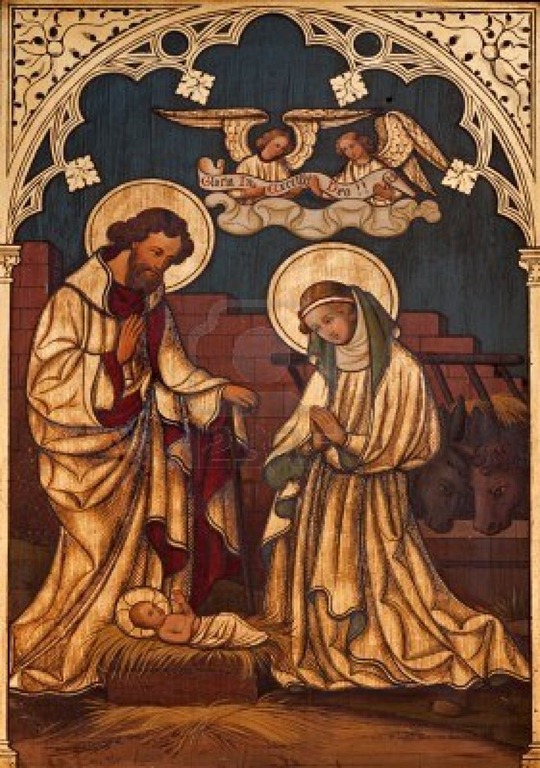
~~~
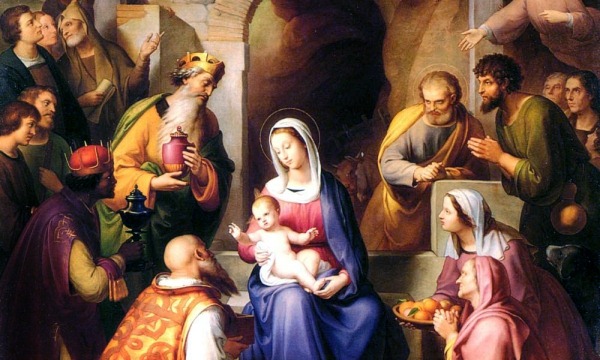
It is, that, from the day itself of our Saviour’s Birth even to the day of our Lady’s Purification, there is, in the Calendar,an extraordinary richness of Saints’ Feasts, doing homage to the master feast of Bethlehem, and clustering in adoring love round the Crib of the Infant-God.
~ “The Mystery of Christmas” from Dom Gueranger’s “The Liturgical Year”
Moses led the Israelites, the Chosen people, out of Egypt to the Promised Land. Later, he received the Ten Commandments from the hand of God on Mount Sinai.
The Law of Moses as symbolized in the tablets which God gave to Moses on Mount Sinai, was fulfilled in Christ who brings a law of love.
~~~
I created this ornament for the Jesse Tree Swap hosted by Karen.
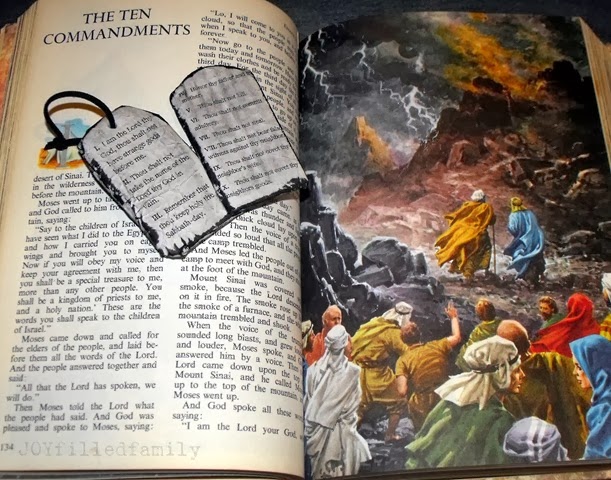
inspired from here
Moses (Symbol: Tablets of Commandments)
Exodus 20:1-4, 7, 8, 12-17 – RSV
And God spoke all these words, saying, “ am the Lord your God, who brought you out of the land of Egypt, out of the house of bondage. You shall have no other gods before me. You shall not make for yourself a graven image. … You shall not take the name of the Lord your God in vain. … Remember the Sabbath day, to keep it holy. … Honor your father and your mother, that your days may be long in the land which the Lord your God gives you. You shall not kill. You shall not commit adultery. You shall not steal. You shall not bear false witness against your neighbor. You shall not covet your neighbor’s house; you shall not covet your neighbor’s wife, or his manservant, or his maidservant, or his ox, or his ass, or anything that is your neighbor’s.
~~~
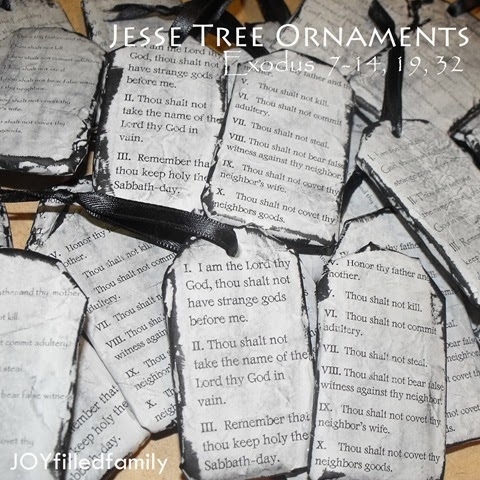
Supplies:
Directions:


~~~
Additional Meditation for this Reflection
found at Presentation Ministries
“I, the Lord, am your God, Who brought you out of the land of Egypt, that place of slavery. You shall not have other gods besides Me.” —Exodus 20:2-3
The first commandment of the Ten Commandments is the one most emphasized. It is explained in greater detail, and it is further commented on after the list of the other commandments. Focus on the first commandment.
Prayer: Father, may no person or thing ever take more of my time, energy, or money than You do.
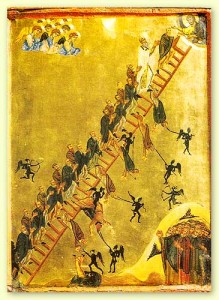
Rev. Fr. Leonard Goffine’s
The Church’s Year
Instruction On The Feast Of All Souls
November 2
What is All Souls’ Day?
It is the day set apart by the Catholic Church for the special devout commemoration of all those souls who have departed this life in the grace and friendship of God, for whom we pray, that they may soon be released by God from the prison of purgatory.
What is purgatory?
Purgatory is a middle state of souls, suffering for a time on account of their sins. St. Paul writes to the Corinthians: And the fire shall try every man’s work, of what sort it is. If any man’s work abide, which he hath built there upon, he shall receive a reward. If any man’s work burn, he shall suffer loss; but he himself shall be saved, yet so as by fire. (i. Cor. in. 13-15.) “And when St. Paul,” says St. Ambrose (Serm. 20. in Ps. cxviii.) “says, yet so as by fire, he shows that such a man indeed becomes happy, having suffered the punishment of fire, but not, like the wicked, continually tormented in eternal fire.” St. Paul’s words, then, can only be understood to refer to the fire of purification, as the infallible Church has always explained them.
Are the heretics right in denying that there is such a place of purification as purgatory?
By no means, for by such denial they oppose the holy Scriptures, tradition and reason. The holy Scriptures teach that there is a purgatory: it is related in the Second Book of Machabees, that Judas Machabeus sent twelve thousand drachms of silver to Jerusalem, to be used in the temple, to obtain prayers for those who fell in battle, for he believed it a good and wholesome thought to pray for the dead, that they may be loosed from their sins. But for what dead shall we pray? Those in heaven do not require our prayers; to those in hell they are of no avail; we must then pray for those who are in the place of purification. Christ speaks of a prison in the future life, from which no man comes out until he has paid the last farthing. (Matt. v. 25, 26.) This prison cannot be hell, because from hell there is never any release; it must be then a place of purification. Again Christ speaks of sin which shall be forgiven neither in this world nor in the next, (Matt. xii. 32.) from which it follows that there is a remittance of some sins in the next world; but this can be neither in heaven nor in hell, consequently in purgatory. As the council of Trent says, (Sess. 6. c. 30.) the Church has always taught, according to the old tradition of the Fathers, in all her councils, that there is a purgatory, and every century gives proofs of the continual belief of all true Christians in a purgatory. Finally, man’s unblinded reason must accept a purgatory; for how many depart this earth before having accomplished the great work of their own purification? They cannot enter heaven, for St. John tells us: There shall not enter into it any thing defiled. (Apoc. xxi. 27.) The simple separation of the soul from the body does not make it pure, yet God cannot reject it as He does the soul of the hardened sinner in hell; there must then be a middle place, a purgatory, where those who have departed not free from stain, must be purified. See how the doctrine of the Church, reason and the holy Scriptures all agree, and do not let yourself be led away by false arguments from those who not only believe in no purgatory, but even in no hell, so that they may sin with so much more impunity.
For what, how much, and for how long must -we suffer in purgatory?
Concerning this the Church has made no decision, though much has been written by the Fathers of the Church on the subject. Concerning the severity of the punishment in purgatory, St. Augustine writes: “This fire is more painful than any that man can suffer in this life.” This should urge us to continual sanctification and atonement, so that we may escape the fearful judgment of God.
How can -we aid the suffering souls in purgatory?
St. Augustine writes: “It is not to be doubted that we can aid the souls of the departed by the prayers of the Church, by the holy Sacrifice of the Mass, and by the alms which we offer for them.” The Church has always taught-that prayers for the faithful departed are useful and good, and she has always offered Masses for them.
What should urge us to aid the suffering souls in purgatory?
1. The consideration of the belief of the Church in the communion of saints, by which all the members of the Church upon earth, in heaven, and in purgatory are united by the bonds of love, like the members of one body, and as the healthy members of a body sympathize with the suffering members, seeking to aid them, so should we assist our suffering brethren in purgatory. 2. The remembrance that it is God’s will that we should practice charity towards one another, and that fearful judgments are threatened those who show no charity to a brother in need, together with the recollection, of God’s love which desires that all men should be happy in heaven. 3. We should be urged to it by love for ourselves, for if we should be condemned to the pains of purification, we would assuredly desire our living brethren to pray for us and perform good works for our sake, while the souls who have found redemption, perhaps through our prayers, will not fail to reward us by interceding for us.
Can we aid the souls in purgatory by gaining indulgences?
Yes, for indulgences, (as explained in the Instruction on the eighteenth Sunday after Pentecost,) are a complete or a partial remittance of the temporal punishment due to sin, bestowed by the Church to penitent sinners from the treasury of the merits of Christ and His saints. If we gain such a remittance, we can apply it to the souls in purgatory. Such an indulgence, however, can be transferred only to one soul.
For which souls should we pray?
We should, on this day especially, offer prayers and good works for all the faithful departed, but particularly for our parents, relations, friends and benefactors; for those who are most acceptable to God; for those who have suffered the longest, or who have the longest yet to suffer; for those who are most painfully tormented; for those who are the most forsaken; for those who are nearest redemption ; for those who are suffering on our account; for those who hope in our prayers; for those who during life have injured us, or been injured by us; and for our spiritual brethren.
When and by what means was this yearly commemoration of the departed introduced into the Church?
The precise time of its introduction is not known. Tertullian (A. D. 160) writes that the early Christians held a yearly commemoration of the faithful departed. Towards the end of the 10th century St. Odilo, Abbot of the Benedictines at Cluny, directed that the yearly commemoration of the faithful departed should be observed on the 2nd of November with prayers, alms and the Sacrifice of the Mass, which time and manner of celebration spread through various dioceses, and was officially confirmed by Pope John XIX. This day was- appointed that, having the day previously rejoiced at the glory of the saints in heaven, we might on this day most properly pray for those who are yet doing penance for their sins and sigh in purgatory for their redemption.
The Introit of this day’s Mass as of all Masses for the dead reads: Eternal rest give to them, O Lord: and let perpetual light shine upon them. A hymn, O God, becometh Thee in Sion; and a vow shall be paid to Thee in Jerusalem: hear my prayer; all flesh shall come to Thee. Eternal rest give to them, O Lord: and let perpetual light shine upon them.
COLLECT O God, the Creator and Redeemer of all the faithful, grant to the souls of Thy servants departed the remission of all their sins: that through pious supplications they may i obtain the pardon which they have always desired. ! Who, livest &c.
EPISTLE (i. Cor. xv. 51-57.) BRETHREN, behold, I tell you a mystery: we shall all indeed rise again, but we shall not all be changed. In a moment, in the twinkling of an eye, at the last trumpet: for the trumpet shall sound, and the dead shall rise again incorruptible: and , we shall be changed. For this corruptible must put on incorruption, and this mortal must put on immortality. And when this mortal hath put on immortality, then shall come to pass the saying that is written: Death is swallowed up in victory. O death, where is thy victory? O death, where is thy sting? Now the sting of death is sin: and the strength of sin is the law. But thanks be to God, who hath given us the victory through our Lord Jesus Christ.
GOSPEL (John v. 25-29.) At that time, Jesus said to the multitudes of the Jews: Amen, amen, I say unto you, that the hour cometh, and now is, when the dead shall hear the voice of the Son of God: and they that hear shall live. For as the Father hath life in himself, so he hath given to the Son also to have life in himself: and he hath given him power to do judgment, because he is the Son of man. Wonder not at this, for the hour cometh wherein all that are in the graves shall hear the voice of the Son of God: and they that have done good things shall come forth unto the resurrection of life: but they that have done evil, unto the resurrection of judgment.
The Epistle and Gospel of this day speak of the resurrection of all men and of the judgment, when every one according as he has lived, sinful and impenitent, or pure and innocent, will receive an eternally miserable or an eternally happy life. Purgatory will then end and there will be only heaven and hell. It remains with us to choose which of these two we shall possess.
At the Offertory of the Mass the priest prays:
O Lord Jesus Christ, King of Glory, deliver the souls of all the faithful departed from the pains of hell and from the deep pit: deliver them from the mouth of the lion, that hell may not swallow them up, and they may not fall into darkness: but may the holy standard-bearer, Michael, introduce them to the holy light: which Thou didst promise of old to Abraham and to his seed. We offer to Thee, O Lord, sacrifices and prayers: do Thou receive them in behalf of those souls whom we commemorate this day. Grant them, O Lord, to pass from death to that life which Thou didst promise of old to Abraham and to his seed.
We may profitably and devoutly repeat the following as often as we pass a graveyard.
V. From the gates of hell,
R. Deliver their souls, O Lord.
V. Eternal rest give to them, O Lord,
R. And let perpetual light shine upon them.
V. May they rest in peace,
R. Amen.
V. May the souls of all the faithful departed through the mercy of God rest in peace,
R. Amen.
~~~
Resources:
This is a Holy Day of Obligation on which we celebrate the Church Triumphant — all the Saints in Heaven, canonized or unknown.
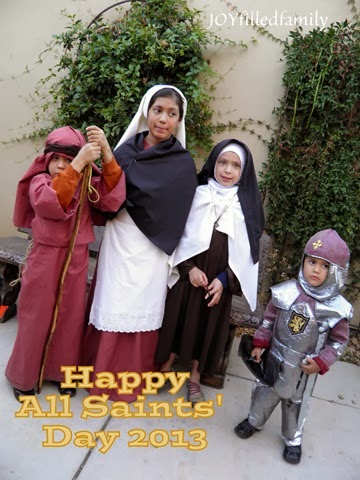
We were blessed to attend our parish festivities for All Hallow’s Eve, in preparation for All Saints’ Day.
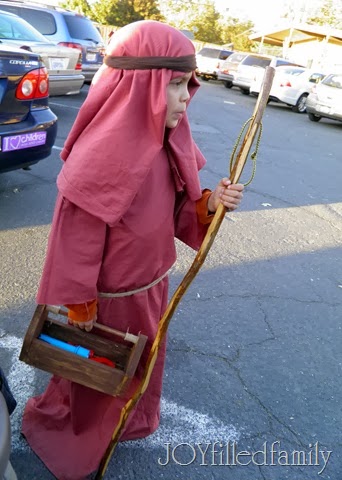
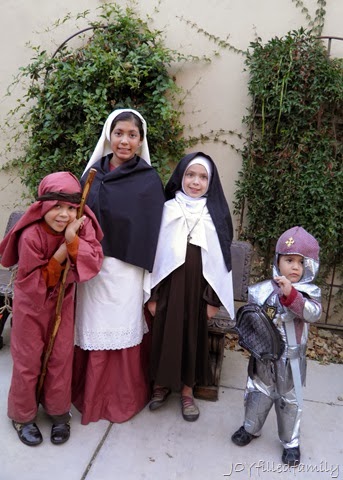
St. Joseph the Carpenter led the way. Papi came up with his own saint and costume. It worked out nicely since his Nina gave him a wooden tool box to construct. He used Sweetie’s robe from her Martha costume.
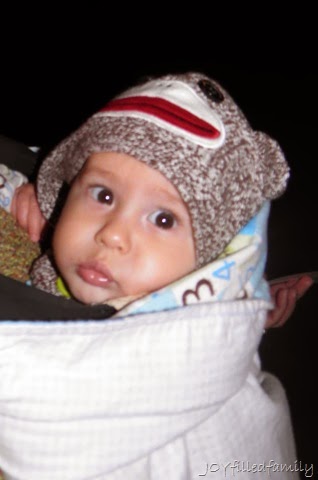
Lil’ man celebrated his first All Saint’s’ Day.
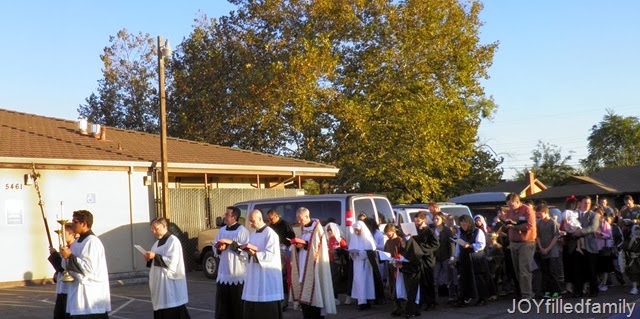
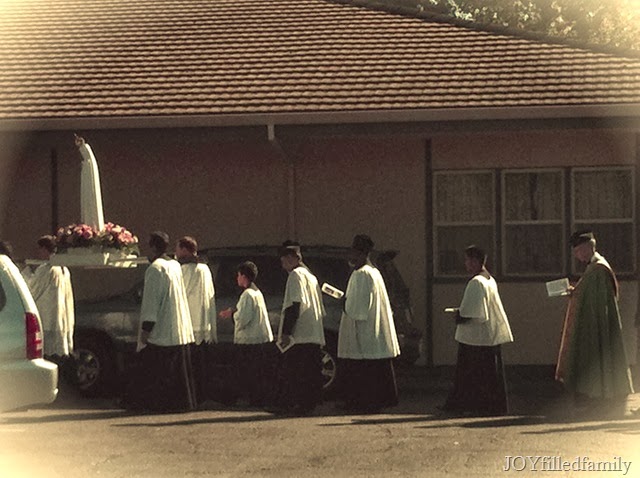
Mass was followed by a Procession and Litany of Saints.
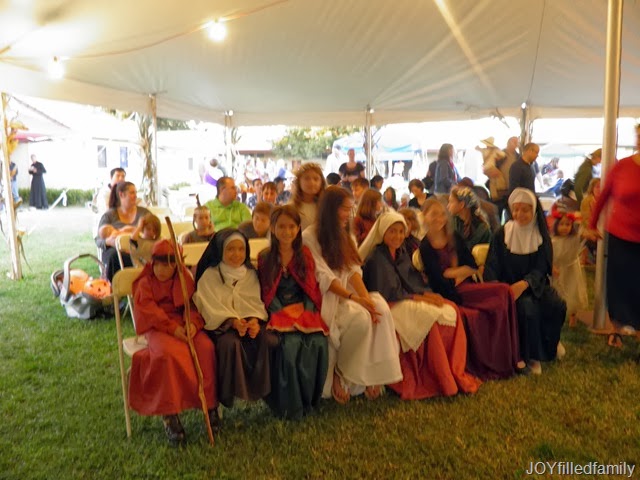
Everyone gathered under the tent for the Parade of Saints and Guess My Saint Contest.
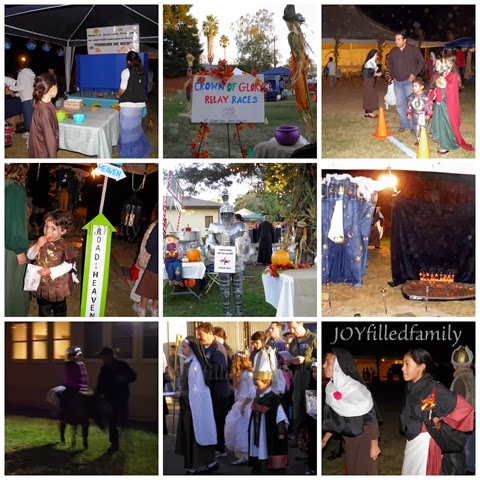
There were plenty of activities and treats for the lil’ saints.
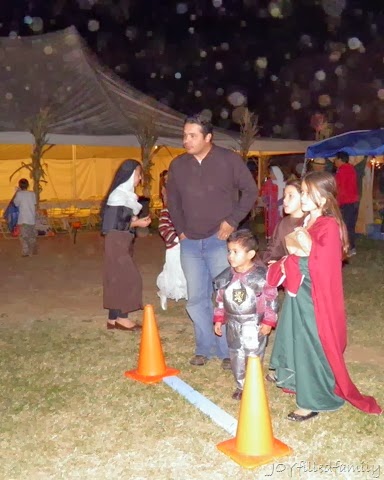
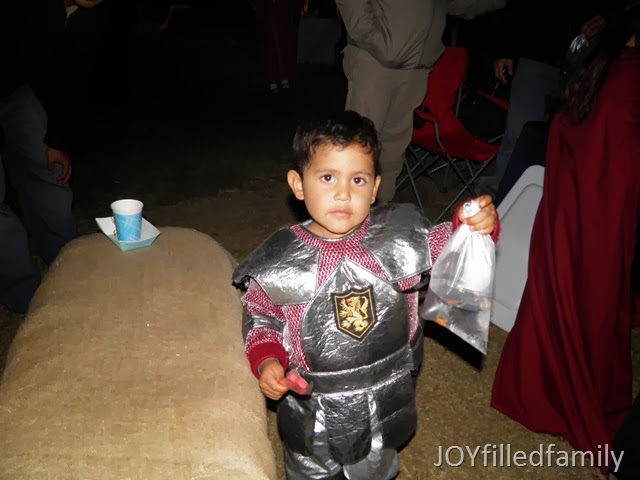
Dragonfly San Giorgio was a fisher of men.
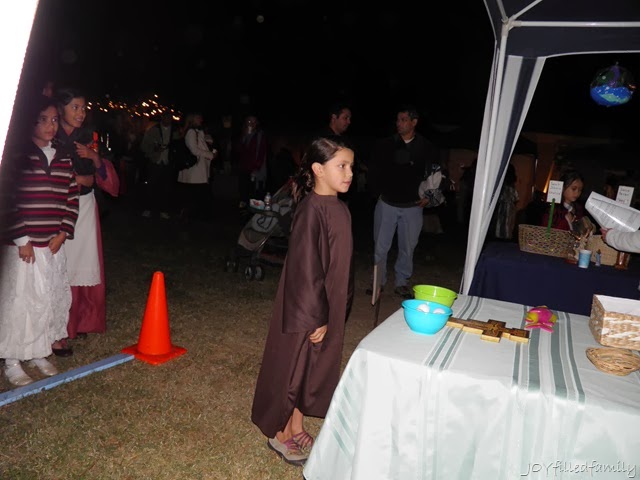
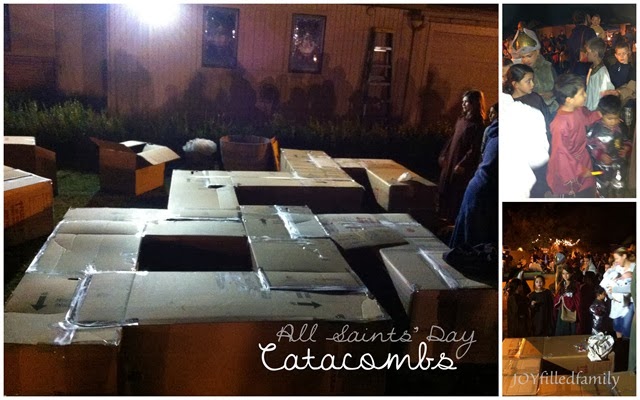 The Catacombs was one of our favorite activities. A family who moved from out of state created this great activity. They used their moving boxes to make up the Catacombs, box maze. Each pilgrim was sent through the Catacombs with a glow stick.
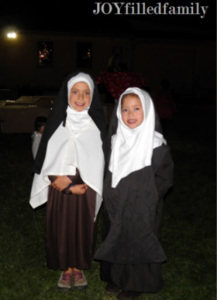
Sweetie and her friend were unplanned twinsies, St. Therese.
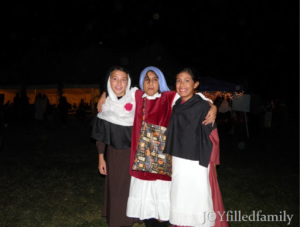
Sparkles St. Bernadette was in good company with St. Therese and St. Zeta.
The evening ended with Fr. M’s Campfire Story.
ORATE PRO NOBIS
~~~
Thanks to all the families who offered their time, talent, and resources for this blessed event that helps our children keep their eyes on our goal –- HEAVEN.
~~~
All Saints’ Day Parties from the Past:
(re-post from 2012)
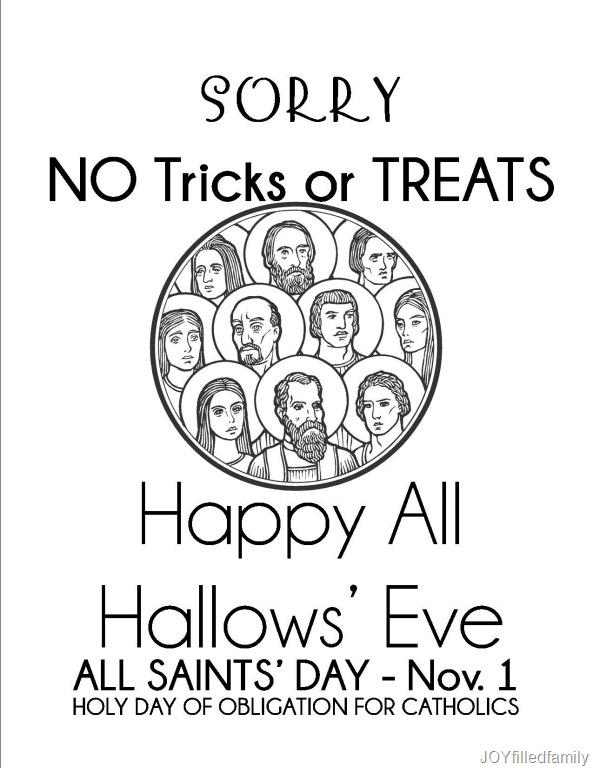
My family is blessed to be able to spend All Hallows Eve celebrating the Saints with friends and Priests in our parish community.
I usually make a cute sign out of scrapbook materials to evangelize and let all would be trick-or-treaters aware that we do not have goodies.
Here is the sign that I will be posting (again) this year.
~~~
Feast of All Saints
November 1st
Why has the Church instituted this festival?
To give praise to God in His saints, and to pay to the saints themselves the honor which they merit for having made it the work of their earthly life to promote the honor of God.
To impress vividly upon our minds that we are members of that holy Catholic Church which believes in the communion of saints, that is, in the communion of all true Christians, who belong to the Church triumphant in heaven, to the Church suffering in purgatory, or to the Church militant upon earth; but, more particularly, to cause us earnestly to consider the communion of the saints in heaven with us, who are yet battling on earth.
To exhort us to raise our eyes and hearts, especially on this day, to heaven, where before the throne of God is gathered the innumerable multitude of saints of all countries, times, nationalities and ranks of life, who have faithfully followed Christ and left us glorious examples of virtues, which we ought to imitate. This we can do, for the saints, too, were weak men, who fought and conquered only by the grace of God, which will not be denied to us.
To honor those saints, for whom during the year there is no special festival appointed by the Church. Finally, that in consideration of so many intercessors God may grant us perfect reconciliation, may permit us to share in their merits, and may grant us the grace to enjoy with them, one day, the bliss of heaven.
Pope Boniface IV first suggested the celebration of this festival, when in 610 he ordered that the Pantheon, a pagan temple at Rome, dedicated to all the gods, should be converted into a Christian church, and the relics of the saints, dispersed through the different Roman cemeteries, taken up and placed therein. He then dedicated the Church to the honor of the Blessed Virgin and all the martyrs, and thus for the first time celebrated the Festival of All Saints, directing that it should be observed in Rome every year. Pope Gregory IV extended this feast to the whole Catholic Church, and appointed the 1st of November as the day of it’s celebration.
~taken from “The Church’s Year” by Fr. Leonard Goffine
Act of Consecration to the Immaculate Heart of Mary
O Mary, Virgin most powerful and Mother of Mercy, Queen of Heaven and Refuge of Sinners, we consecrate ourselves to thy Immaculate Heart. We consecrate to thee our very being and our whole life: all that we have, all that we love, all that we are. To thee we give our bodies, our hearts, and our souls; to thee we give our homes, our families and our country. We desire that all that is in us and around us may belong to thee and may share in the benefits of thy motherly blessing. And, that this act of consecration may be truly fruitful and lasting, we renew this day at thy feet the promises of our Baptism and our First Holy Communion. We pledge ourselves to profess courageously and at all times the truths of our holy Faith, and to live as befits Catholics, who are submissive to all directions of the Pope and the bishops in communion with him. We pledge ourselves to keep the Commandments of God and His Church, in particular to keep holy the Lord’s Day. We pledge ourselves to make the consoling practices of the Christian religion, and above all, Holy Communion, an important part of our lives, in so far as we shall be able to do. Finally, we promise thee, O glorious Mother of God and loving Mother of men, to devote ourselves wholeheartedly to the spreading of devotion to thy Immaculate Heart, in order to hasten and assure, through the queenly rule of thy Immaculate Heart, the coming of the kingdom of the Sacred Heart of thy adorable Son, in our own hearts and in those of all men, in our country, and in all the world, as in Heaven, so on earth.
Amen.
~~~
 Act of Consecration of the Family to the Immaculate Heart of Mary
Queen of the Most Holy Rosary, and tender Mother of men, to fulfill the desires of the Sacred Heart, and the request of the Vicar of your Son on earth, we consecrate ourselves to you, and to your Immaculate Heart, and recommend to you all the families of our nation and of the world.
Please accept our consecration, dearest Mother, and use us and all families as you wish, to accomplish your designs upon the world.
O Immaculate Heart of Mary, Queen of Heaven and earth, and of our family, rule over us, together with the Sacred Heart of Jesus Christ, our King. Save us from the spreading flood of modern paganism, kindle in our hearts and homes the love of purity, the practice of the Christian life, and an ardent zeal for souls, and for the holiness of family life.
We come with confidence to you, O Throne of Grace and Mother of Fair Love; inflame us with the same divine fire which has inflamed your own Immaculate Heart.
Make our hearts and homes your shrine, and through us make the Heart of Jesus rule and triumph in every family in the world. Amen.
~~~
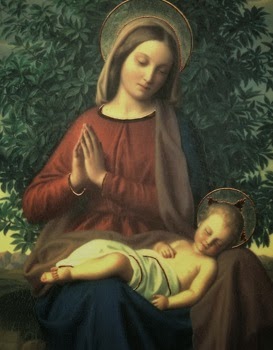
The dogma of the Divine Motherhood was defined by the Council of Ephesus in 431. In his encyclical proclaiming the present feast, which commemorated the 15th centenary of the council, Pope Pius XI especially requested that we pray to Mary for the return of the separated Churches of the East. For these Churches had united with the Pope and the whole Church at Ephesus in proclaiming her to be Mother of God, and to this day they retain a deep devotion to her. Mary is their Mother, also, for in becoming Mother of our Redeemer she became the spiritual mother of all men.
 Hi! I'm Lena, mama of JOYfilledfamily.
We are a traditional Catholic family striving to live for Jesus Christ in everything we do. We pray to completely surrender our will to His and to become His servants. Our mission of this blog is to share our JOY.
This blog serves as a journal of us making good memories, living the liturgical year, and our spiritual journey.