Charity unites us to God. There is nothing mean in charity, nothing arrogant. Charity knows no schism, does not rebel, does all things in concord. In charity all the elect of God have been made perfect. – Pope Saint Clement I
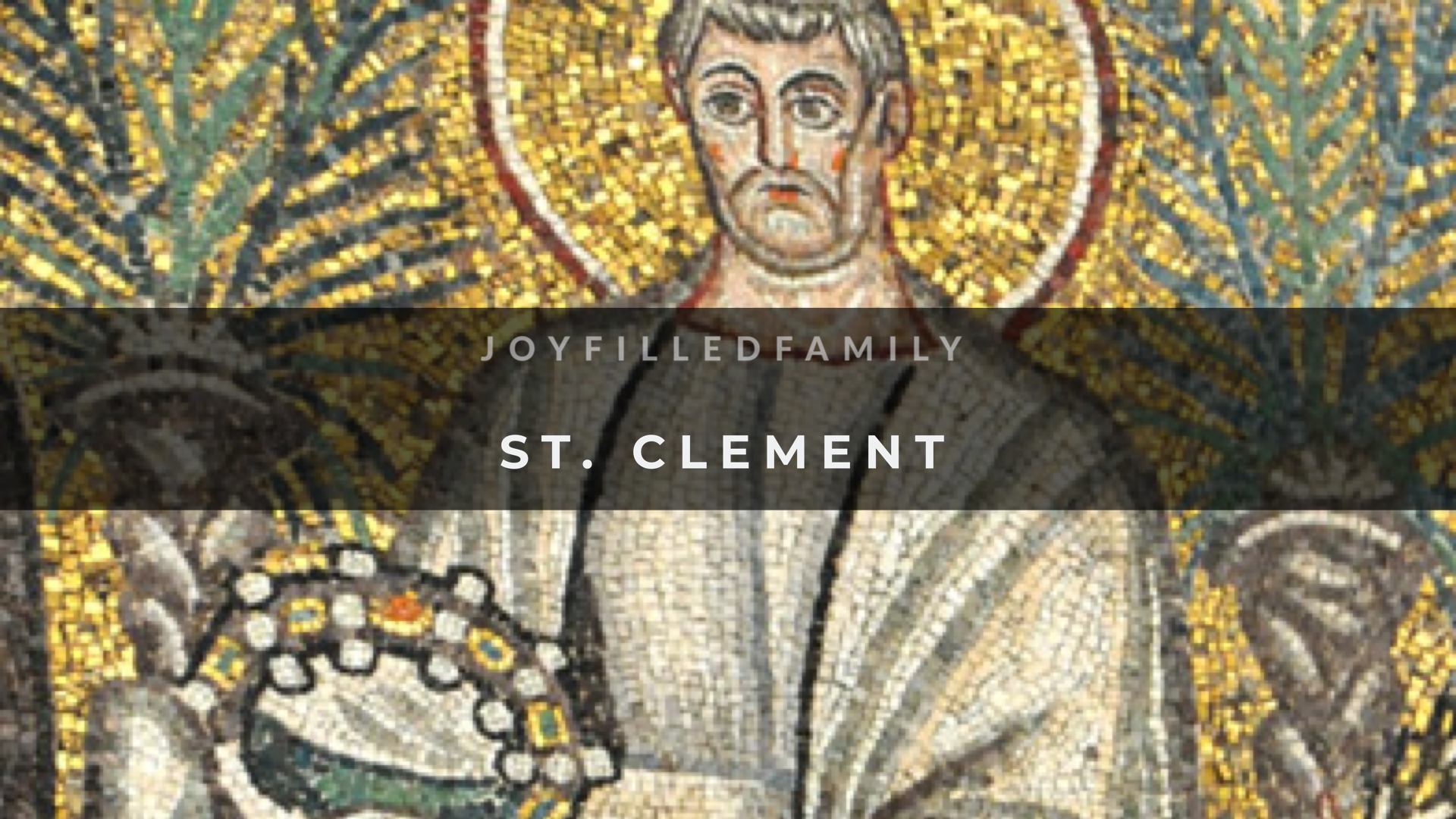
November 23 – Saint Clement I, Pope and Martyr
Patronage
- boatmen
- hatters
- lighthouse keepers
- marble workers
- mariners
- sailors
- sick children
- stonecutters
- watermen
Pictorial Lives of the Saints – Saint Clement of Rome
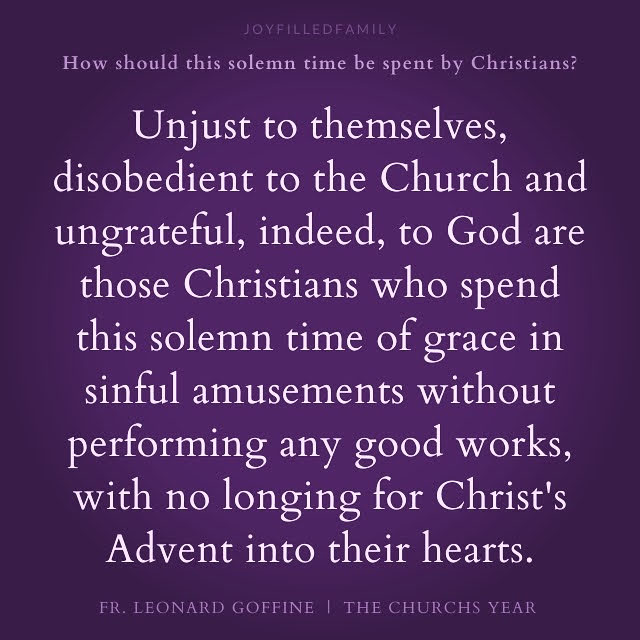
Saint Clement is said to have been a convert of noble birth, and to have been consecrated bishop by Saint Peter himself. With the words of the Apostles still ringing in his ears, he began to rule the Church of God; and thus he was among the first, as he was among the most illustrious, in the long line of those who have held the place and power of Peter. He lived at the same time and in the same city with Domitian, the persecutor of the Church; and besides external foes he had to contend with schism and rebellion from within. The Corinthian Church was torn by intestine strife, and its members set the authority of their clergy at defiance. It was then that Saint Clement interfered in the plenitude of his apostolic authority, and sent his famous epistle to the Corinthians. He urged the duties of charity, and above all of submission to the clergy. He did not speak in vain; peace and order were restored. Saint Clement had done his work on earth, and shortly after sealed with his blood the faith which he had learned from Peter and taught to the nations.
Reflection – God rewards a simple spirit of submission to the clergy, for the honor done to them is done to Him. Your virtue is unreal, your faith in danger, if you fail in this.
Saint Clement, Pope and Martyr
Saint Peter, who appreciated the lofty and practical qualities of Clement, formed in the faith by Saint Paul, designated him as his successor in the government of the Church. But the humble disciple, after the death of the Prince of the Apostles, esteemed himself unworthy to be the Pastor of pastors, and fearing lest this example should cause the pontifical dignity to be considered as hereditary by the choice of the successor being left to the predecessor on expiring, refused to accept it. He had, nevertheless, to submit to this burden, the heaviest on earth, after Saint Linus and Saint Cletus had successively given their life for the faith. He suffered under Trajan and his body was thrown into the ocean. At the prayers of the Christians, however, the waters retreated and an elegant chapel was seen to appear, built by the hand of an angel, in which reposed the martyr’s body. The church in Rome which bears his name and guards his relics, with those of Saints Cyril and Methodius, the apostles of the Slavs, was given by Innocent X to the Irish Dominicans, persecuted in their own country (1667). There it was that P. Lacordaire, already professed, admitted as his first companions on choosing their names in religion, those picked men who seconded him so well in his providential mission of restoring the Order of Friars Preachers in France.
Prayer
My Jesus, give me a sweet and sure shelter in Thy Heart in the midst of the ocean of the world.
Practice
Contribute to prepare some good religious vocations, be it for your own country or for the foreign missions.
– Saints and Saintly Dominicans, by Blessed Hyacinthe-Marie Cormier, O.P.
Fr. Weninger’s Lives of the Saints – Saint Clement, Pope and Martyr
Whilst the holy Apostles, Peter and Paul, were preaching the Gospel at Rome, there came to them Clement, a son of Faustinus, who was related to the Emperor Domitian. After several discourses with Saint Peter, he saw the error of Paganism in which he had been born and educated, and became a convert to the Christian faith. He progressed so rapidly in virtue and holiness, that he was of great help to Paul in converting the heathen, as the holy Apostle testifies in his Epistle to the Philippians. The unwearied zeal he manifested in such holy endeavors, his purity and other bright virtues, raised him, after the death of Saints Linus and Cletus, to the government of the entire Church of Christ. In this elevated but burdensome dignity, his holy life was an example to his flock. He gave several excellent laws to the Church, by one of which he divided the city into seven districts, and placed in each a notary to record the deeds, virtues and martyrdom of those who were persecuted for Christ’s sake, that posterity, admiring their heroism, might be animated to follow their example. His sermons were so full of deep thought and so powerful, that he daily converted several heathens. Amo
ng these was Flavia Domitilla, a niece of the Emperor Domitian, who not only became a zealous Christian, but refusing several advantageous offers of marriage, vowed her virginity to God. He converted Sisinius, one of the most influential men in the city, by a miracle. While yet a heathen, Sisinius went unseen into the secret chapel where the Christians assembled, in order to ascertain what they were doing, and to see whether his wife was among them. God, however, punished him immediately with blindness in both eyes. He discovered himself by calling for some one to lead him home; and Saint Clement, who was present, went to him, and, restoring his sight after a short prayer, he improved the occasion to explain to him the truths of Christianity.
Sisinius, being soon convinced, received holy baptism, and many heathens followed his example. The Emperor Trajan, being informed of this, commanded Saint Clement to be banished to the Chersonesus, unless he consented to sacrifice to the gods. Nearly two thousand Christians had already been banished to that region, where they were forced to work in mines and quarries. The holy Vicar of Christ rejoiced to be thought worthy to suffer for his Divine Master, and indignantly refused to comply with the Emperor’s command to worship the Pagan idols. He was accordingly transported, and condemned to labor like the others. This fate at first seemed very hard to him, but the thought that he suffered it for Christ’s sake, strengthened him. With the same thought he endeavored also to inspire his unhappy companions, when he saw that they became discouraged and lost their patience. He also frequently represented to them the reward which was awaiting them in heaven. A miracle that God performed through him raised him to great consideration even with the heathens. There was a great scarcity of water; and the Christians suffered much from the thirst occasioned by their hard work. Saint Clement, pitying them most deeply, prayed to God to help them. Rising from his knees, he saw, on a high rock, a lamb, which seemed, with his raised right foot, to point to the place where water could be found. The holy man, trusting in the Almighty, seized an axe, and, lightly striking the rock, procured a rich stream of clear water, which refreshed all the inhabitants of the country, especially the poor persecuted Christians. So many heathens were converted on account of this miracle, that, in the course of a year, almost all the idolatrous temples were torn down, and Christian churches erected in their stead. Some of the idolatrous priests complained of this to the Emperor, who immediately sent Aufidian, a cruel tyrant, to force the Christians to forsake their faith, and to put Saint Clement to death. The tyrant endeavored to induce the holy man to forsake Christ, but finding that all words were useless, he commanded the executioners to tie an anchor to the neck of Saint Clement, take him out into the sea, and cast him into the deep, in order that nothing of him should remain to comfort the Christians. The last words of the holy Pope were: “Eternal Father! receive my spirit!” The Christians, who had been encouraged by him to remain constant in their faith, stood on the sea-shore, until the tyrant and his followers had departed, after the death of the Saint. They then knelt in prayer, to beg of the Almighty that He would restore to them the body of their beloved shepherd; and, whilst they prayed, the sea began slowly to retreat from the shore. The Christians, following the retreating water, came to the place where the Saint had been cast into the sea, and found, to their inexpressible astonishment, a small marble chapel, and in it a tomb of stone, in which the body of the holy Pope was reposing. At his side- lay the anchor which had been tied around his neck. The joy and comfort that filled the hearts of the faithful at this sight can more easily be imagined than described. They wished to take the holy body away, but God made known to them that, for the present, it should not be disturbed; and that every year the sea would retreat, during seven days, so as to permit all to visit the shrine of the Saint. This took place for several years, until, at last, by divine revelation, the relics were transported to Rome.
Practical Considerations
Did you observe how Saint Clement encouraged himself and his fellow captives in the hard labor they had to perform? To work for the sake of Christ, and to expect for one’s work an eternal reward in heaven, is surely enough to make all suffering and exertion sweet Every man is bound to work according to his station, and it is quite sure that we are in danger of losing our souls, if we do not work as we ought, but lead an idle, luxurious and sensual life. One station, however, has harder and more troublesome work than another, and there are numbers of people who earn their bread by the sweat of their brow and have, day and night, hardly an hour for rest. It is quite natural that these sometimes become impatient, as we see in many servants, artisans and day-laborers. Their impatience goes so far that they become dissatisfied with God’s providence in their regard, and murmur against Him, curse their labor, or perform it unwillingly; and thus not only lose all the merits which they might have earned, but incur heavy responsibility. I would ask such people to recollect, that their work, if performed with a good intention, in the grace of God and according to His will, will merit for them great glory in heaven. They ought to arm, themselves against the impatience which sometimes rises in them, with the thought of the reward that awaits them in heaven; for God recompenses every man according to his work, as Holy Writ teaches us. Ought not every one to work with pleasure, when he expects an eternal reward?
MLA Citation
- Father Francis Xavier Weninger, DD, SJ. “Saint Clement, Pope and Martyr”. Lives of the Saints, 1876. CatholicSaints.Info. 26 May 2018. Web. 14 November 2026.
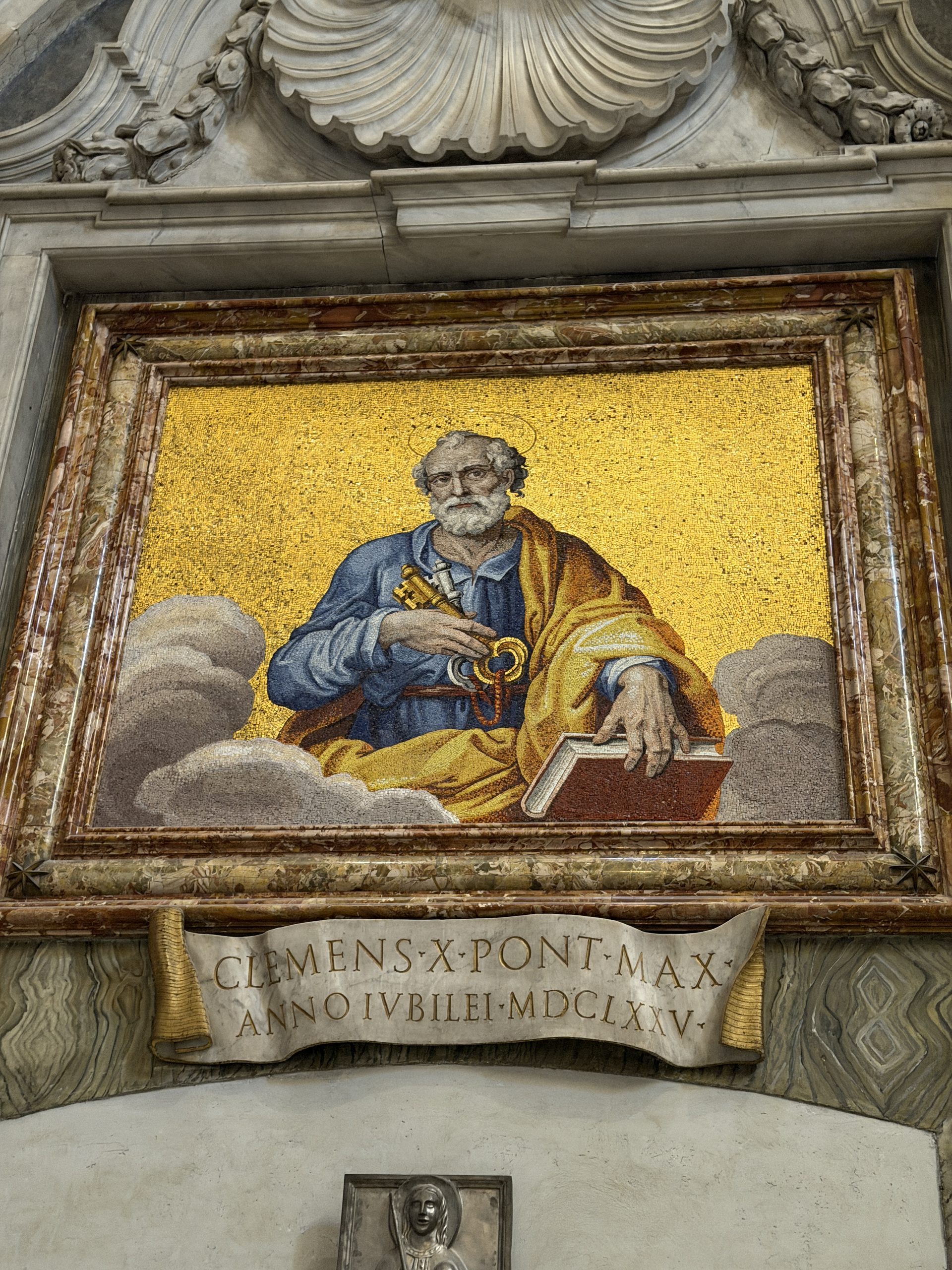
November 23 – St. Clement I, Pope and Martyr
The memory of St. Clement has been surrounded with a peculiar glory from the very beginning of the Roman Church. After the death of the Apostles, he seems to eclipse Linus and Cletus, although these preceded him in the Pontificate. We pass as it were naturally from Peter to Clement; and the East celebrates his memory with no less honor than the West. He was in truth the universal Pontiff, and his acts as well as his writings are renowned throughout the entire Church. This widespread reputation caused numbers of apocryphal writings to be attributed to him, which, however, it is easy to distinguish from his own. But it is remarkable that all the falsifiers who have thought fit to put his name to their own works, or to invent stories concerning him, agree in declaring that he was of imperial descent.
With only one exception, all the documents which attest Clement’s intervention in the affairs of distant churches have perished with time; but the one that remains shows us in full action the monarchical power of the Bishop of Rome at that primitive epoch. The church of Corinth was disturbed with internal quarrels, caused by jealousy against certain pastors. These divisions, the germ of which had appeared even in St. Paul’s time, had destroyed all peace, and were causing scandal to the very pagans. The Corinthians at last felt the necessity of putting an end to a disorder which might be prejudicial to the extension of the Christian faith; and for this purpose it was requisite to seek assistance from outside. The Apostles had all departed this life, except St. John, who was still the light of the Church. It was no great distance form Corinth to Ephesus, where the Apostle resided: yet it was not to Ephesus but to Rome that the Church of Corinth turned. Clement examined the case referred to his judgment by that Church, and sent to Corinth five commissaries to represent the Apostolic See. They were bearers of a letter, which St. Irenaeus calls potentissimas litteras. It was considered at the time so beautiful and so apostolic, that it was long read in many churches as a sort of continuation of the canonical Scriptures. Its tone is dignified but paternal, according to St. Peter’s advice to pastors. There is nothing in it of a domineering spirit; but the grave and solemn language bespeaks the universal pastor, whom none can disobey without disobeying God himself. These words so solemn and so firm wrought the desired effect: peace was reestablished in the church of Corinth, and the messengers of the Roman Pontiff soon brought back the happy news. A century later, St. Dionysius, Bishop of Corinth, expressed to Pope St. Soter the gratitude still felt by his flock towards St. Clement for the service he had rendered.
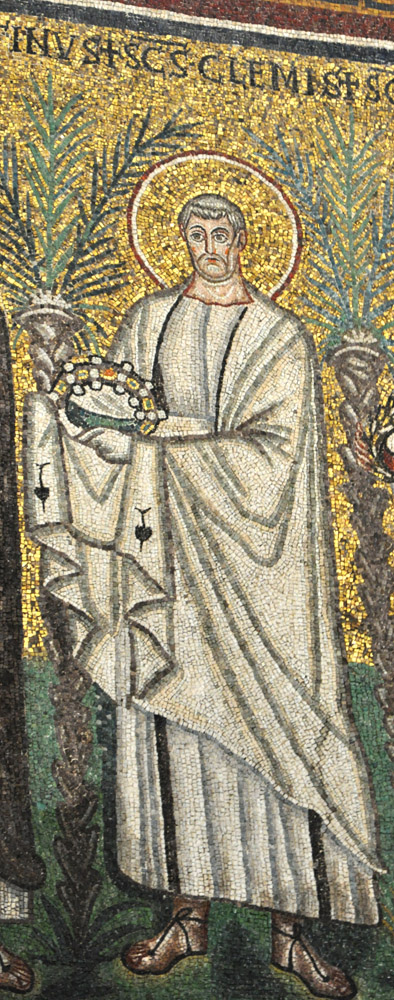
Brought up in the school of the Apostles, Clement had retained their style and manner. These are visible in his two Letters to virgins, which are mentioned by St. Epiphanius and St. Jerome, and were found in the eighteenth century translated into Syriac, in a manuscript brought from Aleppo. As St. Caecilia reminded us yesterday, the principle of chastity being vowed to God was, from the very beginning, one of the bases of Christianity, and one of the most effectual means for the transformation of the world. Christ himself had praised the superior merit of this sacrifice; and St. Paul, comparing the two states of life, taught that the virgin is wholly taken up with our Lord, while the married woman, whatever her dignity, is divided. Clement had to develop this doctrine, and he did so in these two letters. Anticipating those great doctors of Christian virginity, St. Athanasius, St. Ambrose, St. Jerome, St. John Chrysostom, St. Augustin, he developed the teachings of St. Peter and St. Paul on this important subject. “He or she,” he says, “who aspires to this higher life, must lead like the Angels an existence all divine and heavenly. The virgin cuts herself off from the allurements of the senses; not only does she renounce the right to their even lawful use, but she aspires to that hope which God, who can never deceive, encourages by his promise, and which far surpasses the natural hope of posterity. In return for her generous sacrifice, her portion in heaven is the very happiness of the Angels.”
Thus spoke the disciple chosen by St. Peter to set his hand to the task of renovating Rome. It needed no less than this strong doctrine, in order to combat the depraved manners of the Empire. Had Christianity been satisfied with inviting men to honor, as the Philosophers had done, its efforts would have been to no purpose. Stoicism, by exciting great pride, could bring some men even to despise death; but it was utterly powerless against sensuality, which we must own to have been the strongest auxiliary to the tyranny of the Caesars. The ideal of chastity, thrown into the midst of that dissolute society, could alone arrest the ignominious torrent that threatened to submerge all human dignity. Happily for the world, Christian morality succeeded in gaining ground; and, its maxims being followed up by striking examples, it at length forced itself upon the public notice. Roman corruption was amazed to hear of virginity being held in honor and practiced by a great many followers of the new religion; and that at a time when the greatest privileges and the most terrible chastisements could scarcely keep to their duty the six vestals, upon whose fidelity depended the honor and the safety of the city. Vespasian and Titus were aware of the infringements upon their primary duty committed by these guardians of the Palladium; but they considered that the low level at which morals then stood, forbade them to inflict the ancient penalties upon these traitresses.
The time, however, was at hand, when the emperors, the senate, and all Rome, were to learn from the first Apology of St. Justin the marvels of purity concealed within that Babylon of iniquity. “Among us, in this city,” said the Apologist, “there are many men and women who have reached the age of sixty or seventy years; brought up from infancy under the law of Christ, they have persevered to this day in the state of virginity; and there is not a country where I could not point out many such.” Athenagorus, in a memorial presented a few years later to Marcus Aurelius, was able to say in like manner: “You will find among us a multitude of persons, both men and women, who have passed their life up to old age in the state of virginity, having no ambition but to unite themselves more intimately to God.”
Clement was predestined to the glory of martyrdom; he was banished to the Chersonesus on the Black Sea. The Acts, which relate the details of his sufferings, are of very great antiquity; we shall not here enter into discussions concerning them. They tell us how Clement found in the peninsula a considerable number of Christians already transported there and employed in working the rich and abundant marble quarries. The joy of these Christians on seeing Clement is easily conceived; his zeal in propagating the faith in this far-off country, and the success of his apostolate, are no matter for surprise. The miracle of a fountain springing from the rock at Clement’s word, to quench the thirst of the Confessors, is a fact analogous to hundreds of others related in the most authentic Acts of the Saints. Lastly, the apparition of the mysterious Lamb upon the mountain, marking with his foot the spot whence the water was to flow, carries back the mind to the earliest Christian mosaics, on which may still be seen the symbol of the lamb standing on a green hillock.
In the ninth century St. Cyril, apostle of the Slavs, discovered near Cherson the precious remains of the martyr-pontiff. Clement was brought back to Rome; and the great church which had hitherto, according to St. Jerome, preserved the memory of his name, henceforth possessed a still richer treasure. The very memory, however, was of great value for science no less than for piety: on the testimony of ancient traditions, this church was built on the site of St. Clement’s old home in the region of Monte Cœlio, which we know from other sources to have been the quarter preferred by the Roman aristocracy of the period. Modern archaeological investigations have discovered beneath the apse of the primitive basilica, and forming a sort of underground Confession or crypt, the rooms of a private dwelling, the style and ornaments of which are of the Flavian period.
It is time to read the liturgical account of the great Pope of the first century.
| Clemens Romanus, Faustini filius, de regione Cœlii montis, discipulus beati Petri, cujus meminit Paulus scribens ad Philippenses: Etiam rogo et te germane compar, adjuva illas quæ mecum laboraverunt in Evangelio, cum Clemente et cæteris adjutoribus meis, quorum nomina sunt in libro vitæ. Hic septem Urbis regiones divisit septem Notariis, singulas singulis attribuens, qui passiones Martyrum et res ab eis gestas diligentissime conquistas litteris mandarent. Multa scripsit et ipse accurate et salutariter, quibus christianam religionem illustravit. | Clement was a Roman by birth, son of Faustinus who dwelt in the region of Monte Cœlio. He was a disciple of blessed Peter; and is mentioned by St. Paul in his Epistle to the Philippians, in these words: I entreat thee also, my sincere companion, help those women who have labored with me in the Gospel, with Clement and the rest of my fellow-laborers, whose names are in the book of life. He divided Rome into seven regions, appointing a notary for each, who was to ascertain and record with the greatest care the acts and sufferings of the martyrs. He wrote many useful and learned works, such as did honor to the christian name. |
| Cum autem doctrina ac vitæ sanctitate multos ad Christi fidem converteret, a Trajano imperatore relegatus est trans mare Ponticum in solitudine urbis Chersonæ, in qua duo millia Christianorum reperit, qui ab eodem Trajano condemnati fuerant. Qui cum in eruendis et secandis marmoribus aquæ penuria laborarent, Clemens facta oratione, in vicinum collem ascendit, in cujus jugo vidit Agnum dextero pede fontem aquæ dulcis, qui inde scatebat, attingentem; ubi omnes sitim expleverunt: eoque miraculo multi infideles ad Christi fidem conversi, Clementis etiam sanctitatem venerari cœperunt. | He converted many to the faith of Christ by his learning and holiness of life, and was on that account banished by the emperor Trajan to the desert of Cherson beyond the Black Sea. Here he found two thousand Christians, likewise banished by Trajan, who were employed in quarrying marble. Seeing them suffering from want of water, Clement betook himself to prayer, and then ascended a neighboring hill, on the summit of which he saw a Lamb, pointing out with his right foot a spring of sweet water. At this source they all quenched their thirst; and many infidels were converted by the miracle, and began to revere Clement as a Saint. |
| Quibus concitatus Trajanus, misit illuc, qui Clementem, alligata ad ejus collum anchora, in profundum dejicerent. Quod cum factum esset, Christianis ad littus orantibus, mare ad tria milliaria recessit: eoque illi accedentes, ædiculam marmoream in templi formam, et intus arcam lapideam, ubi Martyris corpus conditum erat, et juxta illud nachoram, qua mersus fuerat, invenerunt. Quo miraculo incolæ permeti, Christi fidem susceperunt. Ejus corpus postea Romam, Nicolao primo Pontifice translatum, in ecclesia ipsius sancti Clementis conditum est. Ecclesia etiam in eo insulæ loco, unde divinitus fons manarat, ejusdem nomine dedicata est. Vixit in pontificatu annos novem, menses sex, dies sex. Fecit ordinationes duas mense decembri, quibus cravit presbyteros decem, diaconos duos, episcopos per diversa loca quindecim. | On hearing this Trajan was enraged, and sent officers with orders to cast Clement into the sea with an anchor tied to his neck. After the execution of this sentence, as the Christians were praying on the shore, the sea began to recede for the distance of three miles; on approaching they found a small building of marble, in the form of a temple wherein lay the martyr’s body in a stone coffin, and beside it the anchor with which he had been drowned. The inhabitants of the country were so astounded at the miracle, that they were led to embrace the Christian faith. The holy body was afterwards translated to Rome, under Pope Nicholas I and deposited in the church of St. Clement. A church was also built and dedicated in his honor on that spot in the island where the miraculous fountain had sprung up. He held the pontificate nine years, six months, and six days. In two ordinations in the month of December, he made ten priests, two deacons, and fifteen bishops for divers places. |
The proper Antiphons of St. Clement’s Office form a graceful collection, bearing evident signs of antiquity.
| Antiphons | |
| Oremus omnes ad Dominum Jesum Christum, ut Confessoribus suis fontis venam speriat. | Let us all beseech our Lord Jesus Christ to discover a source of water to his confessors. |
| Orante sancto Clemente, apparuit ei Agnus Dei. | While holy Clement was praying, the Lamb of God appeared to him. |
| Non meis meritis ad vos me misit Dominus, vestris coronis participem fieri. | Not through any merits of mine hath the Lord sent me to you to share your crowns. |
| Vidi supra montem Agnum stantem, de sub cujus pede fons vivus emanat. | I saw upon the mountain the Lamb standing, from beneath whose feet sprang up a fount of living waters. |
| De sub cujus pede fons vivus emanat, fluminis impetus lætificat civitatem Dei. | From beneath his feet sprang up a fount of living waters: the stream of the river maketh glad the city of God. |
| Omnes gentes per gyrum crediderunt Christo Domino. | All the surrounding nations believed in Christ the Lord. |
| Cum iter ad mare cepisset, populus voce magna clamabat: Domine Jesu Christe, salva illum: et Clemens cum lacrymis dicebat: Suscipe Pater spiritum meum. | As he approached the sea, the people cried with a loud voice: Lord Jesus Christ, save him; and Clement weeping said: Father, receive my spirit. |
| Dedisti Domine habitaculum Martyri tuo Clementi in mari, in modum templi marmorei, angelicis manibus præparatum, iter præbens populo terræ, ut enarrent mirabilia tua. | Thou hast given, O Lord, to thy martyr Clement, a dwelling-place in the sea, a marble temple built by the hands of Angels; and thou openest a way thither for the people of the earth, that they may tell thy wonderful works. |
We take the following beautiful formulæ from the Leonian Sacramentary.
| Prayer | |
| Omnipotens sempiterne Deus, qui in omnium Sanctorum tuorum es virtute mirabilis: da nobis in beati Clementis annua solemnitate lætari, qui Filii tui Martyr et Pontifex, quod ministerio gessit, testimonio comprobavit, et quod prædicavit ore, firmavit exemplo. Per Dominum. | O Almighty, eternal God, who art wonderful in the virtue of all thy Saints, grant us to rejoice in the annual solemnity of blessed Clement, who, being the Martyr and Pontiff of thy Son, justified his ministry by his words, and corroborated his teaching by his example. Through our Lord. |
| Preface | |
| Vere dignum Sancti Clementis Martyris tui Natalitia celebrantes, qui cognationem reliquit et patriam; et post odorem tui nominis terras mariaque transmittens, abnegansque semetipsum, crucem peregrinationis assumpsit, ut te per Apostolorum tuorum vestigia sequeretur. Cui tu, Domine … beatissimi Petri mox tradito discipulo … deinde Magistri sui Vicarium per ordinem subrogando, Romanæ Urbis, cujus propter te despexerat dignitatem, tenere constituis Principatum, proque transitoria claritate, cœlesti facis honore conspicuum. Postremo Martyrii gloria sublimatum, pro temporalibus gestis æternam provehis ad coronam. Per. | It is truly right that we should give thee thanks, while celebrating the birthday of holy Clement thy Martyr, who abandoned his people and his country, and drawn by the sweet odor of thy name passed over lands and seas; denying himself, he took up the cross of these wanderings, that he might follow thee in the footsteps of thine Apostles. He was first a disciple of blessed Peter, and afterwards his vicar and successor; and thus didst thou, O Lord appoint him to rule that city of Rome, whose dignities he had despised for thy sake, and instead of transitory honors thou didst ennoble him with heavenly dignity. Finally thou didst raise him to the glory of martyrdom, and reward his temporal labors with an eternal crown. |
The Lord saith: My Words which I have put in thy mouth, shall not depart out of thy mouth: and thy gifts shall be accepted upon my altar. (Isaias 59:21) Thus does the Church open the chants of the great Sacrifice in thy honor, O holy Pontiff! It was indeed a joy and a supreme consolation to her to experience that after the departure of the Apostles, the word did not fail; for of all the gifts left her by her divine Spouse at his Ascension into heaven, this was the most indispensable. In thy writings, the word continued to traverse the world, authoritative and respected, directing, pacifying, sanctifying the people, as fully and as surely as in the days of the Apostles or of our Lord himself. Clear and manifest, thanks to thee, was the proof that Jesus, according to his promise, remains with his disciples till the end of the world. Be thou blessed for having thus, in the earliest times, consoled our Mother the Church.
Thou didst understand, O Clement, that the great apostolic work, the diffusion of the Gospel among all nations, was not to be interrupted by the departure of the first laborers. Thou didst cause death and darkness to retreat farther and farther. All nations owe thee a deep debt of gratitude; but especially the French: for thou didst send thy messengers to Paris and its sister cities, crying in thy name: Rise thou that sleepest, and arise from the dead; and Christ shall enlighten thee.
But the labors of an apostolate attacked in every land by the prince of this world, and the cares of universal government, did not exhaust the zeal that fired thy apostolic soul. Be thou blessed for having reserved thy special teaching and solicitude for the best-loved portion of our Lord’s flock, for them that follow the Lamb on the mountain, where thou didst see him, and whithersoever he goeth. Through thy prayers, may the imitators of Flavia Domitilla increase in number and still more in merit. May every Christian learn from the lesson of thy life that the nobility of this world is nothing compared with that which is won by the love of Christ. May the world, and its capital, once given to God by the Apostles and the Roman patricians, become once more his undisputed kingdom.
On the 10th of July we honored St. Felicitas, mother of the Martyrs, giving a second and heavenly birth to her seven sons. But her own recompense was delayed for four long months. The Church has inscribed her name on the sacred diptychs; let us, then, again offer her our prayers and praises on this day, whereon the sword at length fulfilled her desires, and in justification of her name, restored her to her sons in eternal felicity.
| Antiphon | |
| Ant. Date ei de fructu manuum suarum, et laudent eam in portis opera ejus. | Ant. Give her of the fruit of her hands, and let her works praise her in the gates. |
| ℣. Diffusa est gratia in labiis tuis. | ℣. Grace is spread abroad in thy lips. |
| ℟. Propterea benedixit te Deus in æternum. | ℟. Therefore hath God blessed thee for ever. |
| Prayer | |
| Præsta, quæsumus omnipotens Deus; ut, beatæ Felicitatis Martyris tuæ solemnia recensentes, meritis ipsius protegamur et precibus. Per Dominum. | Grant we beseech thee, O Almighty God, that celebrating the solemnity of blessed Felicitas thy Martyr, we may be protected by her merits and prayers. Through our Lord. |
The Liturgical Year, authored by Dom Prosper Gueranger (1841-1875)
It was through jealousy and envy that the greatest and most upright pillars of the Church were persecuted and struggled unto death. Let us set before our eyes the good apostles. First of all, Peter, who because of unreasonable jealousy, suffered not merely once or twice but many times, and, having thus given his witness, went to the place of glory that he deserved. It was through jealousy and conflict that Paul showed the way to the prize for perseverance. He was put in chains seven times, sent into exile, and stoned; a herald both in the east and the west, he achieved a noble fame by his faith. He taught justice to all the world and, when he had reached the limits of the western world, he gave his witness before those in authority; then he left this world and was taken up into the holy place, a superb example of endurance. Around these men with their holy lives there gathered a great throng of the elect, who, though victims of jealousy, gave us the finest example of endurance in the mist of many indignities and tortures. We are writing this, beloved, not only for your admonition but also as a reminder to ourselves; for we are placed in the same arena, and the same contest lies before us. Hence we ought to put aside vain and useless concerns and should consider what is good, pleasing and acceptable in the sight of him who made us. Let us fix our gaze on the blood of Christ, realizing how precious it is to his Father, since it was shed for our salvation and brought the grace of repentance to all the world. – from a letter to the Corinthians by Pope Saint Clement I