• Email
  • Facebook
  • Instagram
  • Pinterest
share our JOY

JOY{filled}family

striving to radiate Him always

  • Home
  • Blog
  • Brown Scapular
  • Liturgical Calendars & Planners
  • Wellness
    • Essential Oils
    • Fitness
    • Nutrition
  • Homeschool
  • Sacraments
    • Baptism
    • First Communion
    • Confirmation

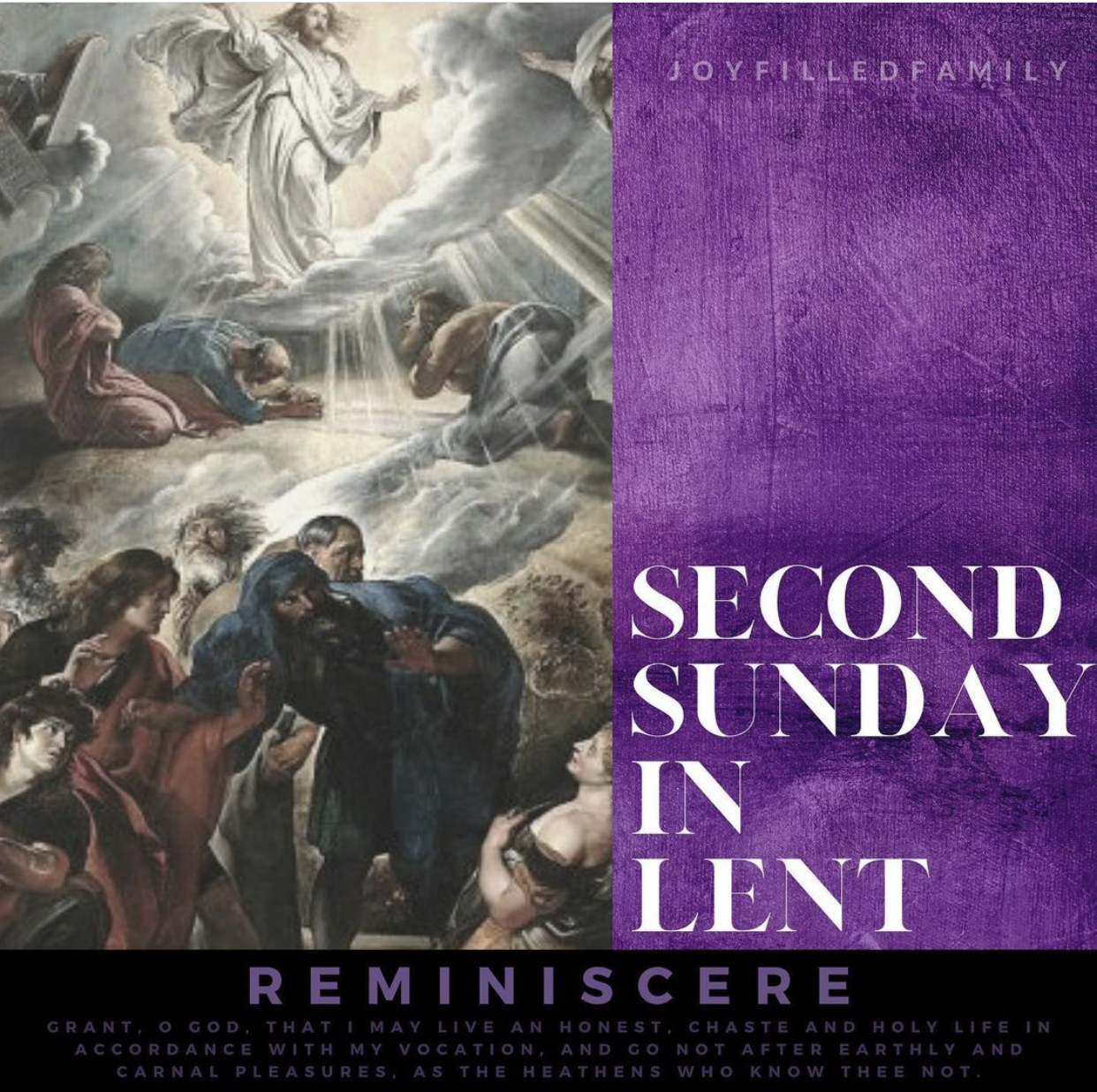
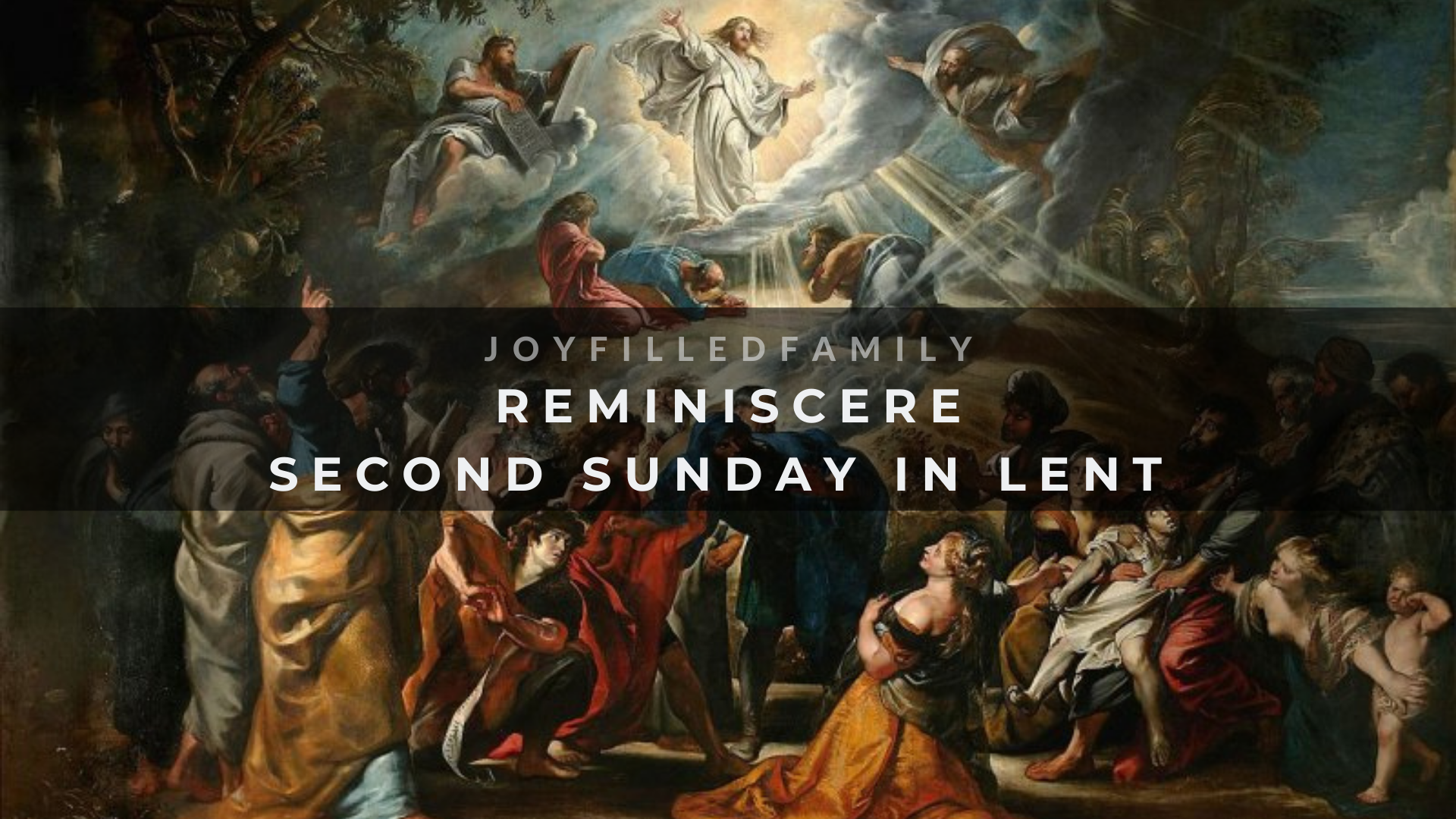
REMINISCERE {Second Sunday in Lent}

February 28, 2021 by Lena {JOYfilledfamily} Filed Under: Fr. Leonard Goffine, Lent, Second Sunday in Lent, The Church’s Year Leave a Comment

REMINISCERE

The following is instruction from Fr. Leonard Goffine, The Church’s Year.

The Introit of this day’s Mass, which begins with the word Reminiscere, from which this Sunday derives its name, is the prayer of a soul begging God’s assistance, that she may sin no more: 

INTROIT Remember, O Lord, Thy compassions and Thy mercies, which are from the beginning, lest at any time our enemies rule over us: deliver us O God of Israel, from all our tribulations. To Thee O Lord, have I lifted up my soul: in Thee, O my God, I put my trust; let me not be ashamed. (Ps. XXIV.) Glory be to the Father, etc.

COLLECT O God, who seest us to be destitute of strength, keep us both inwardly and outwardly; that we may be defended in the body from all adversities, and cleansed in our mind from all evil thoughts. Through our Lord, etc.

EPISTLE (I Thess. IV. 1-7.) Brethren, we pray and beseech you in the Lord Jesus, that as you have received of us, how you ought to walk, and to please God, so also you would walk, that you may abound the more. For you know what precepts I have given to you by the Lord Jesus. For this is the will of God, your sanctification; that you should abstain from fornication; that every one of you should know how to possess his vessel in sanctification and honor; not in the passion of lust, like the Gentiles that know not God: and that no man over-reach nor circumvent his brother in business; because the Lord is the avenger of all these things, as we have told you before, and have testified. For God hath not called us unto uncleanness, but unto sanctification; in Christ Jesus our Lord.

EXPLANATION From these words we see, that the great Teacher of Nations as carefully showed the Christian congregations the sanctity of their calling, as he labored to lead them from the blindness and abominations of heathenism.

ASPIRATION Grant, O God, that I may live an honest, chaste and holy life in accordance with my vocation, and go not after earthly and carnal pleasures, as the heathens who know Thee not.

GOSPEL (Matt. XVII. 1-9.) At that time, Jesus took Peter, and James, and John his brother, and bringeth them up into a high mountain apart: and he was transfigured before them. And his face did shine as the sun, and his garments became white as snow. And behold, there appeared to them Moses and Elias talking with him. Then Peter answering, said to Jesus: Lord, it is good for us to be here; if thou wilt, let us make here three tabernacles, one for thee, and one for Moses, and one for Elias. And as he was yet speaking, behold a bright cloud overshadowed them, and lo, a voice out of the cloud, saying: This is my beloved Son, in whom I am well pleased; hear ye him. And the disciples hearing, fell upon their face, and were very much afraid. And Jesus came and touched them, and said to them: Arise, and fear not. And they lifting up their eyes, saw no one, but only Jesus. And as they came down from the mountain, Jesus charged them, saying: Tell the vision to no man: till the Son of Man be risen from the dead.

Why was Christ transfigured in the presence of His apostles on Mount Thabor?

To permit them to see the glorious majesty of His divinity; to guard them from doubts when they should afterwards see Him die on Mount Calvary; to encourage the disciples and all the faithful to be patient in all crosses and afflictions, for the bodies of the just at the resurrection will be made like the glorified body of Christ. (Phil. III. 21.)

Why did Moses and Elias appear there?

That they might testify, that Jesus was really the Saviour announced by the law and the prophets, and that the law and the prophets received fulfillment in Him. The former was represented by Moses, the latter by Elias.

Why, did Peter wish to build three tabernacles there?

The delightful sweetness of the apparition in which Jesus made him participator so enraptured him, that he knew not what he said, not considering that glory can be attained only through sufferings, the crown through fight, joy through crosses and afflictions.

ASPIRATION Draw us, O Jesus, to Thee, that by the contemplation of the sacred joys awaiting us, we, by Thy grace, may not be defeated in the spiritual contest, but conquer through Thy grace and carry off the unfading crown of victory.

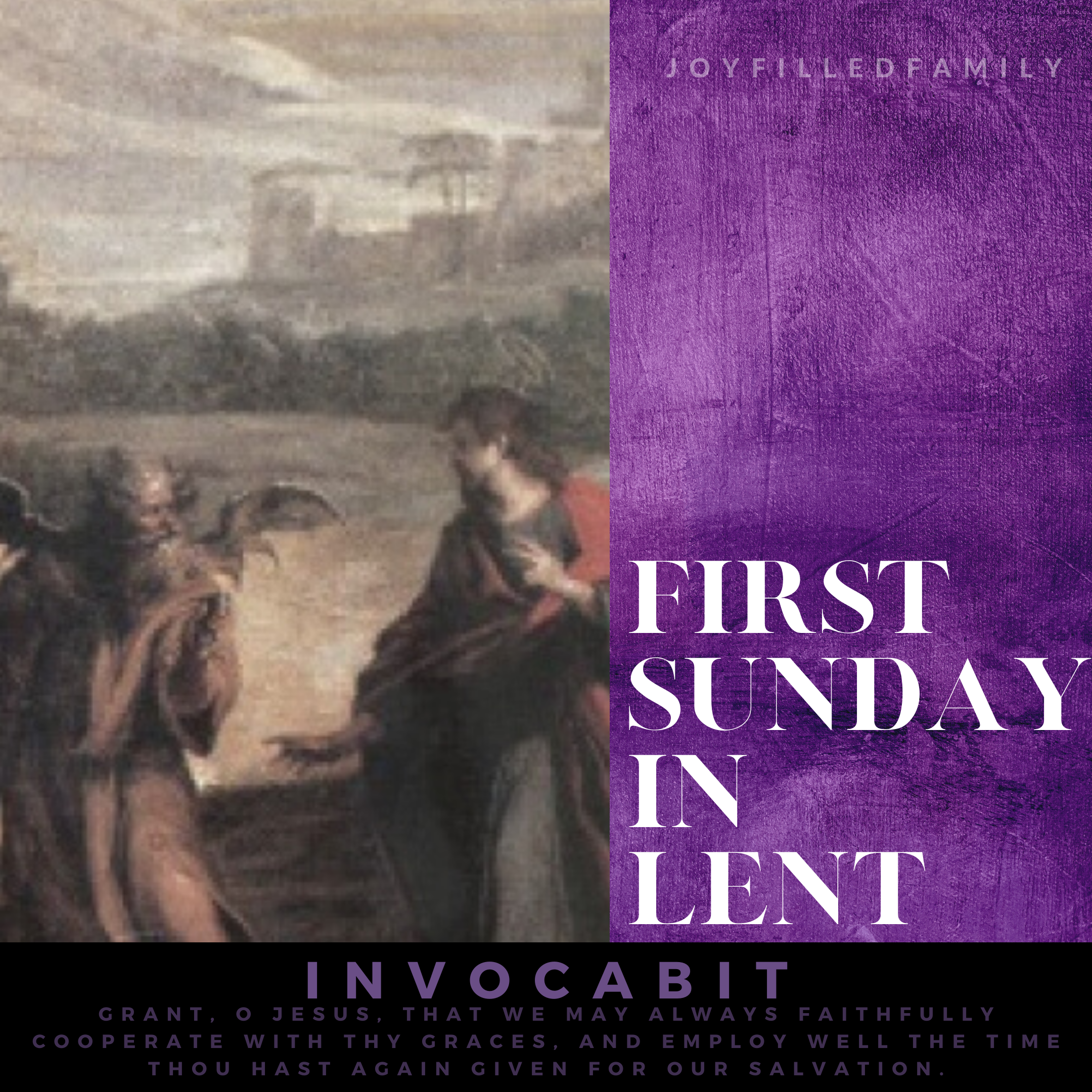
INVOCABIT {First Sunday in Lent}

February 21, 2021 by Lena {JOYfilledfamily} Filed Under: First Sunday in Lent, Fr. Leonard Goffine, Lent, The Church’s Year Leave a Comment

INVOCABIT

The following is instruction from Fr. Leonard Goffine, The Church’s Year.

This Sunday is called Invocabit, because the Introit of the Mass begins with this word, which is taken from the ninetieth psalm, wherein we are urged to confidence in God, who willingly hears the prayer of the penitent: 

INTROIT He shall call upon me, and I will hear him; I will deliver him, and glorify him; I will fill him with length of days. (Ps. XC. 15-16.) He that dwelleth in the aid of the Most high shall abide under the protection of the God of heaven. (Ps. XC. 1.) Glory be to the Father, etc.
COLLECT O God who dost purify Thy Church by the yearly fast of Lent; grant to Thy household that what we strive to obtain from Thee by abstinence, by good works we may secure. Through our Lord, etc.

EPISTLE (II. Cor. VI. 1-10) Brethren, we exhort you that you receive not the grace of God in vain. For he saith: In an acceptable time have I heard thee, and in the day of salvation have I helped thee. Behold, now is the acceptable time; behold, now, is the day of salvation. Giving no offence to any man, that our ministry be not blamed: but in all things let us exhibit ourselves as the ministers of God; in much patience, in tribulations, in necessities, in distresses, in stripes, in prisons, in seditions, in labors, in watchings, in fastings, in chastity, in knowledge, in long-suffering, in sweetness, in the Holy Ghost, in charity unfeigned, in the word of truth, in the power of God, by the armor of justice on the right hand, and on the left, by honor and dishonor, by evil report, and good report; as deceivers, and yet true; as unknown, and yet known; as dying, and behold we live; as chastised, and not killed; as sorrowful, yet always rejoicing; as needy, yet enriching many; as having nothing, and possessing all things.

EXPLANATION The Church very appropriately reads on this day this epistle of St. Paul, in which he exhorts the Christians to make use of the time of grace. A special time of grace is Lent, in which everything invites to conversion and penance, a time, therefore, in which God is ready to make rich bestowal of His graces. St. Anselm says, those do not use the grace who do not cooperate. Let us, therefore, follow St. Paul’s exhortation, and earnestly practise those virtues he places before us, and especially those of temperance, patience, chastity, liberality, love of God and of our neighbor. Let us arm ourselves with the arms of justice at the right and the left, that is, let us strive to be humble in prosperity and in adversity, confident of God’s help. Let us never be led from the path of virtue, by mockery, contempt, nor by persecution, torments, or death.

ASPIRATION Grant, O Jesus, that we may always faithfully cooperate with Thy graces, and employ well the time Thou hast again given for our salvation.

GOSPEL (Matt. IV. 1-11.) At that time, Jesus was led by the Spirit into the desert, to be tempted by the devil. And when he had fasted forty days and forty nights, afterwards he was hungry. And the tempter coming, said to him: If thou be the Son of God, command that these stones be made bread. Who answered and said: It is written: Not in bread alone doth man live, but in every word that proceedeth from the mouth of God. Then the devil took him up into the holy city, and set him upon the pinnacle of the temple, and said to him: If thou be the Son of God, cast thyself down; for it is written: He hath given his angels charge over thee, and in their hands shall they bear thee up, lest perhaps thou dash thy foot against a stone. Jesus said to him: It is written again: Thou shaft not tempt the Lord thy God. Again the devil took him up into a very high mountain, and showed him all the kingdoms of the world, and the glory of them; and said to him: All these will I give thee, if, falling down, thou wilt adore me. Then Jesus said to him: Begone, Satan, for it is written, The Lord thy God shalt thou adore, and him only shaft thou serve. Then the devil left him; and behold, angels came, and ministered to him.

INSTRUCTION

I. Christ went into the desert by the inspiration of the Holy Ghost to prepare by fasting and prayer, for His mission, and to endure the temptations of Satan, that, as St. Paul says, He might be one tempted in all things such as we are, without sin, and so become for us a High-priest who knew how to have compassion on our infirmities, (Heb. IV. 15.) and to show us by His own example, how we should, armed with the word of God, as with a sword, overcome the tempter. (Eph. VI. 17.) – Let us, therefore, courageously follow Christ to the combat against all temptations, with His assistance it will not be hard to conquer them. He has certainly taught us to overcome the hardest ones: the lust of the eyes, of the flesh, and the pride of life, and if we overcome these, it will be easy to conquer the rest.

II. If Christ, the only Son of God, permitted Himself to be tempted by Satan, even to be taken up on a high mountain, and to the pinnacle of the temple, it should not appear strange to us, that we are assailed by many temptations, or that we should find in the lives of so many saints that the evil spirit tormented them by various images of terror and vexation. This we find in the history of the pious Job, where we also find at the same time, that the evil spirit cannot harm a hair of our head without God’s permission.

III. From the coming of the angels to minister to Christ, after He had conquered Satan, we see that all who bravely resist temptations, will enjoy the assistance and consolations of the heavenly spirits.

INSTRUCTION ON TEMPTATION 

To be tempted by the devil. , (Matt. IV. I.)

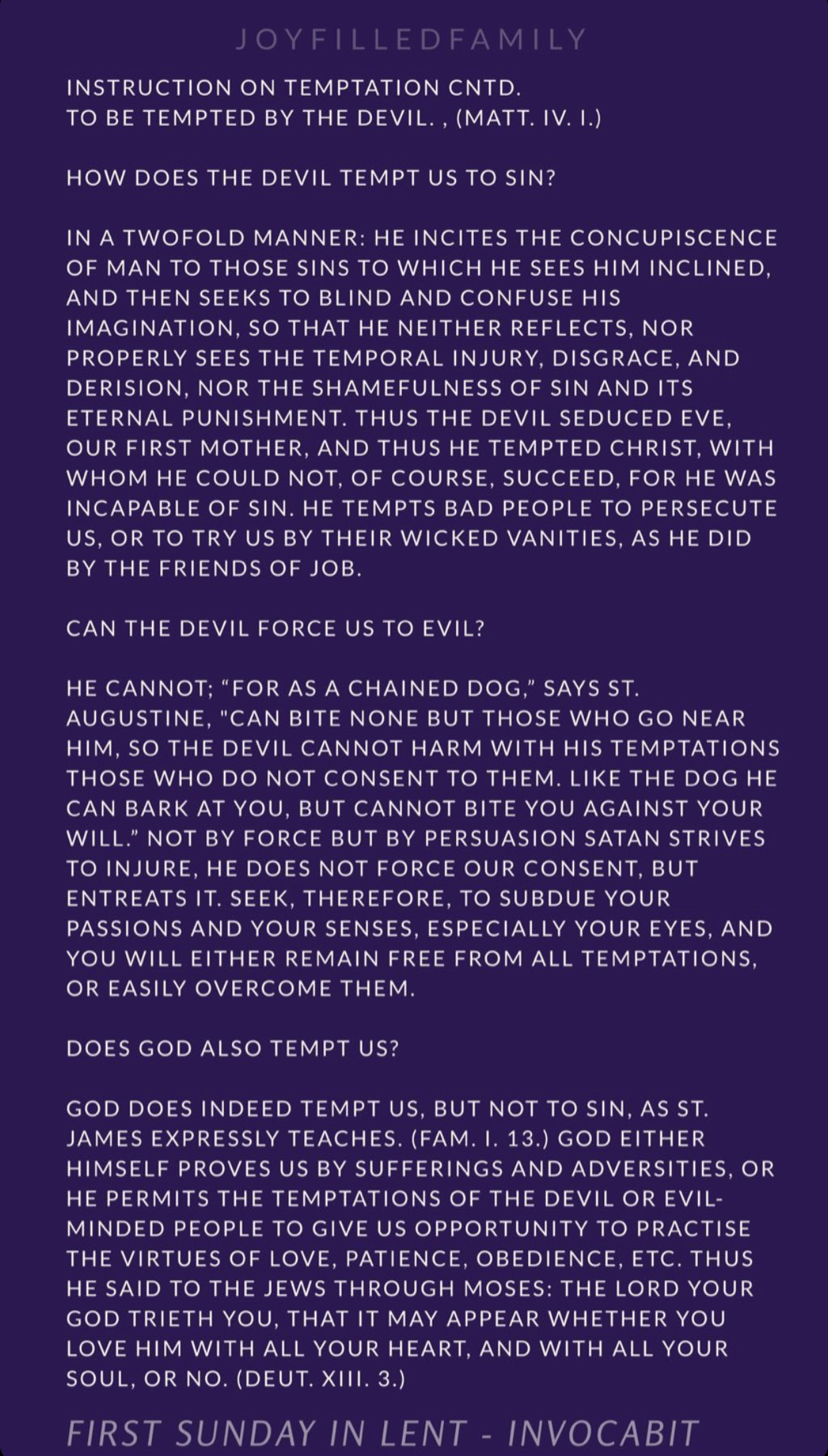
What is a temptation?

A  temptation is either a trial for instruction and exercise in virtue, or a deception and incitement to sin. In the first sense, God tempts man; in the second, he is tempted by the devil, the world or bad people, and the flesh, by evil thoughts, feelings, words, or work.

By what are we principally tempted?

By our own evil concupiscence and inclination to sin which adhere to us through original sin, (Fam. I. 14.) on account of which it is said, that the flesh lusteth against the spirit. (Gal. V. 17.)

Does the devil also tempt us?

He does, and is therefore called, in this day’s gospel, the tempter. St. Peter teaches us this, having himself experienced it: Be sober and watch: because your adversary the devil, as a roaring-lion, goeth about, seeking whom he may devour. (I Peter V. 8.) Not all temptations are to be ascribed to the devil, however, they often come from our own corrupt nature, our own incautiousness, or looseness of our senses, by which we expose ourselves to the danger of falling into sin.

How does the devil tempt us to sin?

In a twofold manner: He incites the concupiscence of man to those sins to which he sees him inclined, and then seeks to blind and confuse his imagination, so that he neither reflects, nor properly sees the temporal injury, disgrace, and derision, nor the shamefulness of sin and its eternal punishment. Thus the devil seduced Eve, our first mother, and thus he tempted Christ, with whom he could not, of course, succeed, for He was incapable of sin. He tempts bad people to persecute us, or to try us by their wicked vanities, as he did by the friends of Job.

Can the devil force us to evil?

He cannot; “for as a chained dog,” says St. Augustine, “can bite none but those who go near him, so the devil cannot harm with his temptations those who do not consent to them. Like the dog he can bark at you, but cannot bite you against your will.” Not by force but by persuasion Satan strives to injure, he does not force our consent, but entreats it. Seek, therefore, to subdue your passions and your senses, especially your eyes, and you will either remain free from all temptations, or easily overcome them.

Does God also tempt us?

God does indeed tempt us, but not to sin, as St. James expressly teaches. (Fam. I. 13.) God either Himself proves us by sufferings and adversities, or He permits the temptations of the devil or evil-minded people to give us opportunity to practise the virtues of love, patience, obedience, etc. Thus He said to the Jews through Moses: The Lord your God trieth you, that it may appear whether you love him with all your heart, and with all your soul, or no. (Deut. XIII. 3.)

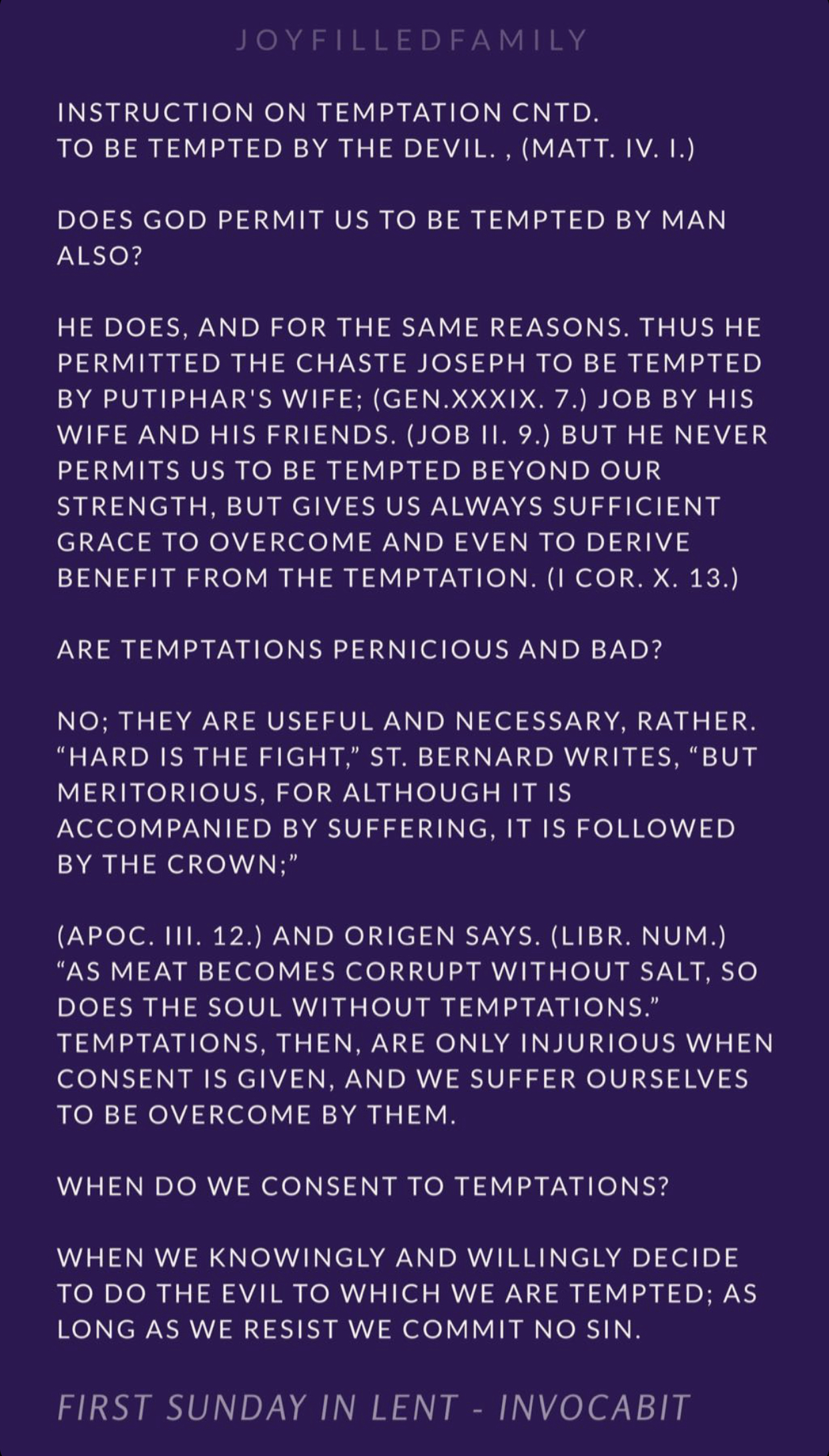
Does God permit us to be tempted by man also?

He does, and for the same reasons. Thus He permitted the chaste Joseph to be tempted by Putiphar’s wife; (Gen.XXXIX. 7.) Job by his wife and his friends. (Job II. 9.) But He never permits us to be tempted beyond our strength, but gives us always sufficient grace to overcome and even to derive benefit from the temptation. (I Cor. X. 13.)

Are temptations pernicious and bad?

No; they are useful and necessary, rather. “Hard is the fight,” St. Bernard writes, “but meritorious, for although it is accompanied by suffering, it is followed by the crown;”

(Apoc. III. 12.) and Origen says. (Libr. Num.) “As meat becomes corrupt without salt, so does the soul without temptations.” Temptations, then, are only injurious when consent is given, and we suffer ourselves to be overcome by them.

When do we consent to temptations?

When we knowingly and willingly decide to do the evil to which we are tempted; as long as we resist we commit no sin. 

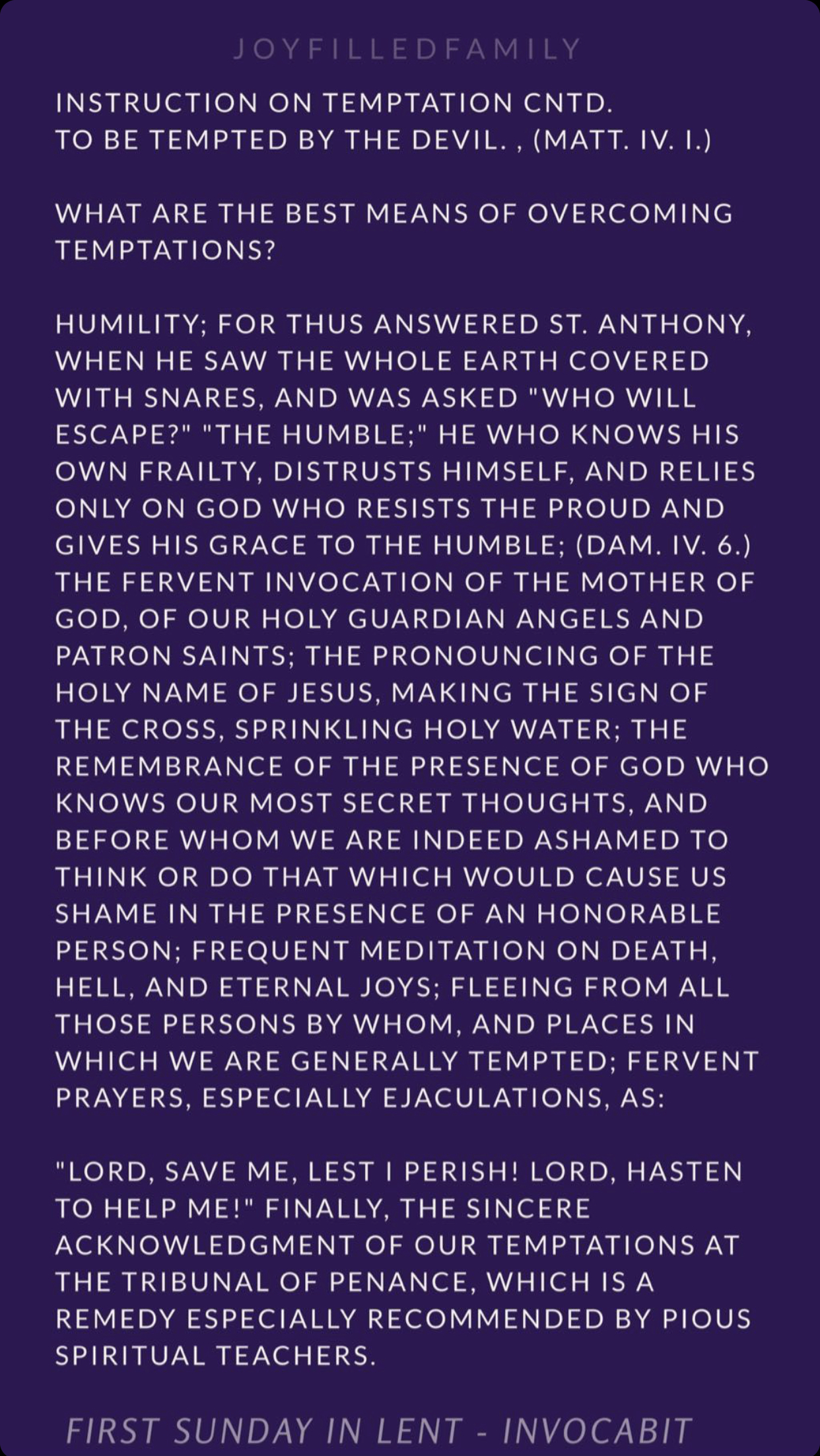
What are the best means of overcoming temptations?

Humility; for thus answered St. Anthony, when he saw the whole earth covered with snares, and was asked “Who will escape?” “The humble;” he who knows his own frailty, distrusts himself, and relies only on God who resists the proud and gives His grace to the humble; (Dam. IV. 6.) the fervent invocation of the Mother of God, of our holy guardian angels and patron saints; the pronouncing of the holy name of Jesus, making the sign of the cross, sprinkling holy water; the remembrance of the presence of God who knows our most secret thoughts, and before whom we are indeed ashamed to think or do that which would cause us shame in the presence of an honorable person; frequent meditation on death, hell, and eternal joys; fleeing from all those persons by whom, and places in which we are generally tempted; fervent prayers, especially ejaculations, as:

“Lord, save me, lest I perish! Lord, hasten to help me!” finally, the sincere acknowledgment of our temptations at the tribunal of penance, which is a remedy especially recommended by pious spiritual teachers.

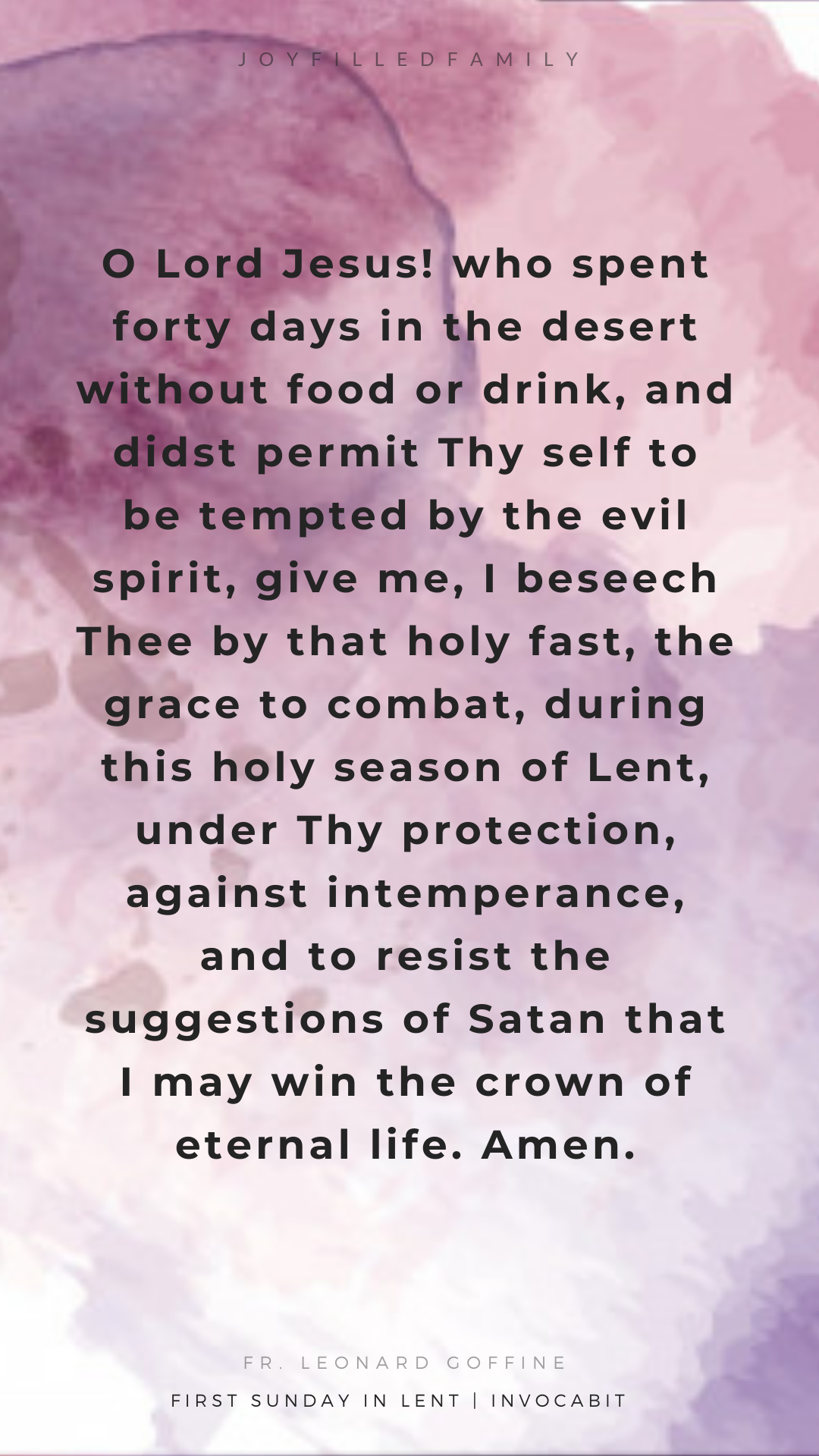
PRAYER O Lord Jesus! who spent forty days in the desert without food or drink, and didst permit Thy self to be tempted by the evil spirit, give me, I beseech Thee by that holy fast, the grace to combat, during this holy season of Lent, under Thy protection, against intemperance, and to resist the suggestions of Satan that I may win the crown of eternal life. Amen.

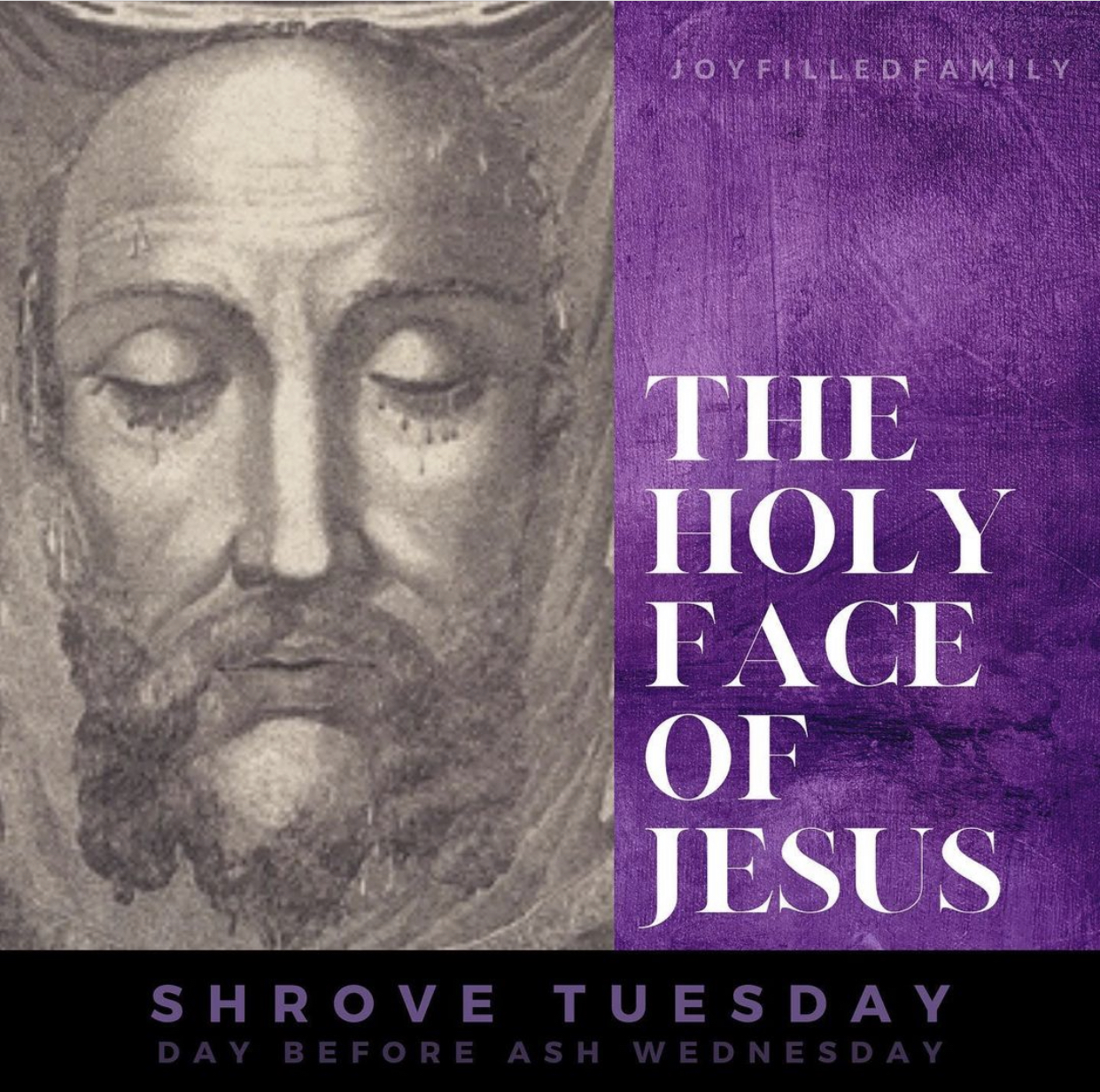
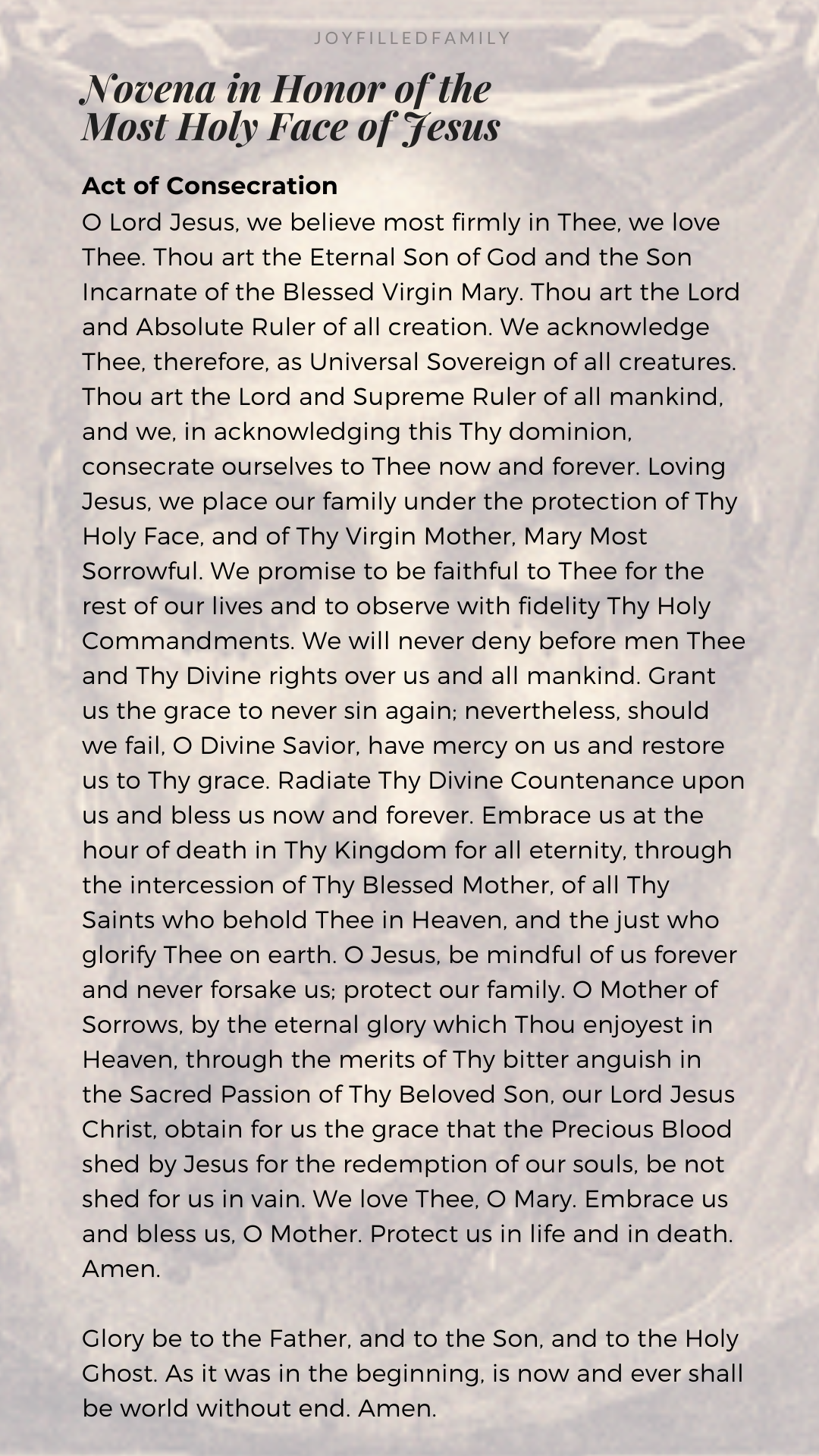
The Holy Face of Jesus

February 16, 2021 by Lena {JOYfilledfamily} Filed Under: Holy Face of Jesus, Lent, Mardis Gras, Shrove Tuesday Leave a Comment

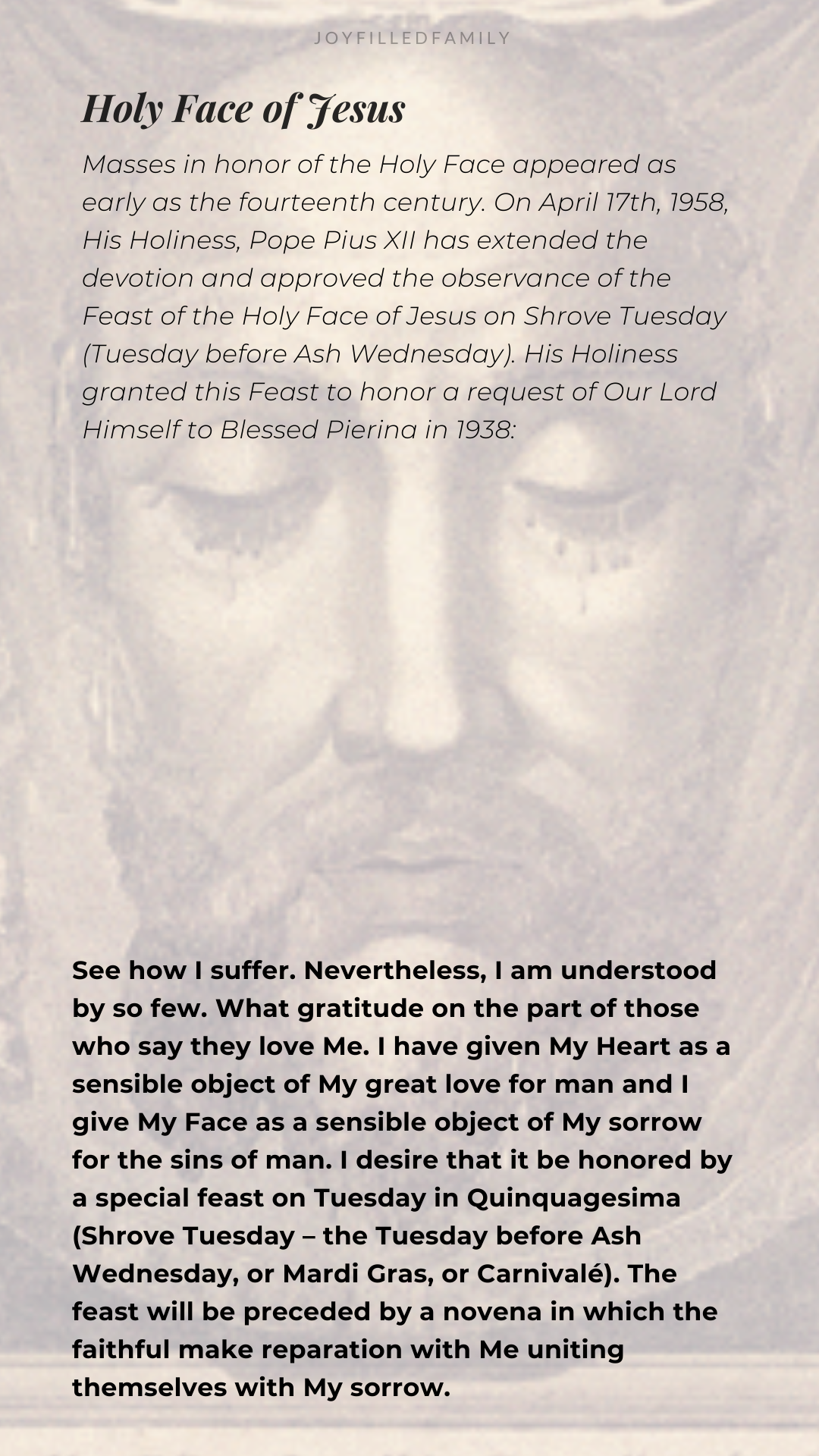
Devotion to the Holy Face of Christ is of ancient origin, reaching back to the fourth century and before. The feast of the Holy Face of Jesus was established throughout the universal Church in 1958 by Pope Pius XII to be observed on the Tuesday before Ash Wednesday, Shrove Tuesday.

It is an opportunity to make reparation for the outrages that the Holy Face of Jesus received during His Passion, and which He continues to receive.

May we not get carried away with a carnival mentality on this last day before Lent. But further examine ourselves and go to confession to remove any sins that would hinder us from having a holy and fruitful Lent.

“Devotion to the Holy Face was/is to make reparation for the blasphemies and outrages of the ‘revolutionaries’ of that (our) time, the blasphemies of atheists, freethinkers and Masons, and for blasphemy and the profanation of Sundays by Catholics. 

Sister Marie de Saint-Pierre (1816-1848) wrote: 

“Then He unfolded His Heart to me, concentrating therein the powers of my soul, and addressed me thus: ‘My Name is everywhere blasphemed; even little children blaspheme it.’  And He made me understand how that dreadful sin pierced and wounded His Heart more than all other crimes. 

“By blasphemy, the sinner outrages Him to His Face, attacks Him openly, and pronounces upon himself his own judgment and condemnation. Blasphemy is a poisoned arrow, wounding His Divine Heart continually. He told me that He would give me a “Golden Arrow” with which to wound Him delightfully and heal the poisonous wounds caused by sin.” 

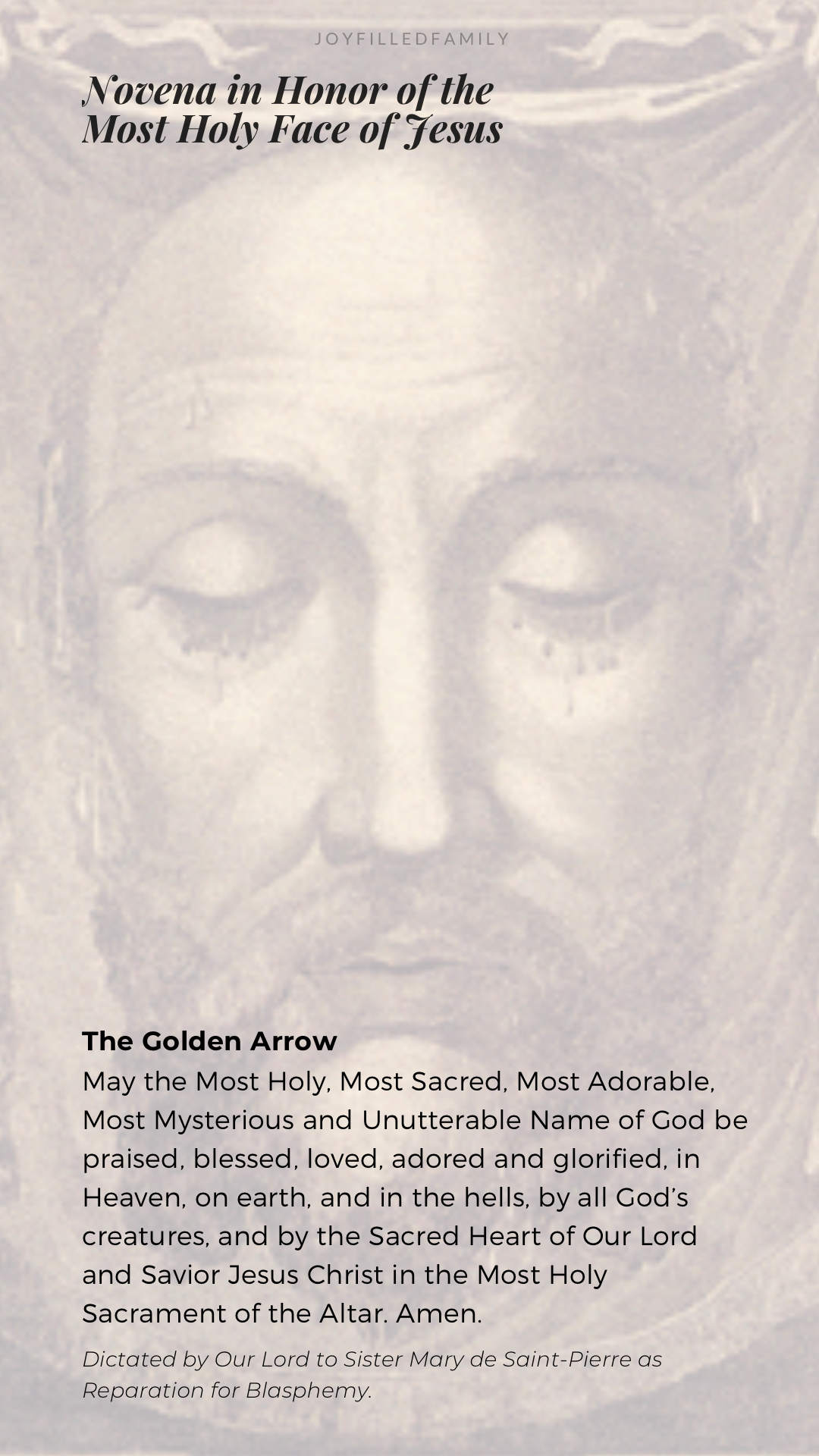
Our Lord then dictated to Sr. Mary the following Golden Arrow prayer, assuring her that every time she said it, she would lovingly wound His Heart. 

The Golden Arrow Prayer 

May the most holy, most sacred, most adorable, most incomprehensible and ineffable Name of God be forever praised, blessed, loved, adored, and glorified in Heaven, on earth and in Hell, by all the creatures of God, and by the Sacred Heart of Our Lord Jesus Christ in the Most Holy Sacrament of the Altar. Amen.”

Our Lord told Sr. Mary on March 16, 1844: “Oh if you only knew what great merit you acquire by saying even once, ‘Admirable is the Name of God!’ in the spirit of reparation for blasphemy.” 

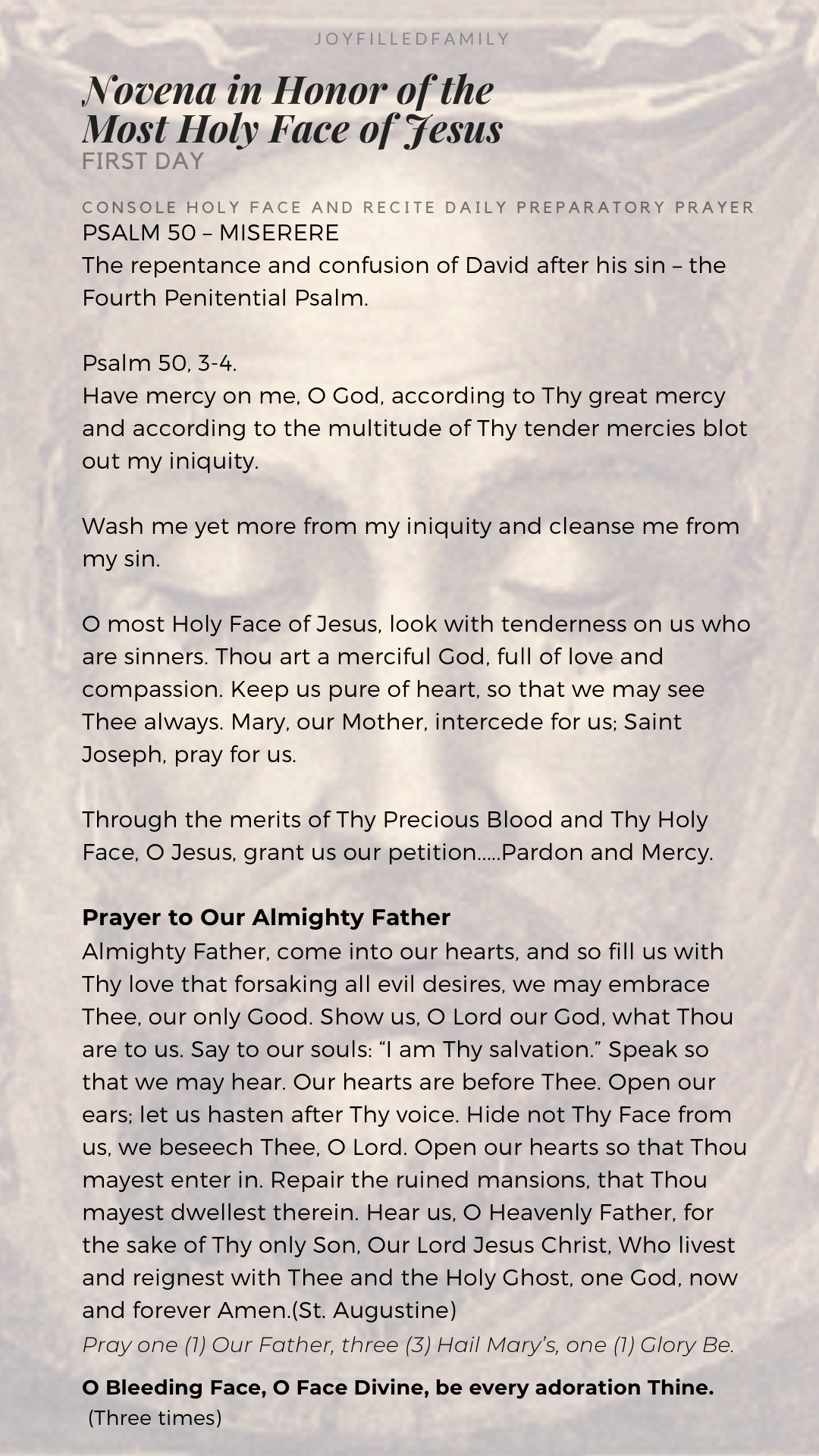
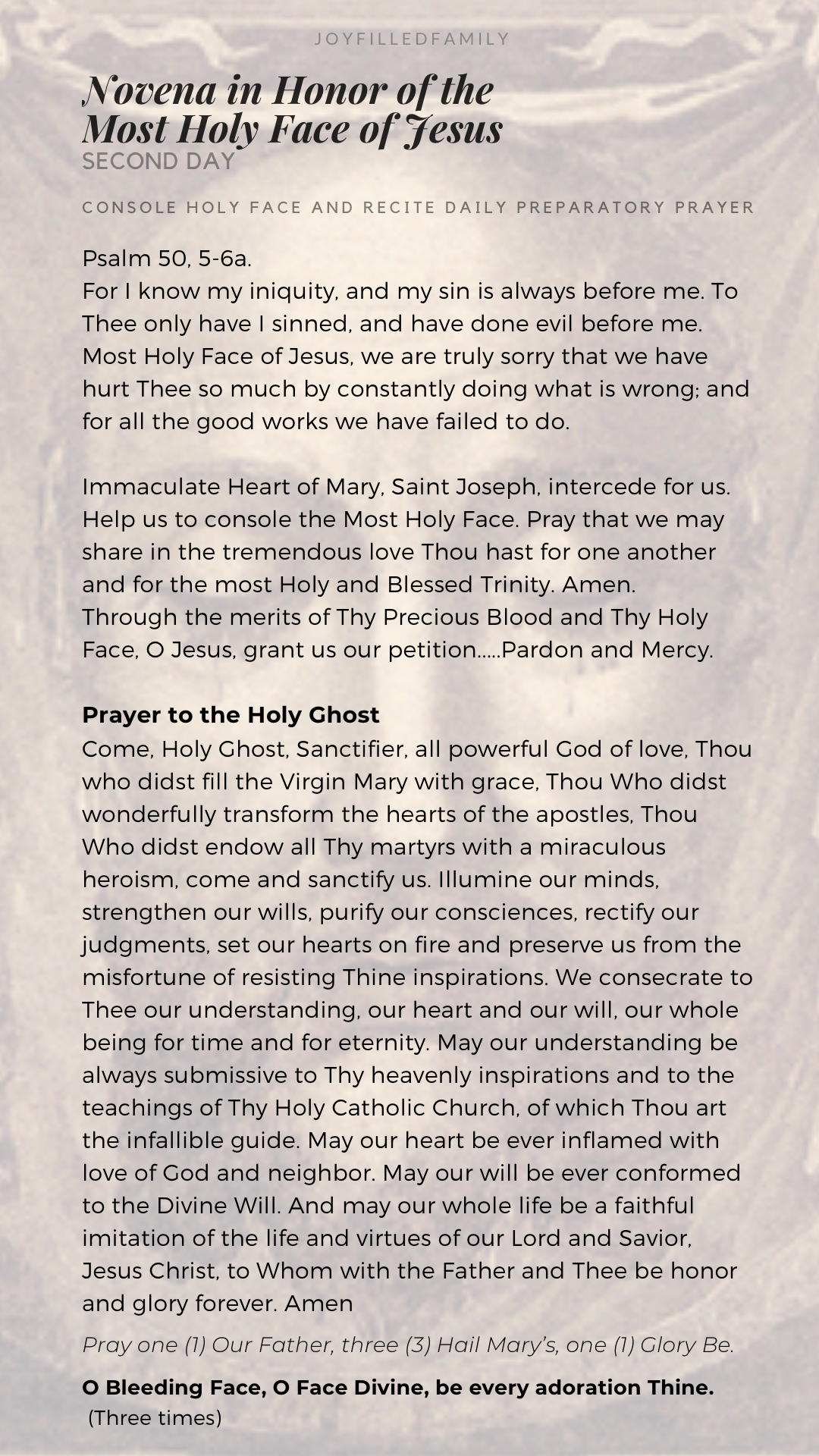
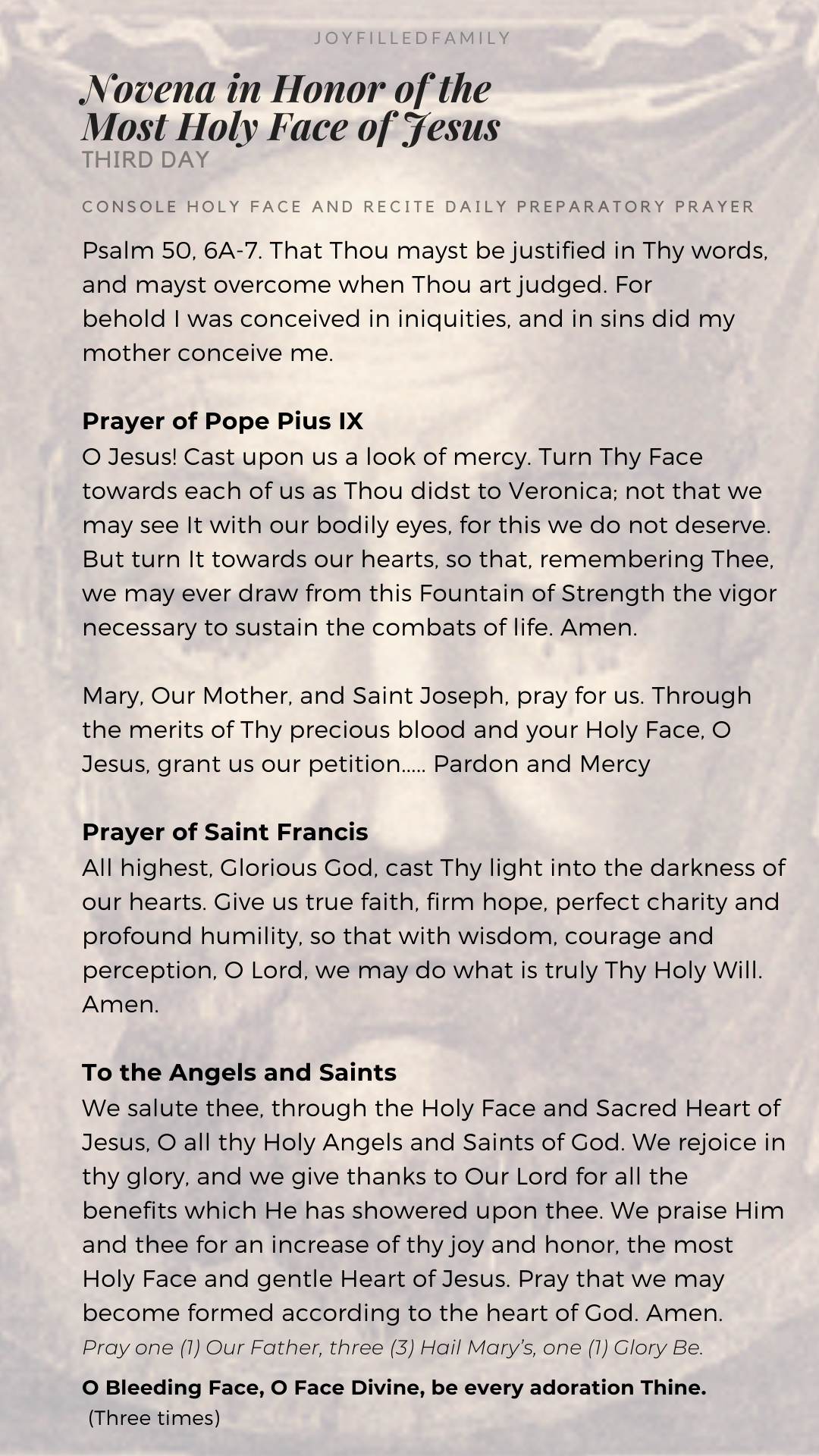
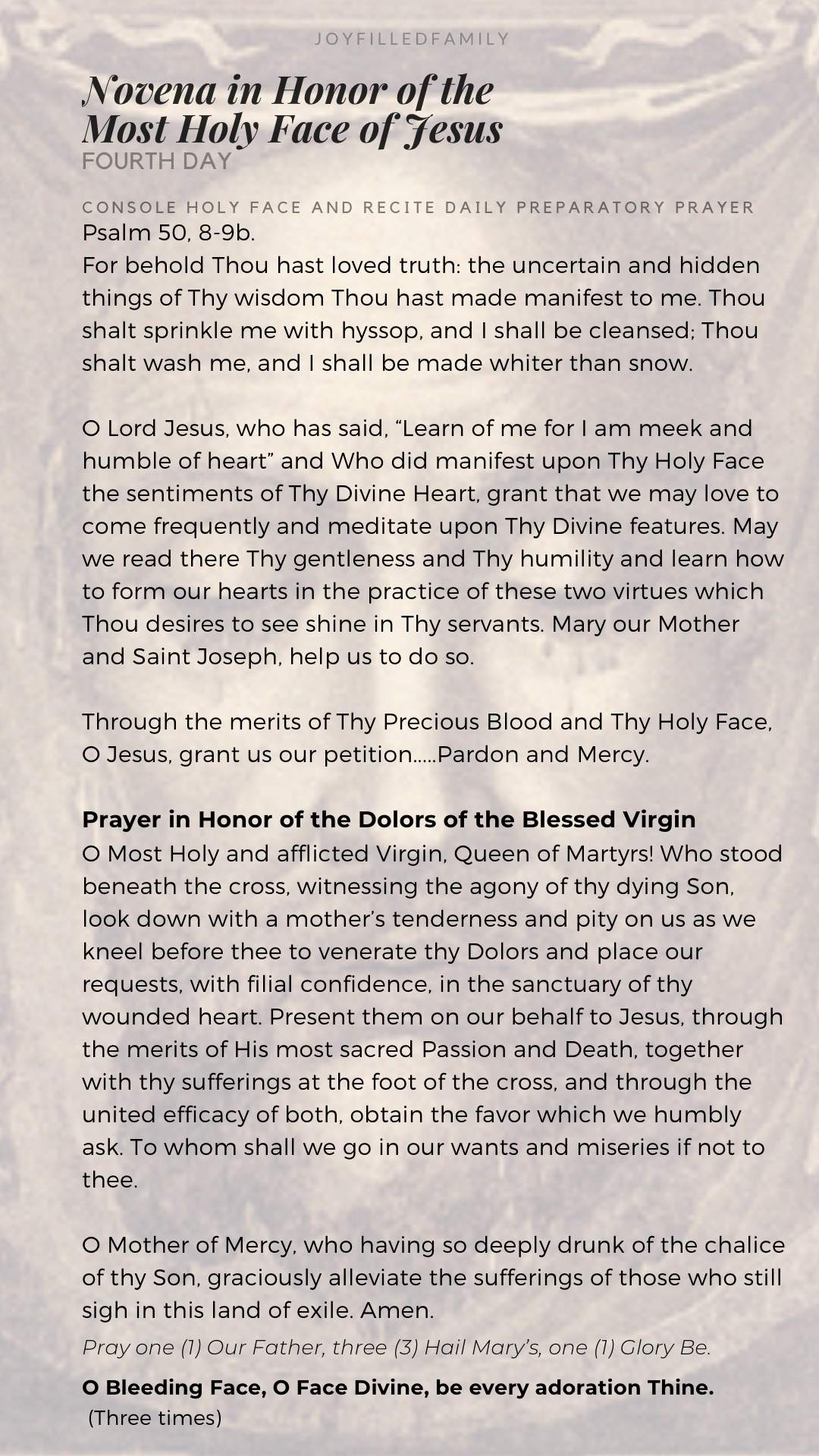
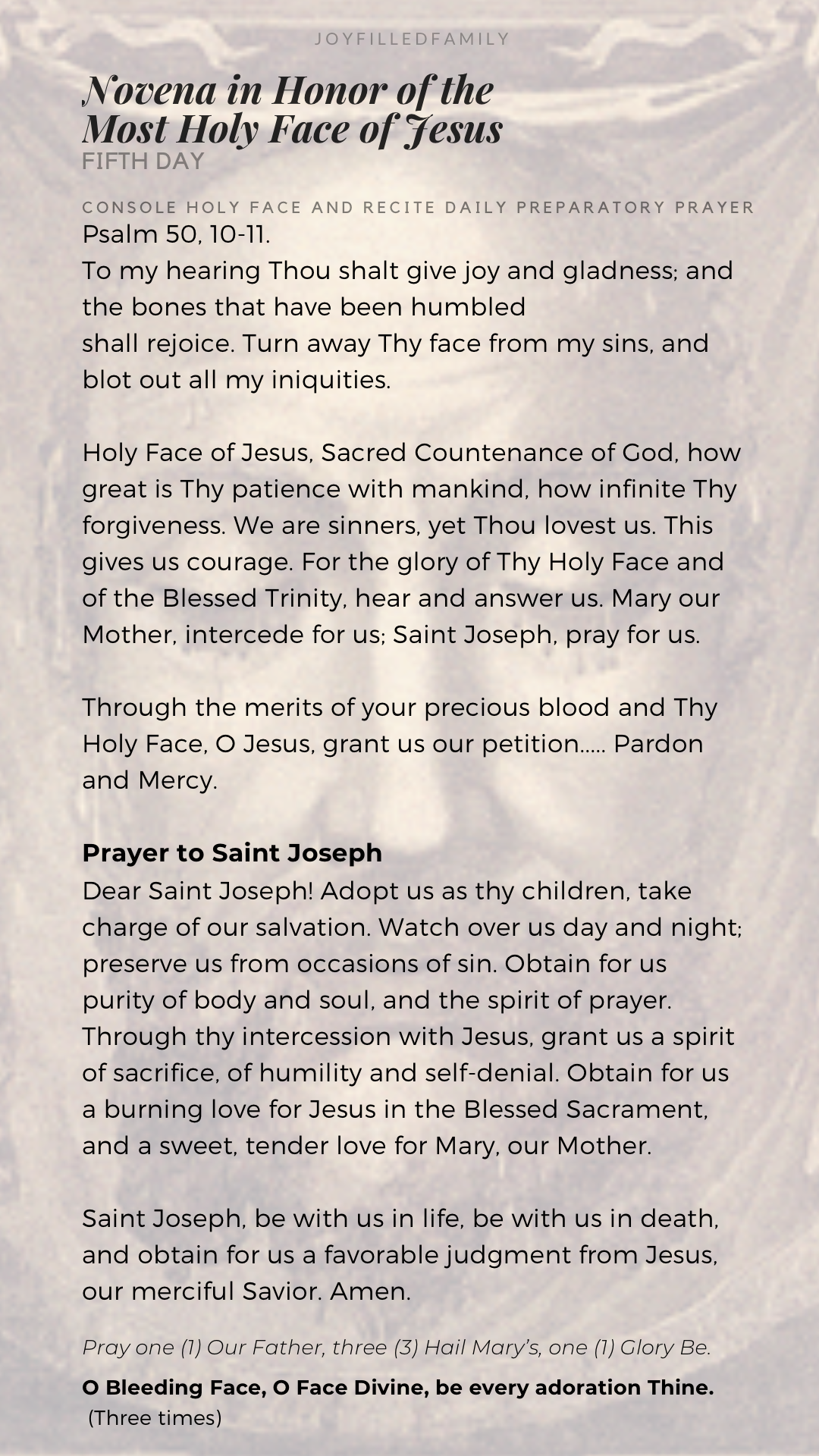
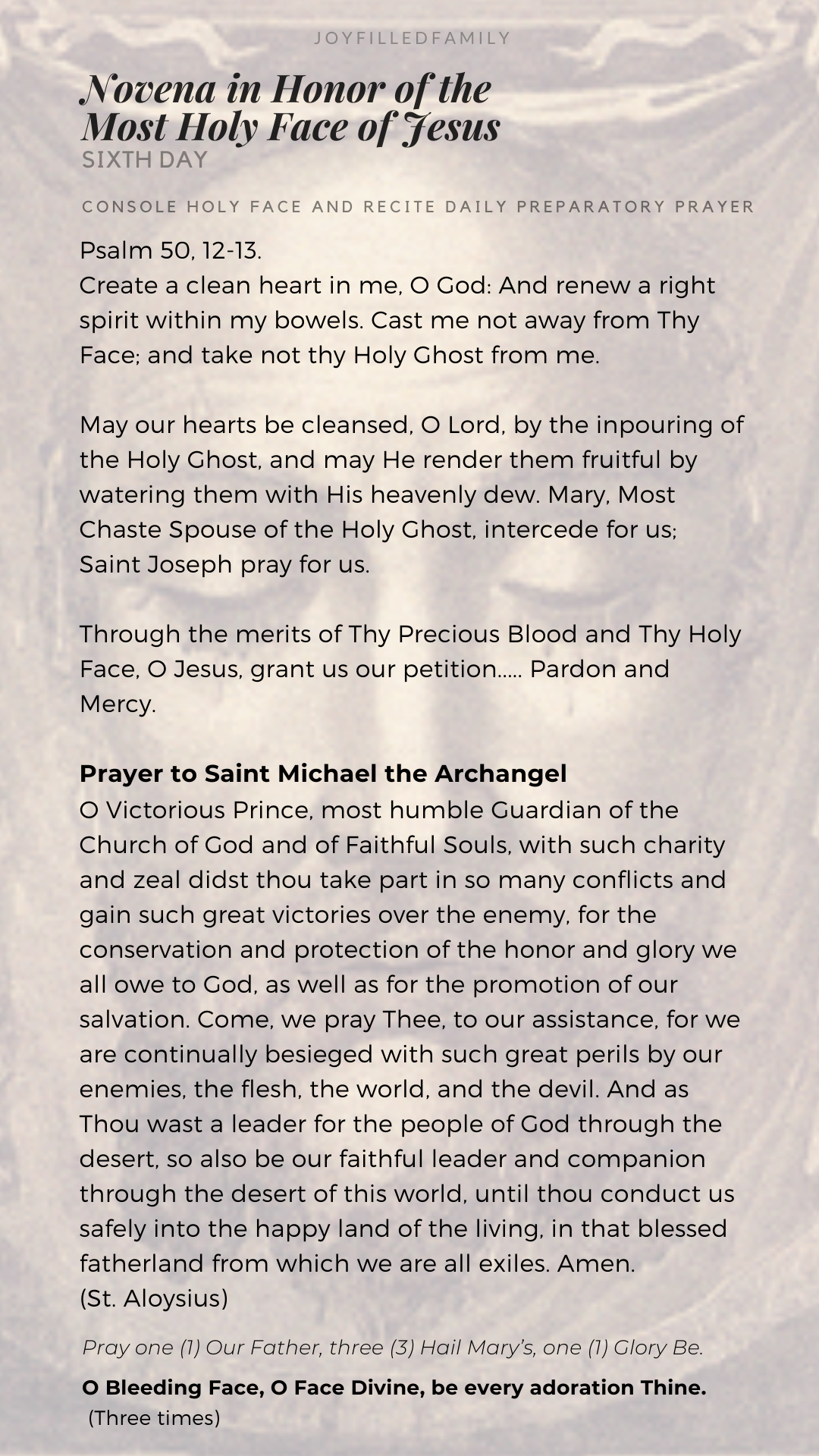
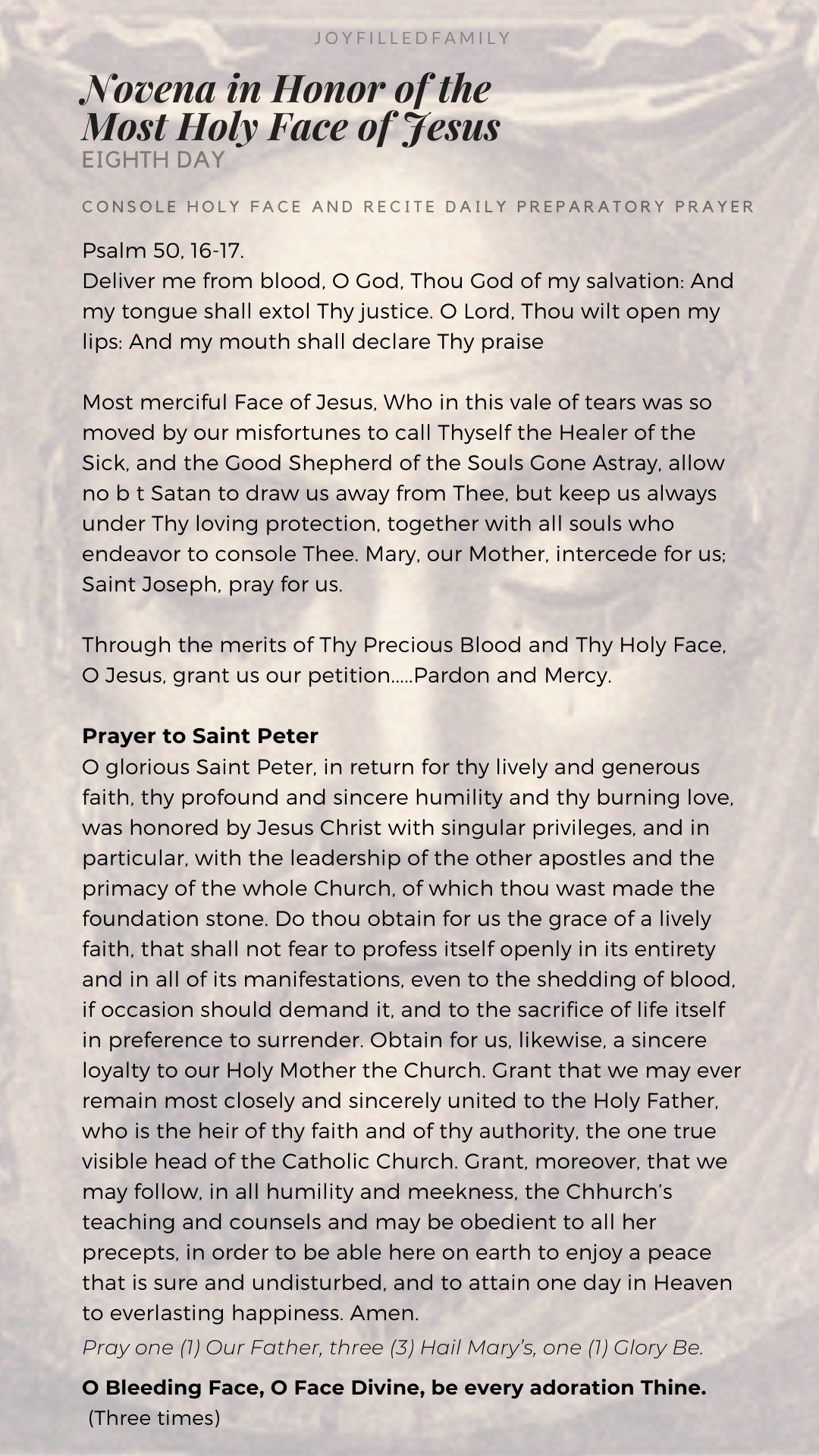
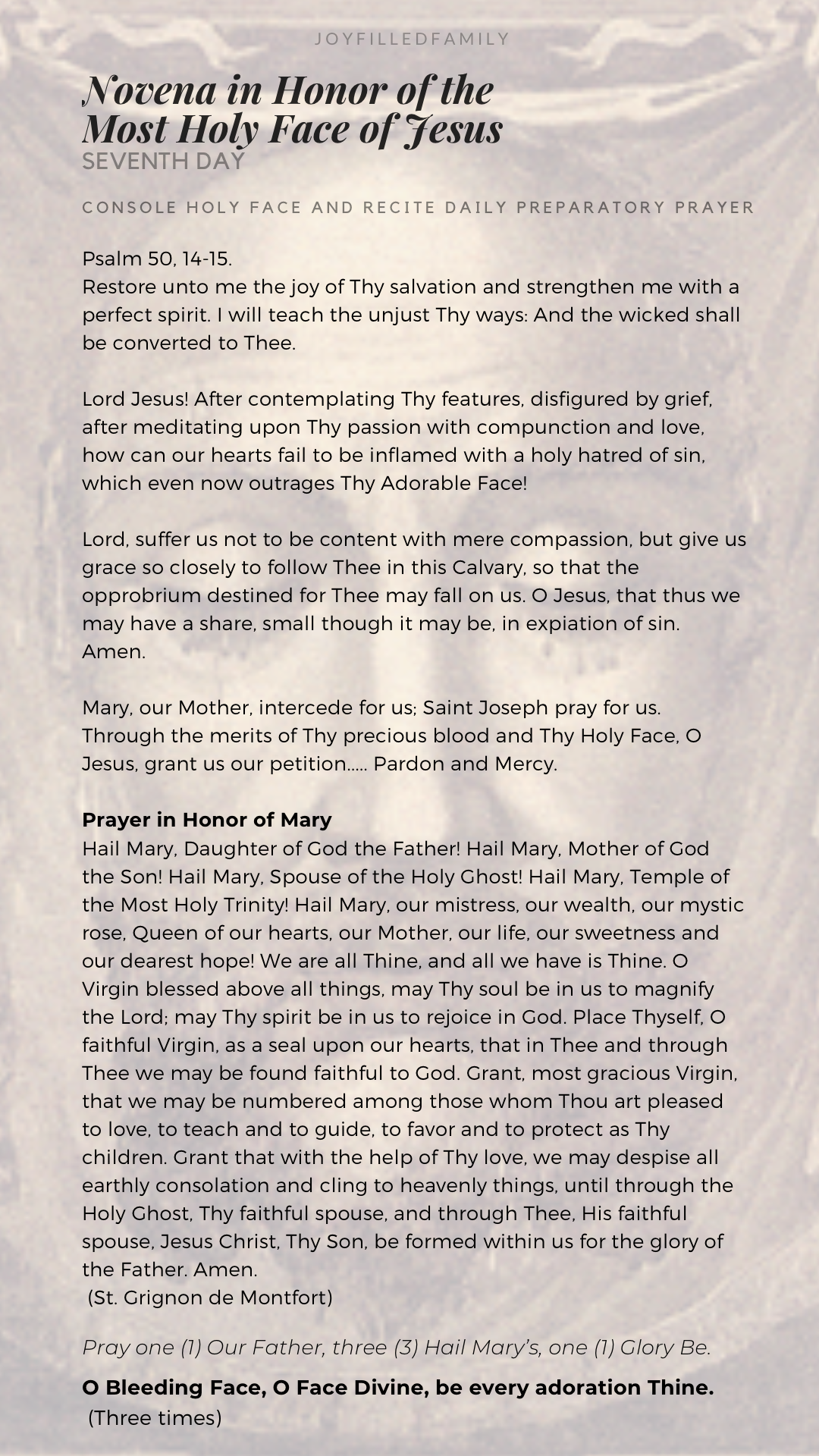
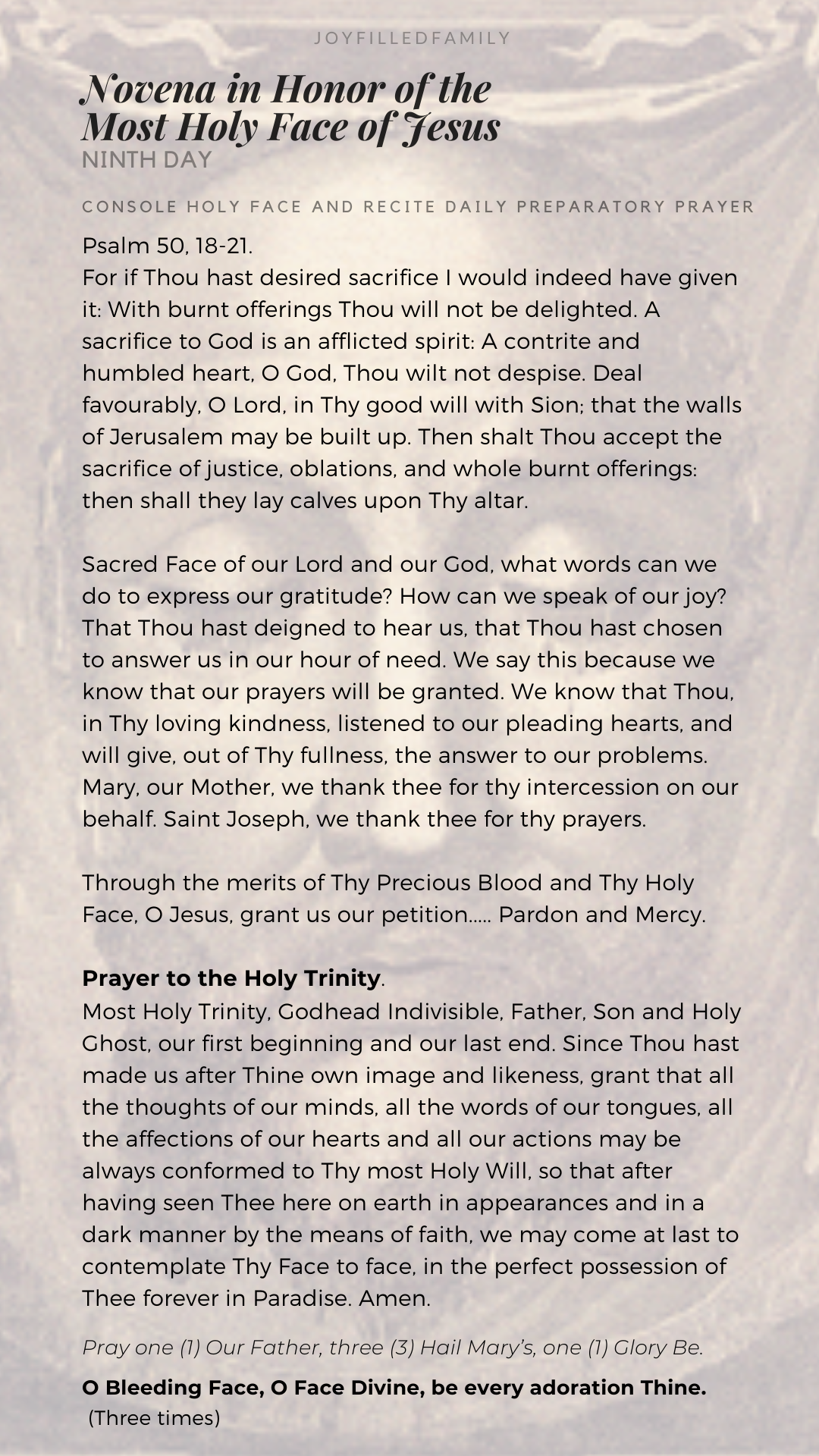
  • Novena in Honor of the Most Holy Face of Jesus – Fatima.org
  • Revelations of the Holy Face of Jesus – John Vennari
  • Holy Face of Jesus Prayer Card – Fatima.org
  • Blessed Medal of the Holy Face
  • Enroll in the Archconfraternity of the Holy Face of Jesus


Prayer of St. Therese of Lisieux to the Holy Face of Jesus

O Jesus, Who in Thy bitter Passion didst become “the most abject of men, a man of sorrows,” I venerate Thy Sacred Face whereon there once did shine the beauty and sweetness of the Godhead; but now it has become for me as if it were the face of a leper! Nevertheless, under those disfigured features, I recognize Thy infinite Love and I am consumed with with the desire to love Thee and make Thee loved by all men. The tears which well abundantly in Thy sacred eyes appear to me as so many precious pearls that I love to gather up, in order to purchase the souls of poor sinners by means of their infinite value. O Jesus, Whose adorable Face ravishes my heart, I implore Thee to fix deep within me Thy Divine Image and to set me on fire with Thy Love, that I may be found worthy to come to the contemplation of Thy glorious Face in Heaven. Amen.
An Account of Your Time

February 15, 2021 by Lena {JOYfilledfamily} Filed Under: Lent, MROL, Rule of Life Leave a Comment

I meditate on the last four things, regularly and most of the time different promptings are placed on my heart.  But there is one that is steadfast, the account that I will have to give for my time.  

Make no mistake about it — I do not have it all together!  I have many responsibilities as a homeschooling mama of 7 with a married daughter, health ailments, bouts of overwhelmedness that lead to a paralyzation of sorts, my battle of the flesh, and more…so much more.

I give thanks for it all because it brings me to my knees and makes me more dependent on God.  Yet, I know that I must do better with the time that continues to be gifted to me.  

Do you meditate regularly on the Last Four Things? Are you able to give an honest & favorable account of your time?

These necessary reflections lead to my final suggestion for #comingtotradition this Lent (always).

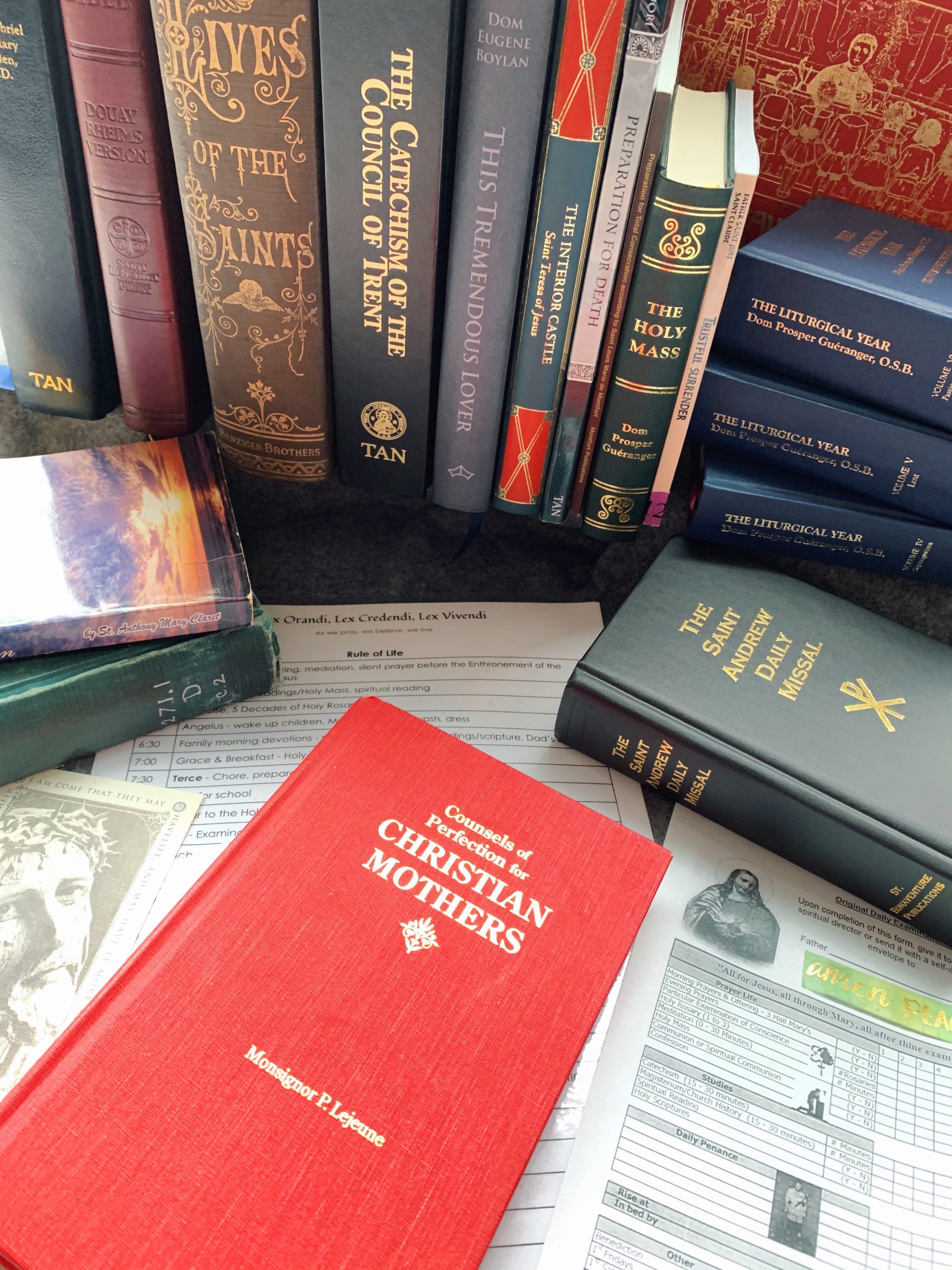
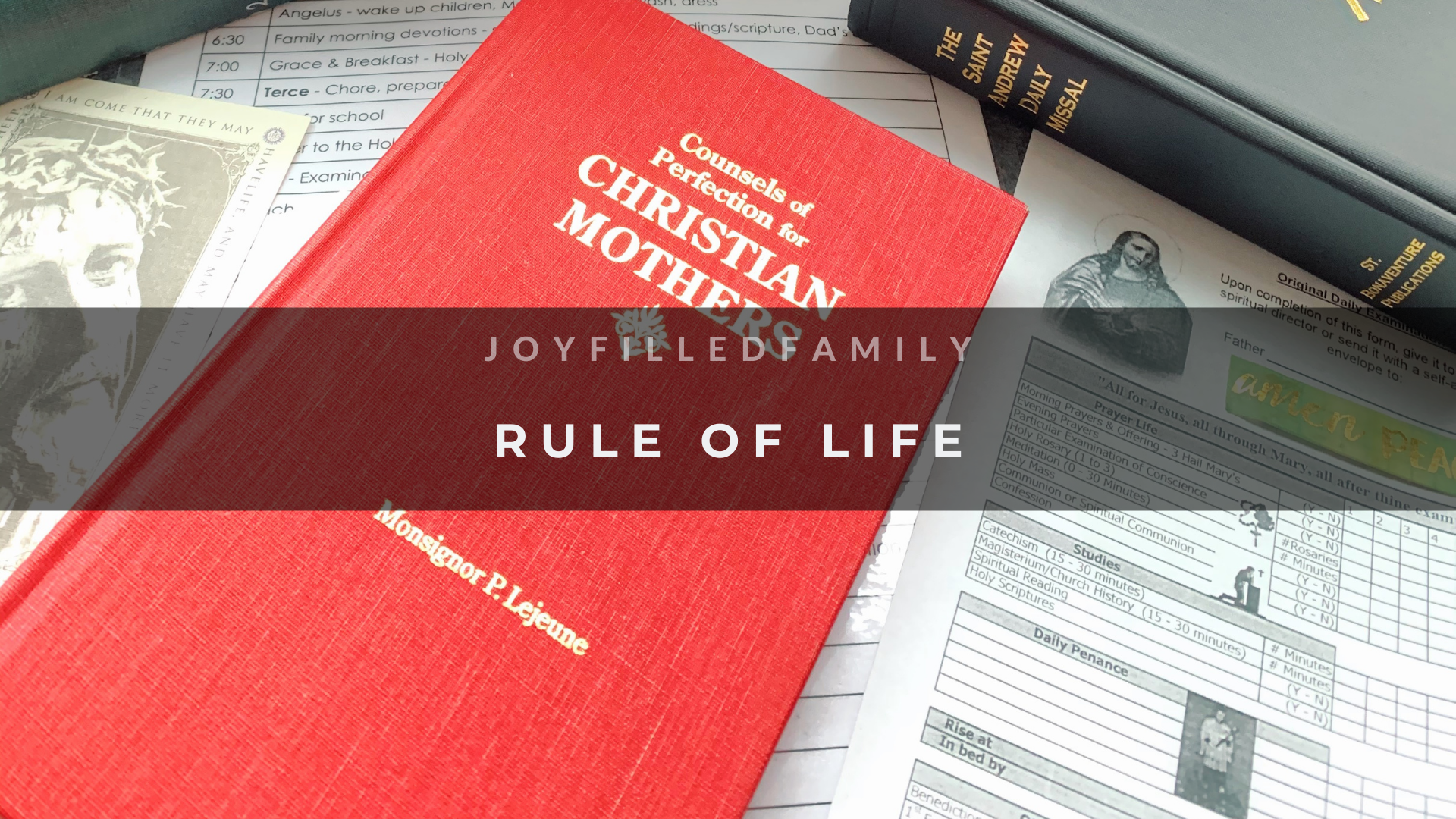
The Rule of Life (ROL) is a must!  It’s not something new or something reserved for religious orders.  It’s for all!  

All the saints and many holy laities will speak to their ROL.  I’ll leave you with the following direction from Monsignor P. Lejeune in his Counsels of Perfection for CHRISTIAN MOTHERS.  

“You must have a (written) rule, otherwise your life will be squandered in a thousand follies and futilities…

…unless you are bound by a rule, your lives will drift unceasingly; …float along guided only by caprice, and the sense of duty will be almost entirely lost. In that case it is your own will that you have followed…and not the will of God.

…what a sad life is that which is not regulated. It is a life which, from a worldly standpoint, may have a certain respectability, but which, from the supernatural side is a mere farce. Will you tell me what that day weighs, in the divine balance, during which you follow your own will with never a thought for the will of God?

I have no hesitancy in saying that a life without a rule, is a life wherein the supernatural, that is, the part of God, has little or no importance.

…first determine the hour of your rising and retiring…place in your rule: morning and evening prayers should be said kneeling…there is hardly one among you who cannot spend a quarter of an hour each day in spiritual reading. Those of you who have the time, and who are unwilling to be satisfied with merely earthly piety, ought to make a meditation every morning, and also to attend Holy Mass each day, or at least several times during the week.

Give your attention, above all to the most important duties. I mean those of your interior, and station in life. Then attend to the less important duties; the remainder of your time may be spent on duties of pure decorum–if any more time remains.

Since your rule has been made for God, it is for God that it should be followed out. This rule is the expression of the will of God in your regard, which must of necessity be very dear to you. Bring, then, to the accomplishment of each of these articles, a true spirit of faith, and a truly supernatural motive, and place yourselves a hundred times daily under the eye of God, saying frequently to Him and love: “All for you, My God.”

Let us meditate on the Four Last Things through Lent and tend to our Rule of Life in efforts to properly order our days throughout the year for the time that God gifts us!

You can find more, here or here.

  • Counsels of Perfection for CHRISTIAN MOTHERS PDF 
  • Counsels of Perfection for CHRISTIAN MOTHERS MP3
    • COUNSELS OF PERFECTION FOR CHRISTIAN MOTHERS.  Father P. Lejuene explains in very practical ways what real Christian Perfection is.  He goes through the various Spiritual Exercises and explains how to derive the most benefit from them.  He addresses his book to Christian Mothers, but it is very beneficial to all.  Imprimatur 1913.  Three Tapes read by MH.  
    • T1S1 Listen Download
    • T2S1 Listen Download
    • T2S2 Listen Download
    • T3S1 Listen Download
    • T3S2 Listen Download

Divine Office

February 15, 2021 by Lena {JOYfilledfamily} Filed Under: Divine Office, Roman Breviary Leave a Comment

The Church structured her official prayer around a framework of the psalms prayed eight times a day so that within one week, all 150 psalms are said.

As laity, we are not required to pray all the hours of the Divine Office. But it is highly recommended to do more as we’re able, starting with Prime & Compline.

Prime is the perfect Morning Prayer, Compline the perfect night prayer, and Sext is for the middle of the day.

This is better than private prayer; it’s the prayer of the entire Mystical Body because you pray with one heart with the millions of other clerics, religious and laymen around the world who have prayed and are praying these exact same prayers, AND because you adopt the intentions of the psalmist as you pray.

Below are a few options for praying the Divine Office.


The Roman Breviary (3 volumes)

$350-$380

Reprint of the 1961 Roman Breviary in English and Latin. Traditional Roman Breviary, in the form approved by Pope Benedict XVI in Summorum Pontificum. Full texts of national feasts for the USA included in the Proper of Saints. National feasts for England & Wales, Scotland and Australasia indicated in the Proper on the dates they occur. Extracts from the Rituale Romanum (including the most commonly used litanies) given in Latin with English rubrics in an Appendix. 

The Monastic Diurnal

$70-90

A republication of the 1963 edition of the Benedictine hours of Prime, Lauds, Terce, Sext, None, Vespers and Compline, in Latin and English for all the feasts and seasons in the traditional Benedictine calendar. The Latin text is the traditional Vulgate psalter

Breviarium Meum App
FREE

This app allows one to pray the traditional (1962) Latin breviary of the Catholic Church from anywhere (via your iPhone, iPod touch, or iPad).  

You simply have to select the hour to pray, and begin. 

You can download the texts up to a week in advance, so you can pray even when you don’t have a network connection. 

This is handy even if you have a printed Breviary so you can travel light.  

The app makes praying the Divine Office easy — no flipping requires.  

There are other prayers & blessing and convenient features of this app.  

If you don’t understand the Latin, you can display a parallel English translation.

Those more familiar with the breviary, and especially priests, will be pleased to see we’ve included a selection of prayers and blessings in Latin, such as are normally found in the appendix of a breviary.

The Little Office of the Blessed Virgin Mary 

$20-$30

This is a wonderful devotion.  It is what I prayed in my earliest years of motherhood.  

It is a shorter form of the Divine Office in honor of the Blessed Virgin Mary. 

It has been used for centuries as the Church’s daily liturgical prayer to Our Lady, by Priests, religious, and the laity throughout the centuries. 

“Lay people used to flock to the great Cathedrals to publicly recite The Little Office during the Middle Ages, and during the great persecution, when the practice of the Catholic Faith was illegal in Great Britain, Bishop Challoner commended The Little Office to his flock.

Through its psalms, antiphons, readings, responsorials, and prayers the Little Office stresses the role Our Lady played in salvation history, and how through her fiat the divine Word took flesh in her womb and achieved salvation for us all; and how Our Lord granted her the first fruits of the general resurrection in her holy and glorious assumption.

All Catholics are called to a consistent prayer life. For those who do not feel called to recite the Divine Office, but still wish to participate in the liturgical prayer of the Church, or for those who have a particular devotion to the holy Mother of God, there is no finer form of prayer than the Little Office of the Blessed Virgin Mary.”

  • « Previous Page
  • 1
  • …
  • 49
  • 50
  • 51
  • 52
  • 53
  • …
  • 233
  • Next Page »

Hi! I'm Lena, mama of JOYfilledfamily.
We are a traditional Catholic family striving to live for Jesus Christ in everything we do. We pray to completely surrender our will to His and to become His servants. Our mission of this blog is to share our JOY.

This blog serves as a journal of us making good memories, living the liturgical year, and our spiritual journey.

Subscribe to our Newsletter

  • Home
  • About
  • Blog

Copyright © 2026 swank WordPress Theme <a PDCD