• Email
  • Facebook
  • Instagram
  • Pinterest
share our JOY

JOY{filled}family

striving to radiate Him always

  • Home
  • Blog
  • Brown Scapular
  • Liturgical Calendars & Planners
  • Wellness
    • Essential Oils
    • Fitness
    • Nutrition
  • Homeschool
  • Sacraments
    • Baptism
    • First Communion
    • Confirmation

Fifth Sunday After Pentecost

July 10, 2022 by Lena {JOYfilledfamily} Filed Under: Archbishop Lefebvre, Dom Gaspar Lefebvre, Fr. Leonard Goffine, The Church’s Year, Time After Pentecost Leave a Comment

INSTRUCTION ON THE FIFTH SUNDAY AFTER PENTECOST

At the Introit implore God’s assistance and say, with the priest:

INTROIT Hear, O Lord, my voice with which I have cried to thee: be thou my helper, forsake me not, nor do Thou despise me, O god, my Savior. (Ps. XXVI.) The Lord is my light and my salvation; whom shall I fear? Glory be to the Father, etc.

COLLECT O God, who host prepared invisible good things for those that love Thee: pour into our hearts such a sense of Thy love, that we, loving Thee in all, and above all, may obtain Thy promises, which exceed all out desire: Through etc.

EPISTLE (I Peter III. 8-15.) Dearly beloved, Be ye all of one mind, having compassion one of another, being lovers of the brotherhood, merciful, modest, humble: not rendering evil for evil, nor railing for railing, but contrariwise, blessing: for unto this you are called; that you may inherit a blessing. For he that will love life, and see good days, let him refrain his tongue from evil, and his lips that they speak no guile. Let him decline from evil, and do good: let him seek?after peace, and, pursue it: because the eyes of the Lord are upon the just, and his ears unto their. prayers: but the countenance of the Lord upon them that do evil, things. And, who is he that can, hurt you, if you: be zealous of good? But if also you suffer any thing for, justice’ sake, blessed are ye. And be not afraid of their fear, and be not troubled: but sanctify the Lord Christ, in your hearts.

How can and how should we sanctify the Lord in our hearts?

By practising those virtues which Peter here recommends, and which he so exactly describes; for thereby we become true disciples of Christ, honor Him and edify others, who by our good example are led to admire Christianity, and to become His followers. Moreover, we thus render ourselves more worthy of God’s grace and protection, so that if for justice’ sake we are persecuted by, wicked men, we need not fear, because God is for us and will reward us with eternal happiness.

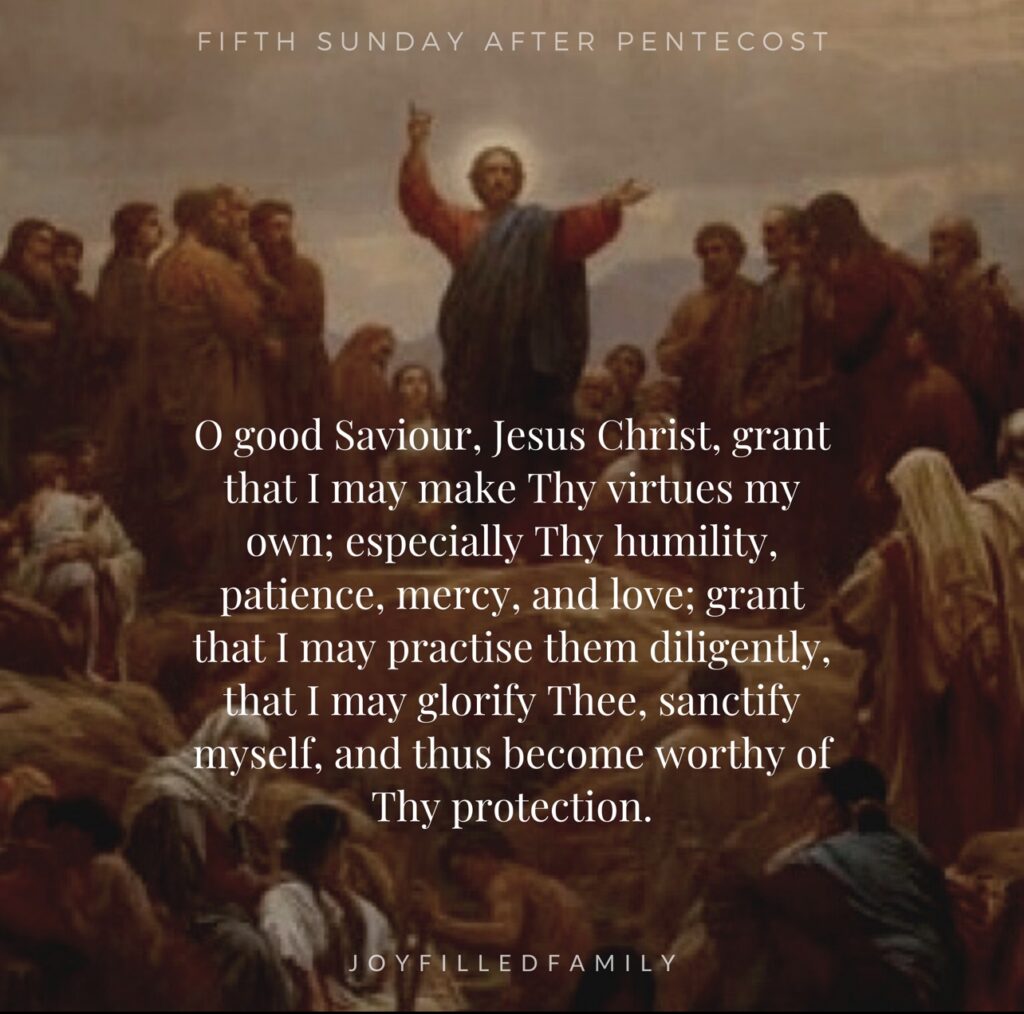
ASPIRATION O good Saviour, Jesus Christ, grant that I may make Thy virtues my own; especially Thy humility, patience, mercy, and love; grant that I may practise them diligently, that I may glorify Thee, sanctify myself, and thus become worthy of Thy protection.

GOSPEL (Matt. V. 20-24.) At that time, Jesus said to his disciples: Except your justice abound more than that of the Scribesand Pharisees, you shall not enter into the kingdom of heaven. You have heard that it was said to them of old: Thou shalt not kill: and whosoever shall kill, shall be in danger of the judgment. But I say to you, that whosoever is angry with his brother, shall be in danger of the judgment. And whosoever shall say to his brother, Raca, shall be in danger of the council. And whosoever shall say, Thou fool, shall be in danger of hell fire. If therefore, thou bring thy gift at the altar, and there thou remember that thy brother bath anything against thee, leave there thy offering befog a the altar, and go first to be reconciled to thy brother: and then coming, thou shaft offer thy gift.

In what did the justice of the Pharisees consist?

In external works of piety, in the avoidance of such gross vices as could not be concealed, and would have brought them to shame and disgrace. But in their hearts these Pharisees cherished evil, corrupt inclinations and desires, pride, envy, avarice, and studied malice and vengeance. Jesus, therefore, called them hypocrites, whitened sepulchres, and St. John calls them a brood of vipers. True Justice consists not only in external works of piety, that is, devotional works, but especially in a pure, sincere, self sacrificing feeling towards God and man; without this all works, however good, are only a shell without a kernel.

How are we to understand that which Christ here says of anger and abusive words?

The meaning of Christ’s words are:. You have heard that murder was forbidden to your fathers in the desert, and that the murderer had to be given up to justice: but I say to you, whoever becomes angry with his neighbor, shall be in danger of divine judgment, and he who with abusive words, such as Raca, Villain, gives vent to his anger, using expressions of contempt and insult, as fool, scoundrel, profligate, wretch, is more liable to punishment. These degrees of anger are punished in different ways by God.

Is anger always sinful?

No, anger is sinful only when we wish or actually inflict some evil to the body, property, or honor of our neighbor; when we make use of such insulting and abusive words as injure his character, provoke and irritate him. If we become angry at the vices and crimes of others, when our office or the duties of our station demand that we watch over the conduct of those under our care, to punish and correct them, (as in the case of parents, teachers, and superiors) then anger is no sin. When one through pure love of God, becomes irritated at the sins and vices of his fellowmen, like King David, or if one urged to wrong, repels the tempter with indignation, this is even a holy anger. Thus St. Gregory Says; “It is to be understood that anger created by impatience is a very different thing from anger produced by a zeal for justice. The one is caused by vice, the other by virtue.” He, then, who becomes angry for justice’ sake, commits no sin, but his conduct is holy and praiseworthy, for even our Lord was angry at those who bought and sold in the temple, (John II. 15.) Paul at the magician Elymas, (Acts XIII. 8.) and Peter at the deceit of Ananias and Saphira. (Acts V. 3.) Anger, then, to be without sin, must proceed from true zeal for God’s honor and the salvation of souls, by which we seek to prevent others from sin, and to make them better. Even in this respect, we must be careful to allow our anger no control over our reason, but to use it merely as a means of doing good, for we are often apt to take the sting of anger for holy zeal, when it is really nothing but egotism and ambition.

Why must we first be reconciled with our neighbor before bringing an offering to God, or undertaking any good work?

Because no offering or other good work can be pleasing to God, while we live in enmity, hatred, and strife with our neighbor; for by living thus we act altogether contrary to God’s will. This should be remembered by all Christians, who go to confession and holy Communion, without forgiving those who have offended them, and asking pardon of those whom they have injured. These must know that instead of receiving absolution for their sins, they by an invalid confession are guilty of another sin, and eat their own judgment in holy Communion.

How should reconciliation be made with our neighbor?

With promptness, because the apostle says: Let not the sun go down upon your anger. (Eph. IV. 26.) But if the person you have offended is absent, says St. Augustine, and you cannot easily meet him, you are bound to be reconciled to him interiorly, that is, to humble yourself before God, and ask His forgiveness, making the firm resolution to be reconciled to your enemy as soon as possible. If he is accessible, go to him, and ask his forgiveness; if he has offended you, forgive him from your heart. The reconciliation should be sincere, for God sees into the heart; it should also be permanent, for if it is not lasting, it may be questioned if it was ever sincere. On account of this command of Christ to be reconciled to our enemies before bringing sacrifice, it was the custom in ancient times that the faithful gave. the kiss of peace to one another at the sacrifice of Mass, before Communion, as even to this day do the priests and deacons, by which those who are present, are admonished to love one another with holy love, and to be perfectly reconciled with their enemies, before Communion.

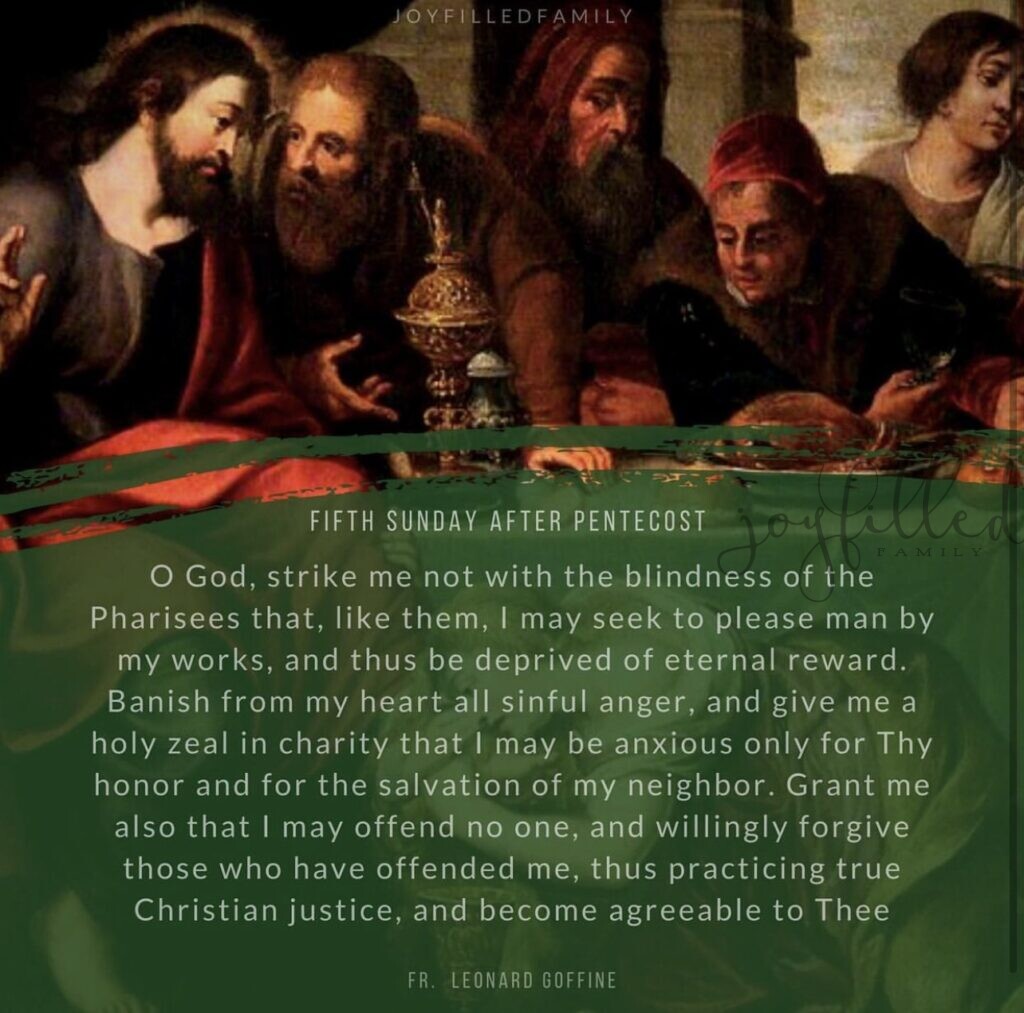
ASPIRATION O God, strike me not with the blindness of the Pharisees that, like them, I may seek to please man by my works, and thus be deprived of eternal reward. Banish from my heart all sinful anger, and give me a holy zeal in charity that I may be anxious only for Thy honor and for the salvation of my neighbor. Grant me also that I may offend no one, and willingly forgive those who have offended me, thus practicing true Christian justice, and become agreeable to Thee.

MEANS OF PREVENTING ANGER

The first and most effectual preventive is humility; for as among the proud there are always quarrels and contentions, (Prov. XIII. 10.) so among the humble reign peace, meekness and patience. To be humble, meek, and patient, we must frequently bring before our minds the example of Christ who did not sin, neither was guile found in His mouth, (I Peter II. 22.) yet suffered great contradictions, many persecutions, scoffs and sneers from sinners, without threatening vengeance to any one for all He suffered; He say’s to us in truth: Learn of me, because I am meek and humble of heart. (Matt. XI. Z9.) A very good preventive of anger is to think over in the morning what causes will be likely to draw us into anger at any time during the day, and to arm ourselves against it by a firm resolution to bear all with patience and silence; and when afterwards anything unpleasant occurs, let us think, “What will I effect by my anger? Can I thereby make things better? Will I not even make myself ridiculous and injure my health?” (for experience as well as holy Scripture teaches, that anger shortens life.) (Eccles. XXX. 26.) Finally, the most necessary preventive of anger is fervent prayer to God for the grace of meekness and patience, for although it seems difficult and almost impossible to our nature to be patient, by the grace of God it becomes not only possible, but even easy.

INSTRUCTION ON SACRIFICE
Offer thy gift. (Matt. V. 24.)

In its wider and more universal sense sacrifice comprehends all religious actions by which a rational being; presents himself to God, to be united with Him; and in this sense prayer, praising God, a contrite heart, charity to others, every good work, and observance of God’s commandments is a sacrifice. Thus the Holy Scriptures say: Offer up the sacrifice of justice and trust in the Lord. (Fs. IV. 6.) Offer to God the sacrifice of praise. (Ps. XLIX. iq..) Sacrifice to God is an afflicted spirit; a contrite and humble heart, O God, thou wilt not despise. (Ps. 1. 19.) It is a wholesome sacrifice to take heed to the commandments, and to depart from, all iniquity. (Ecclus. XXXV. 2.) “Therefore,” says St. Augustine, “every good work which is united in sanctity with God, is a true sacrifice, because it refers to the end of all good, to God, by whom we can be truly happy.” As often, then, as you humble yourself in prayer before the majesty of God, when you give yourself up to God, and when you make your will subject to His divine will, you bring a sacrifice to God; as often as you punish your body by continency, and your senses by mortification, you bring a sacrifice to God, because you offer them as instruments of justice; (Rom. VI. 13.) as often as you subdue the evil concupiscence of the flesh, the perverted inclinations of your soul, deny yourself any worldly pleasure for the love of God, you bring a sacrifice to God. Such sacrifices you should daily offer to God; without which all others have no value and do not please God, such as these you can make every moment, when you think, speak, and act all for the love, of God.Strive then, Christian soul, to offer these pleasing sacrifices to God, the supreme Lord, and as you thus glorify Him, so will He one day reward you with unutterable glory.

Fifth Sunday after Pentecost
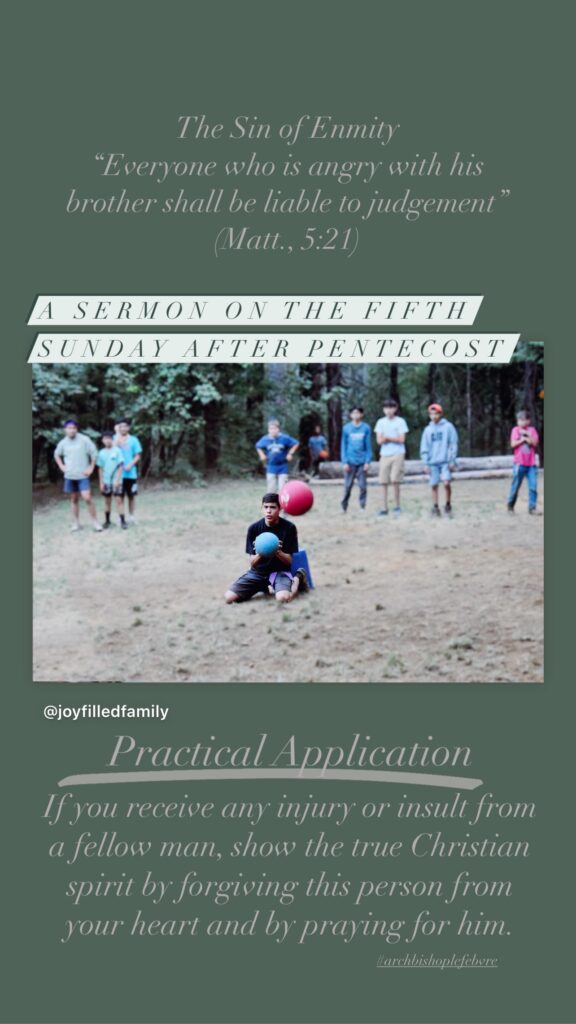
The Sin of Enmity
“Everyone who is angry with his brother shall be liable to judgement”
(Matt., 5:21)


The moral law proclaimed by Jesus Christ is based on the commandment of love: “Thou shall love the Lord thy God with thy whole heart and soul… Thou shalt love thy neighbour as thyself.” Hence, it is a serious sin to disobey this commandment, not only with reference to the obligation to love God but also with reference to the obligation to love one’s neighbour. This is the significance of Our Lord’s words in today’s Gospel: “Everyone who is angry with his brother shall be liable to judgement.”
Of course, these words must be interpreted properly. Our Lord does not condemn just anger.

He Himself manifested just anger when He drove the buyers and sellers out of the temple. If some modern parents were more inclined to show just anger toward their children when they misbehave, there would be less juvenile delinquency in our country. Again, that type of anger which consists in a brief manifestation of impatience or a slight show of temper which is uncalled for is not a serious sin, though people should strive to restrain this also.
But the type of anger toward our fellow men which Christ condemned so severely is that which consists in lasting, deep hatred. It is most unfortunate that many persons yield to this form of anger, which we call enmity. There are cases of enmity that lasts for years–sometimes between near relatives. People who meet daily hate each other so viciously that they will speak only in so far as is strictly necessary. They will strive to do each other harm, they will rejoice in each other’s misfortunes. How can such persons call themselves Christians, followers of the gentle and forgiving Jesus Christ? How can they say with sincerity: “Forgive us our trespasses as we forgive those who trespass against us?”

It is only natural that at times we should feel a sense of resentment when we are treated unkindly or unjustly by others, and we are not forbidden to manifest our feelings and demand our just rights. But this must be done without hatred of soul. When there is reason to believe that the person who offended us was not aware of what he was doing, we should be sufficiently magnanimous to forget the matter. Often the source of the resentment that divides people for years is a slight incident, not sufficiently important to arouse good Christians to a single burst of impatience.

Practical Application
If you receive any injury or insult from a fellow man, show the true Christian spirit by forgiving this person from your heart and by praying for him.

– Archbishop Lefebvre

Liturgy: Fifth Sunday after Pentecost – Be Reconciled to Thy Brother

“If thou offer thy gift at the altar, and thou remember that thy brother hath anything against thee, leave there thy offering before the altar, and go first to be reconciled to thy brother, and then coming thou shall offer thy gift, alleluia”

This Sunday’s liturgy is concerned with the forgiveness of injuries, with brotherly reconciliation. It takes its cue from a passage of one of the epistles of St. Peter the Apostle, whose feast is kept this month, and from a portion of the Sermon on the Mount, recorded in St. Matthew’s Gospel.

Jesus condemns not only the external act of murder, but also the interior motive of anger which leads us to it, for in this is the desire of ridding ourselves of our neighbor. “This anger has three degrees,” says St. Augustine. The first is when one retains in the heart the disturbance that has been created there (Postcommunion), the second when one expresses his indignation, and thirdly, when one openly reviles him who caused it (Epistle). Corresponding to these three degrees are three punishments of an increasingly grave character. “The true sacrifice is reconciliation with our brother,” says St. John Chrysostom. “The first sacrifice necessary to offer to God,” adds Bossuet, “is a heart free from all coldness and unfriendliness towards one’s brother” (Meditations, 14th day).

The best way to come to the possession of charity is to love God, to desire the good things of eternity (Collect) and the possession of happiness in heavenly places, where entrance is only to be had through the continual practice of this fair virtue. “One thing have I asked of the Lord, and this will I seek after; that I may dwell in the house of the Lord all the days of my life” (Communion).

– Dom Gaspar Lefebvre, OSB, 1945

Fourth of July

July 4, 2022 by Lena {JOYfilledfamily} Filed Under: 07 July, July 4th Leave a Comment

The Fourth of July is more than just a day to celebrate. We reflect, pray in thanksgiving, and petition Our Lord.

➕
As, externally, the specter of a World War III appears menacingly on the horizon and, internally, we see the ghosts of recession and civil unrest haunting the lives of Americans, we realize that the independence of our nation is in jeopardy.

When we see the extremes of immorality, fraud and corruption that our society is reaching, directed by its political leaders, we wonder whether God is starting to apply His Justice and punish these crimes as well as so many others the U.S. has committed in its History.

In this case, those true Americans who have always loved our country for the vocation it received from Divine Providence should raise their eyes and their hearts to Heaven and ask Our Lord Jesus Christ, through the powerful intercession of His Most Holy Mother, to have mercy on our country and not allow this vocation to be lost.

May She protect the authentic patriots who fight for the Only True Faith and give them the courage, wisdom and material means to save our country from the external and internal enemies who are at the service of Communism and its inspirer, the Devil.

These are our wishes and prayers on this twilight of Western Civilization. —TIA

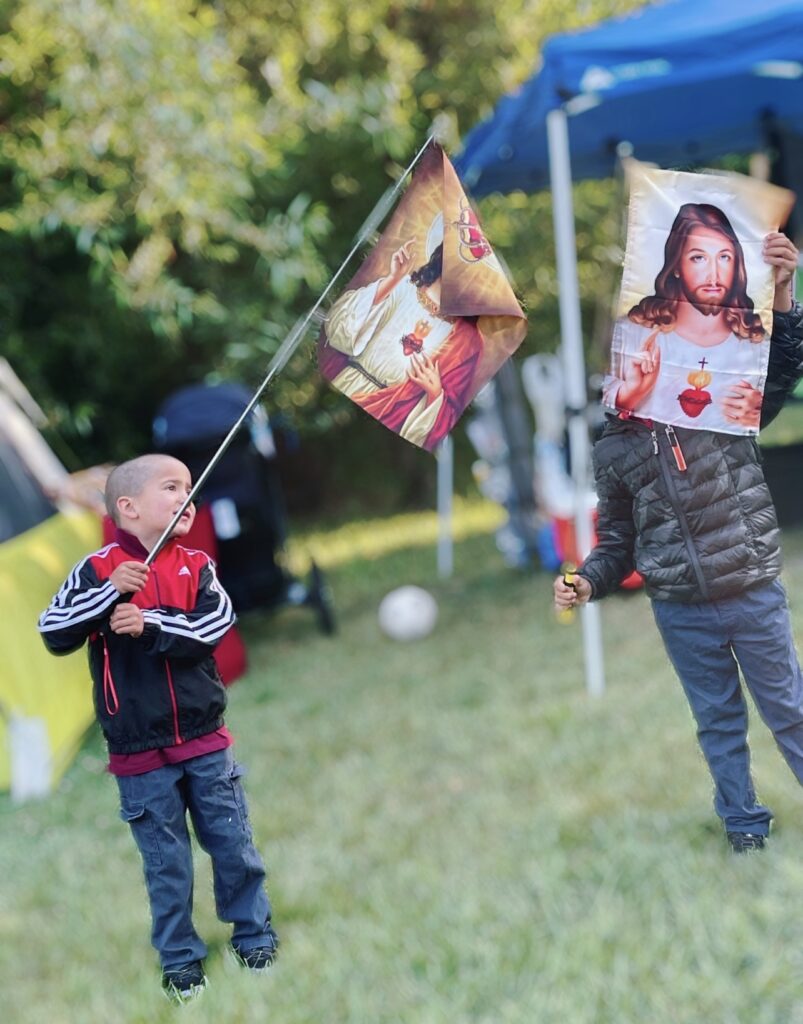
Our Lady of Bethlehem Pulgrimage going through the city streets with two young boys carrying flags which represent our beliefs — God & Country. Further up, two teen boys carry our banners of Our Lady, to whom we entrust it all to.

A Historic Opportunity

June 27, 2022 by Lena {JOYfilledfamily} Filed Under: 06 June, Archbishop Vigano, Libertas Leave a Comment

On the day (6.24.22) on which the Church celebrates the Feast of the Most Sacred Heart of Jesus, and also the Birth of Saint John the Baptist, who “leapt in the womb” of his mother Elizabeth (Luke 1:41), the Lord has desired to grant to the United States of America the possibility of redeeming itself, ensuring that its man-made laws are coherent with the natural law impressed by the Creator in the heart of every person.

And this is the essential basis that is necessary for a Nation to be blessed by Heaven. One Nation under God.

Our two youngest children ready to make their 5th & 7th pilgrimage.
A few of our men of all ages leading #olbpilgrimage in reparation for our sins and that of our country & world, all for the Sacred Heart of Jesus through the Immaculate Heart of Mary in union with St. Joseph and all the saints who have walked the hallowed ground we walked.

I hope that the American people will know how to treasure this historic opportunity, and that they will understand that

there cannot be justice anywhere the right to abortion is recognized,

there cannot be peace and prosperity in a society that massacres its own children, and

there cannot be liberty wherever license, vice and pride subvert God’s Commandments.

Read the full letter by Archbishop Vigano, here.

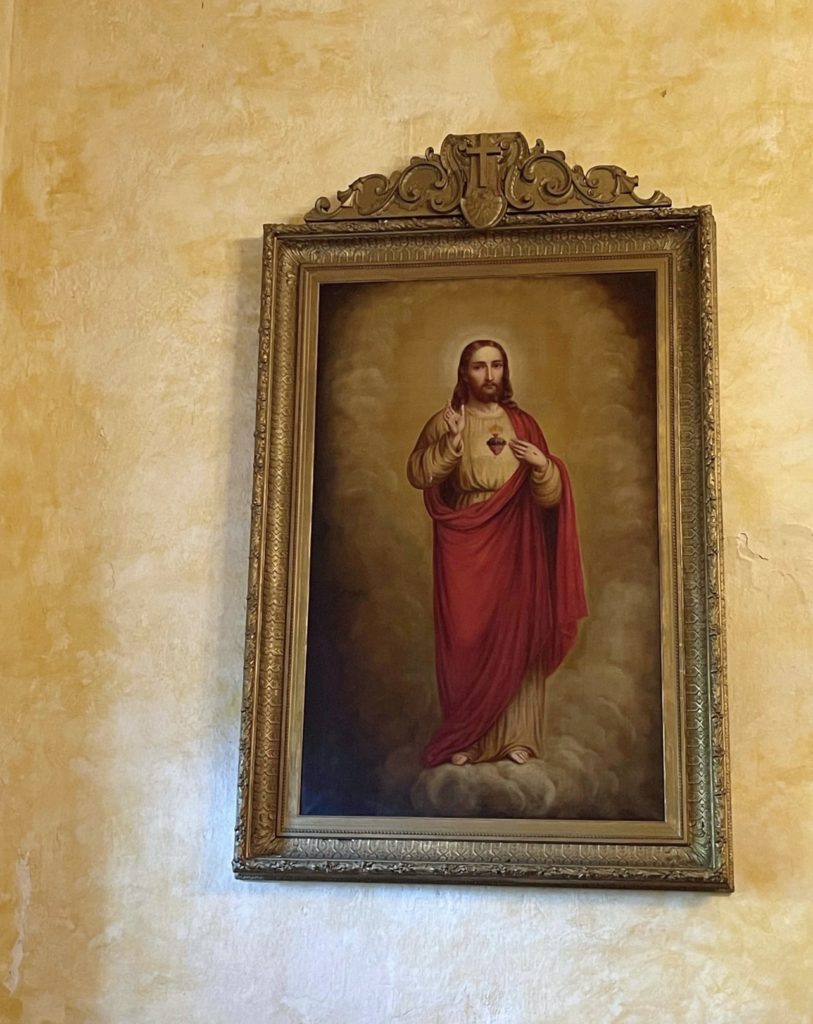
Sacred Heart of Jesus

June 24, 2022 by Lena {JOYfilledfamily} Filed Under: 06 June Saints, Fr. Leonard Goffine, Sacred Heart of Jesus, The Church’s Year Leave a Comment

O Jesus, most worthy of love! I gratefully offer Thee my heart in compensation for my great unfaithfulness, and consecrate myself wholly and forever to Thy service, purposing, with Thy grace, no more to offend Thee. Amen. – An act of resignation to the Sacred Heart of Jesus

➕

The most sacred devotion, for by it man venerates the holiest sentiments and emotions of the Heart of Jesus, by which He has sanctified the Church, glorified His Heavenly Father, and presented Himself to us as the perfect model of the most exalted sanctity.

The oldest devotion of the holy Church, which, instructed by the great St. Paul, has at all times recognized the munificence of the Sacred Heart of Jesus.

The most approved devotion, for the Holy Scriptures everywhere exhort us to renew our heart by changing our lives, rendering them contrite by true penance, inflaming them with the fire of divine love, and adorning them by the exercise of all virtue. Therefore a new heart is promised on which to remodel our Heart. That Heart can be no other than the Heart of Jesus, which is given us as an example of all virtue, and which we must imitate if we wish to be saved.

The most perfect devotion, for it is the: source of all other devotions; the Heart of Jesus is that inexhaustible treasury from which the Mother of God and all the saints have drawn their graces, their life, their virtues, and all spiritual blessings. Filled from this treasury, other servants of God have instituted different devotions.

The most useful devotion, for in it we have the Fountain of Life itself before our eyes, from which we can draw directly, and increase in all virtue by adoring this divine Heart, meditating on its holy desires, and seeking to imitate it.

The devotion most pleasing to Christ, for by it we honor God, as Christ requires, in spirit and in truth, because we adore the interior power of God, seeking to please His heart.

Finally; the most necessary devotion, for its object is that we become intimately connected as members with Jesus, our Head, that we live by and according to His spirit, and have only one heart and soul with Christ. #venerablePSimonGourdan

Instruction on the Feast of the Sacred Heart, Fr. Leonard Goffine, The Church’s Year

The Introit of this day’s Mass reads:

He will have mercy according to the multitude of his mercies: for he hath not willingly afflicted nor cast off the children of men: the Lord is good to them that hope in him, to the soul that seeketh him. Alleluia, alleluia. (Lament. 3:32, 33, 35) The mercies of the Lord I will sing for ever: to generation and generation. (Ps. 88:1). Glory, etc. 

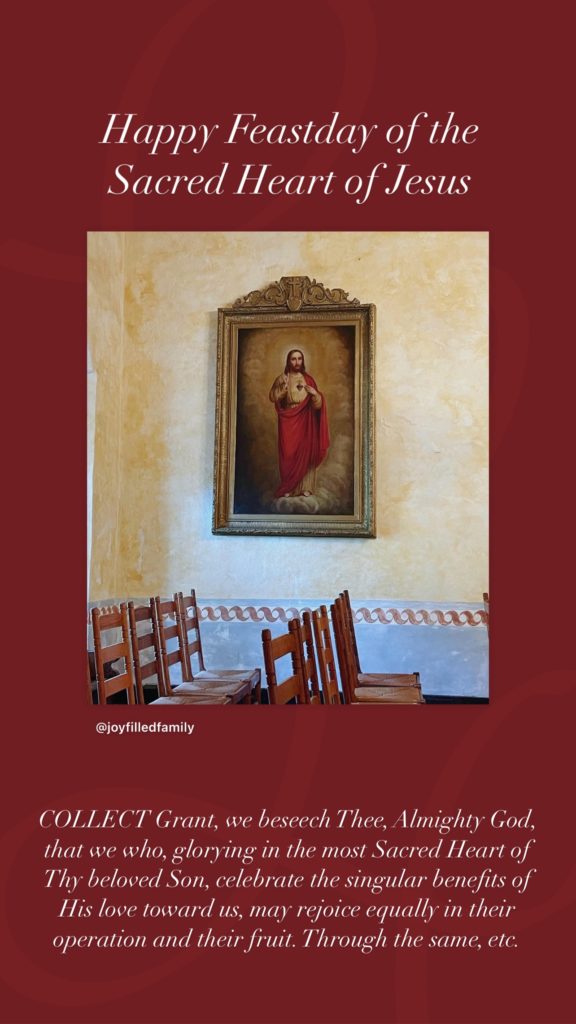
COLLECT Grant, we beseech Thee, Almighty God, that we who, glorying in the most Sacred Heart of Thy beloved Son, celebrate the singular benefits of His love toward us, may rejoice equally in their operation and their fruit. Through the same, etc.

LESSON (Is. 12:16) I will give thanks to thee, O Lord, for thou art angry with me; thy wrath is turned away, and, thou hast comforted me. Behold God is my Savior, I will deal confidently, and will not fear: because the Lord is my strength and my raise, and he is become my salvation. You shall draw waters with joy out of the Savior’s fountains: and you shall say in that day: Praise ye the Lord, and call upon his name: make his works known among tie people: remember that his name is high. Sing ye to the Lord, for he hath done great things: show this forth in all the earth. Rejoice, and praise, O thou habitation of Sion: for great is he that is in the midst of thee, the Holy One of Israel.

EXPLANATION This lesson is a hymn of praise for the deliverance of the Jews from the hands of their enemies, and at the same time a prophecy of the coming redemption of mankind from sin and death through Christ. Man will then draw waters with joy, says the prophet, from the Savior’s fountains. These fountains are the graces which Jesus has gained for us on the cross, but especially, as St: Augustine says, the holy sacraments of Baptism and Communion. We should rejoice on account of these graces, particularly that the Holy One of Israel, Christ, the Son of God, dwells in the midst of Sion, that is, in the Catholic Church, in the Blessed Sacrament, to remain there to the end of the world. Oh! let us often approach this ever flowing fountain of all grace, the holy Eucharist, and let us draw with confidences consolation, help, and strength from this fountain of love.

GOSPEL (John 19:31-35) At that time, The Jews (because it was the parasceve), that the bodies might not remain upon the cross on the sabbath-day (for that was a great sabbath-day), besought Pilate that their legs might be broken, and that they might be taken away. The soldiers, therefore, came, and they broke the legs of the first, and of the other that was crucified with him. But after they were come to Jesus, when they saw that he was already dead, they did not break his legs. But one of the soldiers with a spear opened his side, and immediately there came out blood and water. And he that saw it hath given testimony: and his testimony is true.

EXPLANATION According to the Jewish law a criminal could not be put to death, nor could the body of one who had been executed, remain in the place of execution, on the Sabbath day; it was for this reason that the Jews asked Pilate, the governor, to have the Body of Christ and those of the two thieves buried. Before this could be done, the bones of the crucified, according to the Roman law, had to be broken with iron clubs. The soldiers did so to the two thieves, who were yet alive; when they came to Jesus and found Him dead, they did not break His bones, but one of them, Longinus, opened the Savior’s side with a spear, as was foretold by the prophet.

Jesus permitted His most Sacred Heart to be opened to atone for and efface those sins of men which originate in the heart, as Christ Himself says: (Matt. 15:19) From the heart come forth evil thoughts, murders, adulteries, fornications, thefts; false testimonies, blasphemies; also to show us the infinite love with which He has loved us from the beginning, so that lie even shed the last drop of His heart’s blood for our salvation; to make, as it were, a place of refuge in His heart for us, as St. Augustine says:

The Evangelist is very careful in his expression; he does not say, the soldiers pierced or wounded His side, but he opened it, as if to open for us the door of life, from which flow the Sacraments of the Church, without which there can be no access to the true life.” As often, then, as a temptation arises, or trouble depresses us, let us take refuge in that abode, and dwell there, until the tempest is over; as says the prophet; (Is. 2:10) Enter thou into the rock, and hide thee in the pit. Who is the rock but Christ, and what is the pit but His wound?”

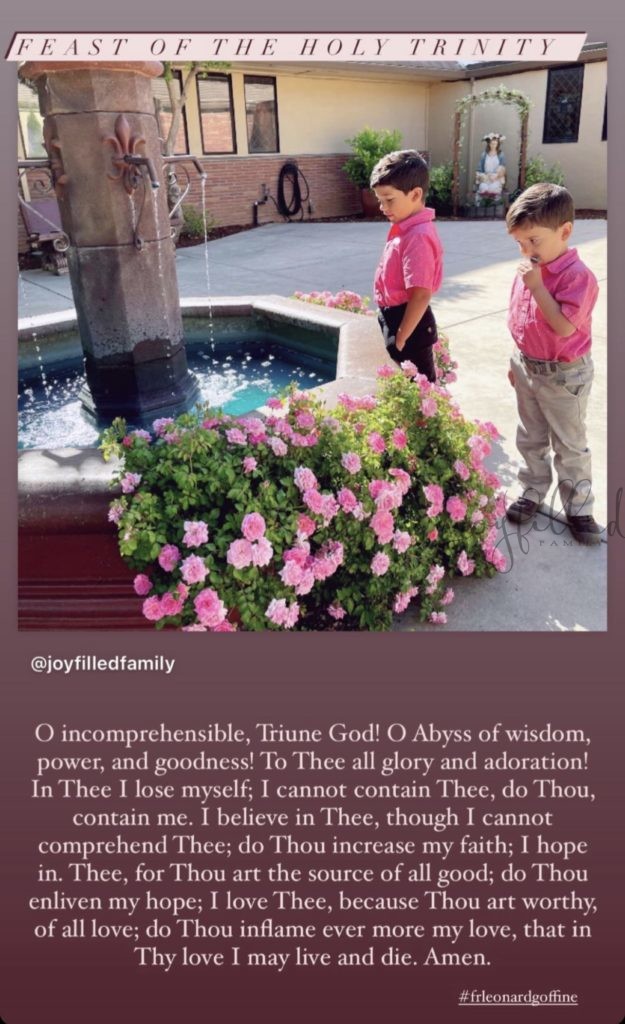
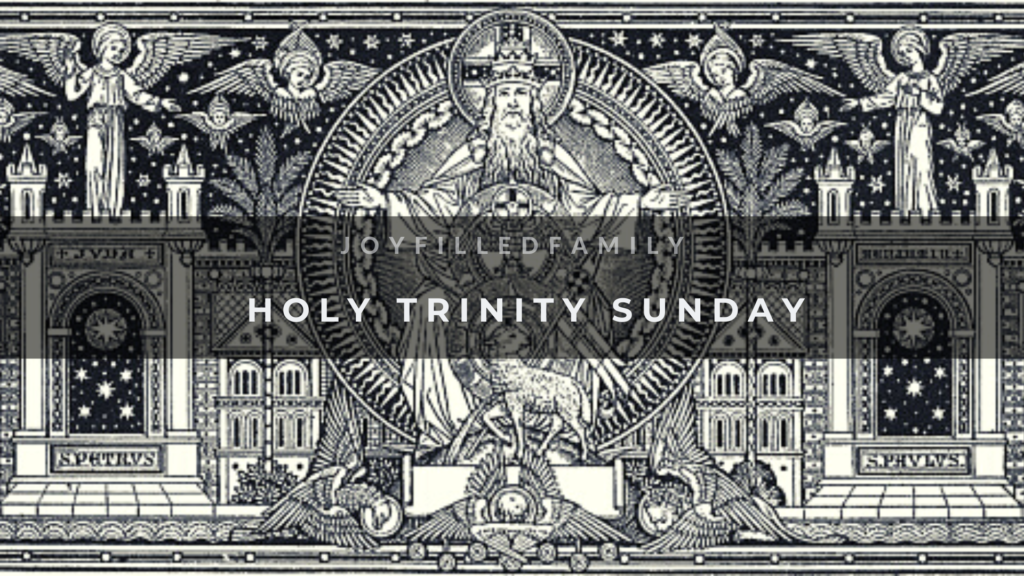
The Holy Trinity

June 12, 2022 by Lena {JOYfilledfamily} Filed Under: 06 June Saints, Archbishop Lefebvre, Dom Gaspar Lefebvre, Fr. Leonard Goffine, Holy Trinity Sunday, The Church’s Year Leave a Comment

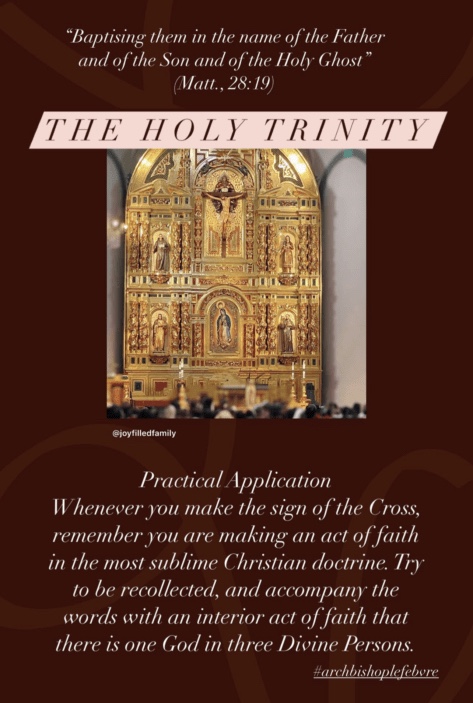
“Baptising them in the name of the Father and of the Son and of the Holy Ghost” (Matt., 28:19)


Archbishop Lefebvre offers the follow sermon for todays feast.

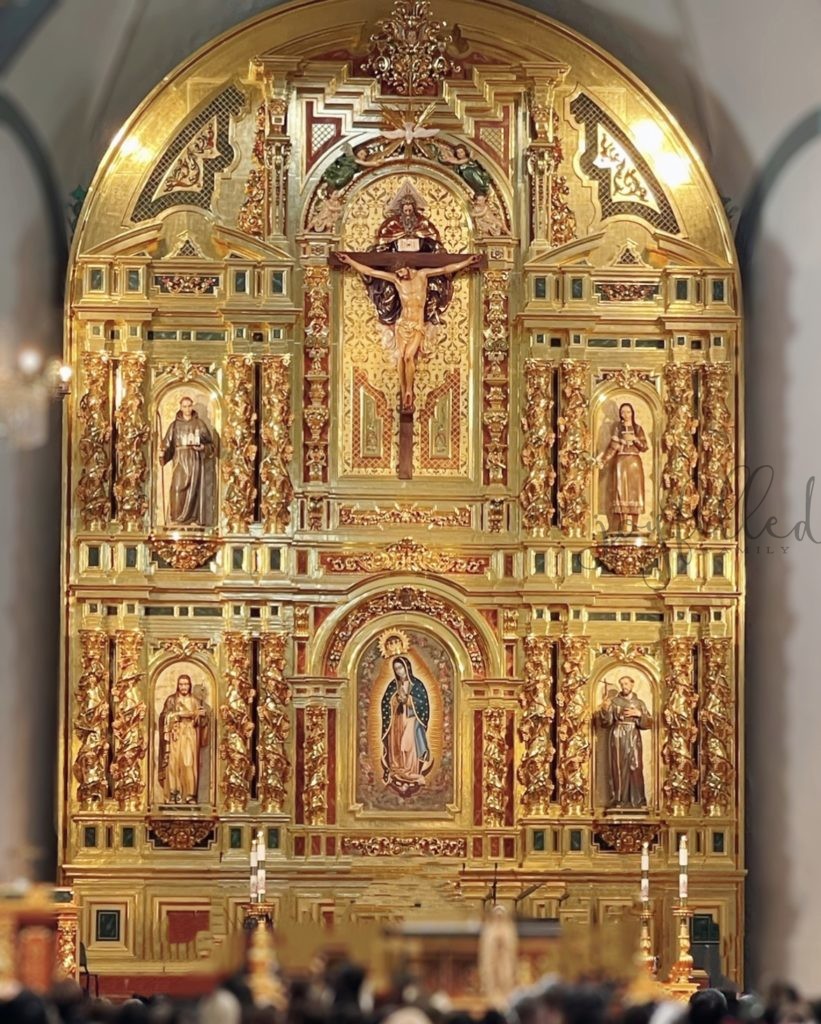
A beautiful Basilica that I photoshopped due to the sacrileges we witnessed on our visit to the Mission.

“They can occupy our churches, but they are outside the true Faith.“ #stathanasius

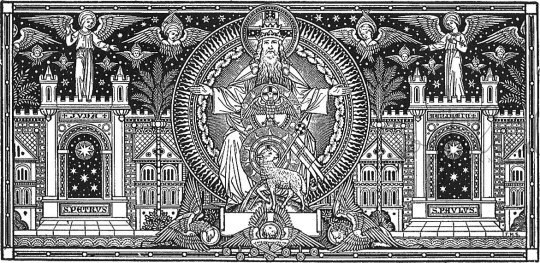
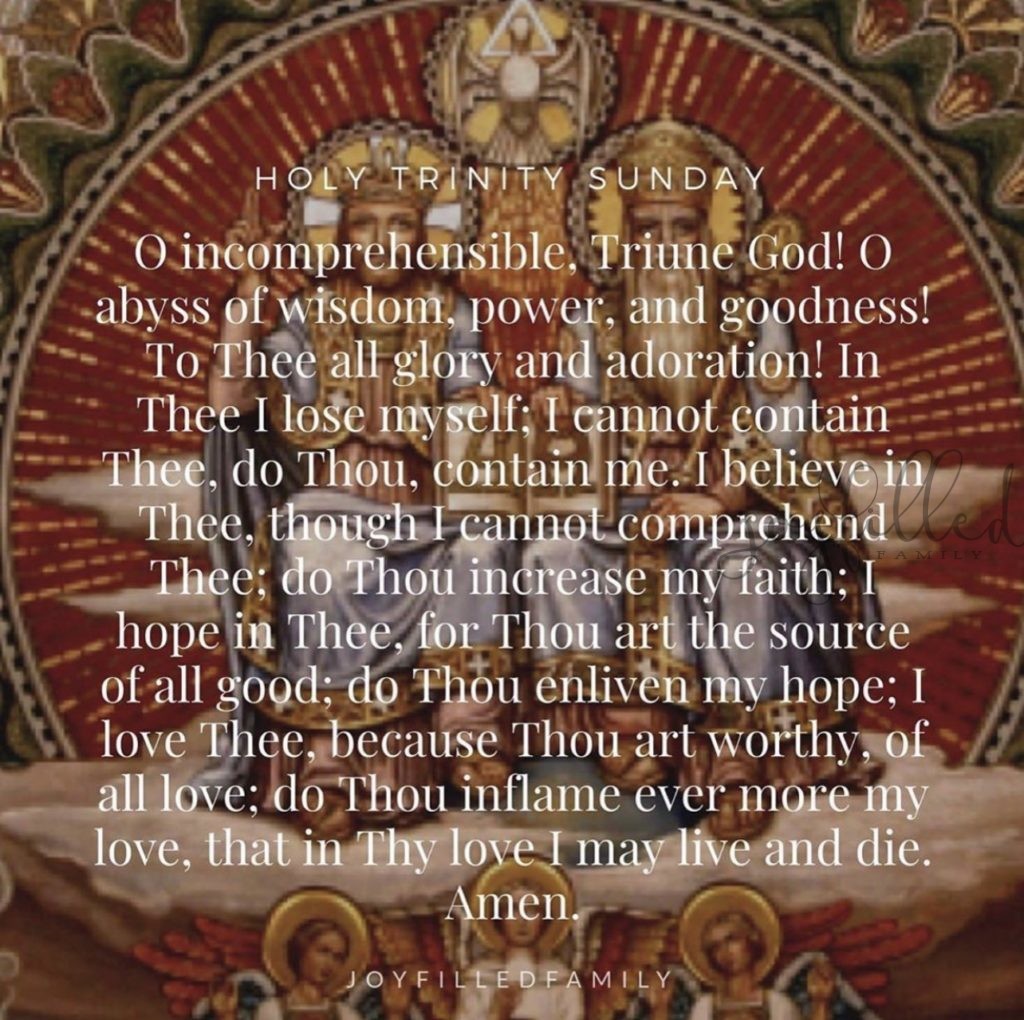
On this day the Catholic Church observes a special feast in honour of the most profound mystery of our faith, the doctrine of the Holy Trinity.

According to this doctrine, there is only one God, but in God there are three distinct Persons, known as the Father, the Son, and the Holy Spirit. In theological language this means that God is one in nature, but three in Persons.


We make no claim that we can give a clear and adequate explanation of this doctrine. It is a mystery-that is, a truth which we accept on the authority of God, but which we cannot understand. We can, indeed, understand that there is only one God. Our reason tells us that it would be a contradiction in terms to say that there is more than one God. The very idea of God indicates absolute supremacy, the possession of all perfections. If there were two Gods, neither could be absolutely perfect because neither would possess the perfections of the other.


But, how this one divine nature can be possessed by three Persons, each distinct from the other, yet each identical with the divinity is entirely above our understanding. However, this is no argument against the reasonableness of believing this doctrine. We accept the statements of our fellowmen on matters that surpass our understanding when these persons are intelligent and truthful–for example, the statements of the atomic scientists. Why then should we not accept the statement of the all-knowing and all-truthful God when He tells us that He is one God in three distinct Persons?


The doctrine of the Holy Trinity is the very foundation of Christian belief. In the early Church there were many misunderstandings about this sublime doctrine, so that most of the heresies of the first centuries were centred about this mystery. But the infallible Church pointed out the way to the truth, and hence today in our Catholic theology we have a profound and consistent teaching regarding this doctrine, enabling us to answer all the objections that are raised against it, even though we make no claim to give a positive understanding of its full significance. Catholics should try to familiarise themselves with at least a general knowledge of the Church’s theological doctrine on the Holy Trinity.


Practical Application
Whenever you make the sign of the Cross, remember you are making an act of faith in the most sublime Christian doctrine. Try to be recollected, and accompany the words with an interior act of faith that there is one God in three Divine Persons.

Oldest son serving as MC for Pentecost Sunday High Mass at the end of our #olbpilgrimage

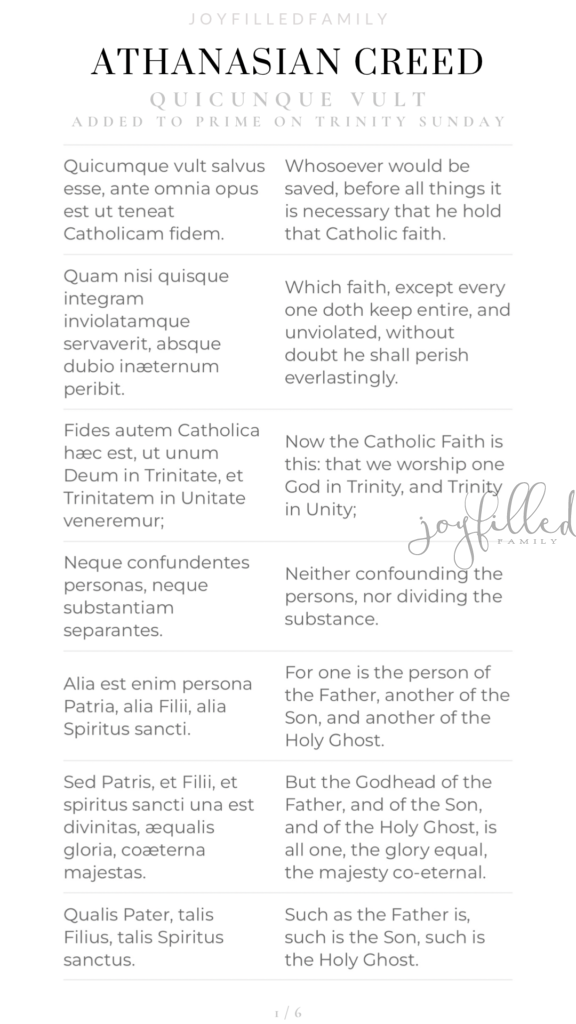
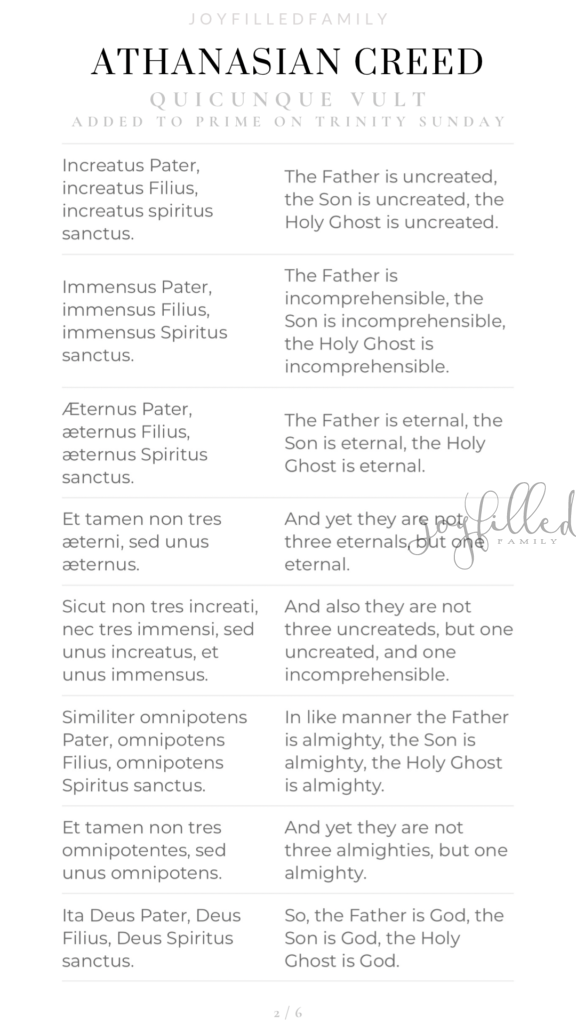
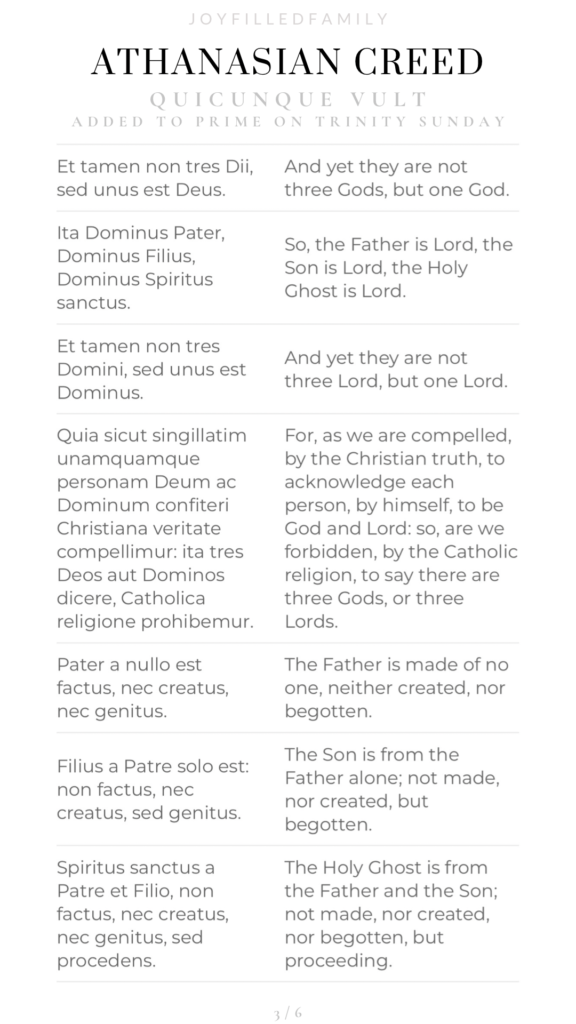
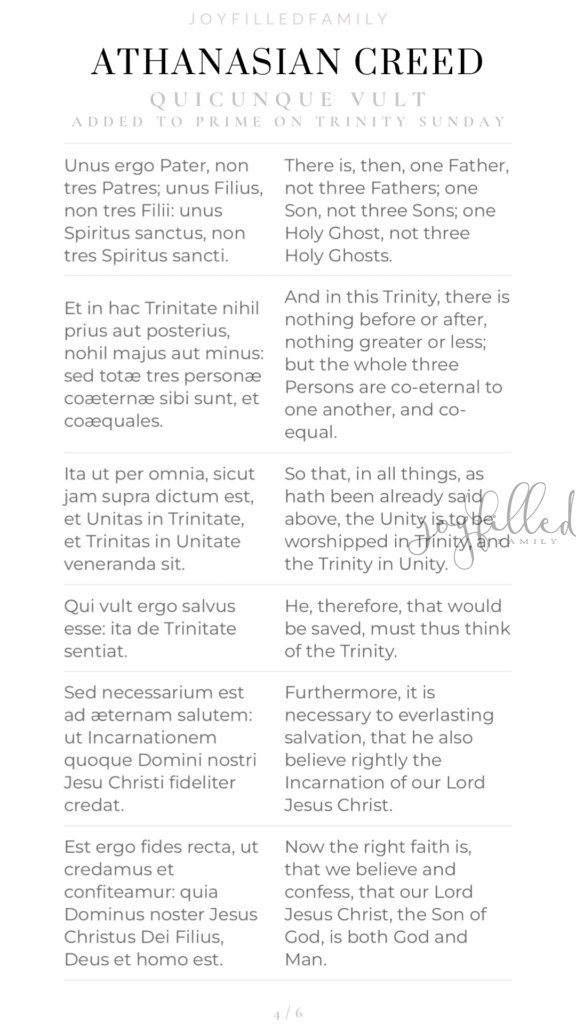
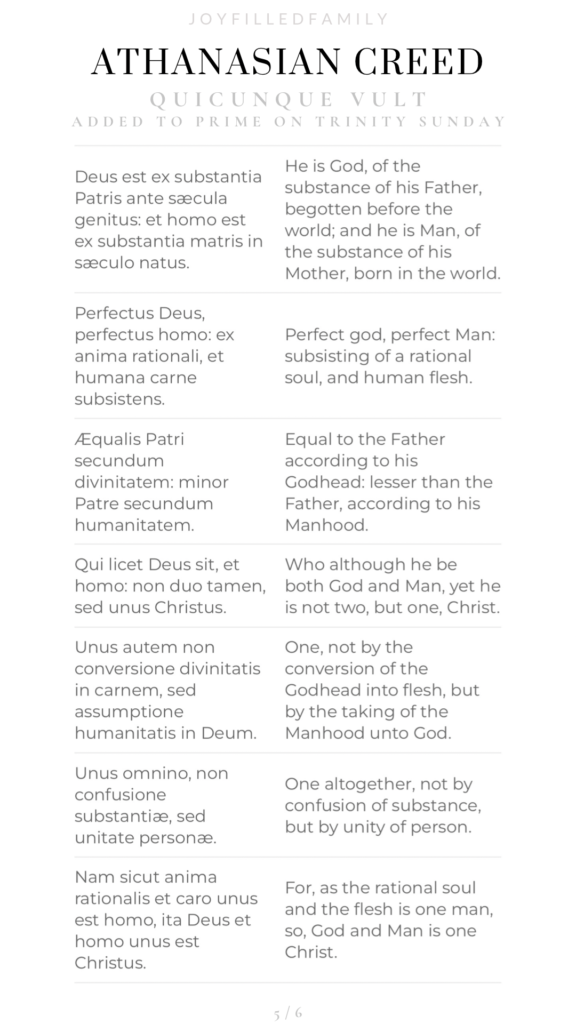
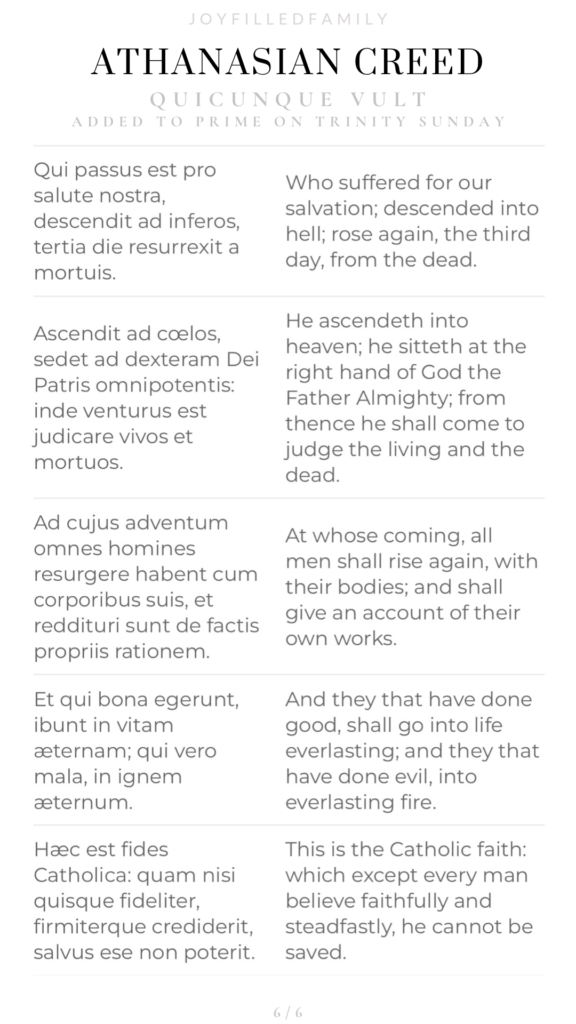
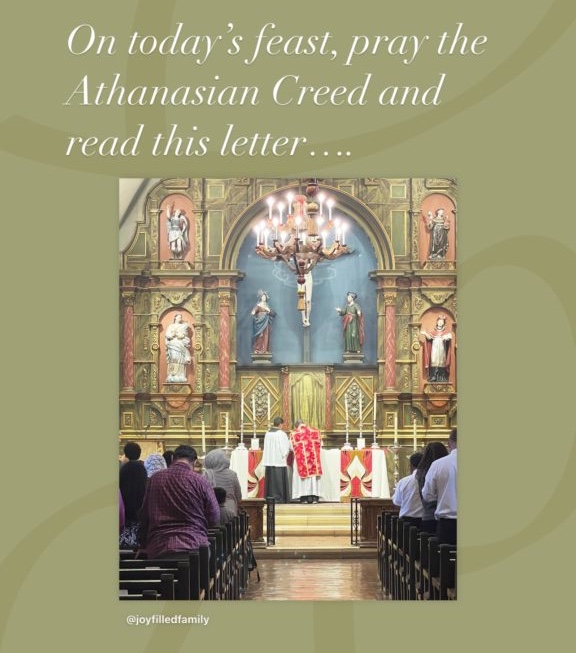
We pray the Athanasian Creed on this Trinity Sunday. See my stories for the full Creed.

On today’s feast, I also invite you to read the Letter of St. Athanasius to his flock (included below).

St. Athanasius is often referred to as the Champion of Orthodoxy, he was undoubtedly one of the most courageous defenders of the Faith in the entire history of the Church.

He is a saint for our times!

This letter of his could have been written, in its entirety, yesterday.

➕

May God console you! …What saddens you …is the fact that others have occupied the churches by violence, while during this time you are on the outside. It is a fact that they have the premises─but you have the apostolic Faith.

They can occupy our churches, but they are outside the true Faith.

You remain outside the places of worship, but the Faith dwells within you. Let us consider: what is more important, the place or the Faith? The true Faith, obviously. Who has lost and who has won in this struggle-the one who keeps the premises or the one who keeps the Faith?

True, the premises are good when the apostolic Faith is preached there; they are holy if everything takes place there in a holy way …You are the ones who are happy: you who remain within the church by your faith, who hold firmly to the foundations of the Faith which has come down to you from apostolic Tradition. And if an execrable jealousy has tried to shake it on a number of occasions, it has not succeeded. They are the ones who have broken away from it in the present crisis.

No one, ever, will prevail against your faith, beloved brothers. And we believe that God will give us our churches back some day.

Thus, the more violently they try to occupy the places of worship, the more they separate themselves from the Church. They claim that they represent the Church; but in reality, they are the ones who are expelling themselves from it and going astray.

Even if Catholics faithful to Tradition are reduced to a handful, they are the ones who are the true Church of Jesus Christ. ➕

Instruction on the Feast of the Holy Trinity from Fr. Leonard Goffine.

This festival is celebrated on the Sunday after Pentecost, because as soon as the apostles were instructed and consoled by the Holy Ghost, they began to preach openly that which Christ had taught them.

Why do we celebrate this festival?

That we may openly profess our faith in the doctrine of the Holy Trinity, which is the first of Christian truths, the foundation of the Christian religion, and the most sublime of all mysteries; and that we may render thanks, to the Father for having created us, to the Son for having redeemed us, and to the Holy Ghost for having sanctified us.

In praise and honor of the most Holy Trinity, the Church sings at the Introit of this day’s Mass:

INTROIT Blessed be the holy Trinity and undivided Unity: we will give glory to him, because he hath shown his mercy to us: (Tob. 12) O Lord, our Lord, how wonderful is thy name in all the earth! (Ps. 8:1) Glory be to the Father, etc.

GOSPEL (Matt. 28:18-20) At that time Jesus said to His disciples: All power is given to me in heaven and in earth. Going, therefore; teach ye all nations, baptizing them in the name of the Father, and of the Son, and of the Holy Ghost; teaching them to observe all things whatsoever I have commanded you. And behold, I am with you all days, even to the consummation of the world.

EXPLANATION Christ being God had from all eternity the same power that His Father had; being man, He had this same power by the union of His divinity with His humanity, and on account of the infinite merits of His passion. In virtue of this power, He said to His apostles, before the ascension, that, as His Heavenly Father had sent Him, even so He sent them to all nations, without exception, to teach all that He had commanded, and to receive them, by means of baptism, into the Church; at the same time He promised to be with them to the end of the world, that is, that He would console them in suffering, strengthen them in persecution, preserve them from error, and always protect them and their successors, the bishops and priests, even unto the consummation of the world.

FEAST OF THE HOLY TRINITY

This festival is celebrated on the Sunday after Pentecost, because as soon as the apostles were instructed and consoled by the Holy Ghost, they began to preach openly that which Christ had taught them.

The fundamental truth on which everything in the Christian religion rests, is the dogma of the Holy Trinity from whom all comes (Epistle ROM XI. 33-36 ), and to whom all baptized in His name must return (Gospel Matt. XXVIII. 18-20).

In the course of the cycle, having called to our minds in order, God the Father, Author of creation, God the Son, Author of redemption, and God the Holy Ghost, Author of our sanctification, the Church today, before all else, recapitulates the great mystery by which we acknowledge and adore the Unity of Nature and Trinity of Persons in almighty God (Collect).

The dogma of the Holy Trinity is affirmed, in the liturgy, on every hand. It is in the Name of the Father and of the Son and of the Holy Ghost that we begin and end the Mass and Divine Office, and that we confer the Sacraments. All the Psalms end with the Gloria, the Hymns with the Doxology, and the Prayers by a conclusion in honor of the three Divine Persons. Twice during the Mass we are reminded that it is to the Holy Trinity that the Mass is being offered.

A votive Mass in honor of the Holy Trinity was composed in the seventh century, and in the eleventh century the Abbey of Cluny established the custom of using it for a feast of the Holy Trinity on this Sunday. Bishop Stephen of Liege composed its office in the tenth century. The feast was officially adopted by the Roman liturgy in 1334 at Avignon by Pope John XXII and was later promoted in rank by St. Pius X.

That we may ever be armed against all adversity, let us today, with the liturgy, make our solemn profession of faith in the Holy and Eternal Trinity and His indivisible Unity.

– Dom Gaspar Lefebvre OSB, 1945

Ember Days of Pentecost

June 8, 2022 by Lena {JOYfilledfamily} Filed Under: Ember Days, Pentecost Leave a Comment

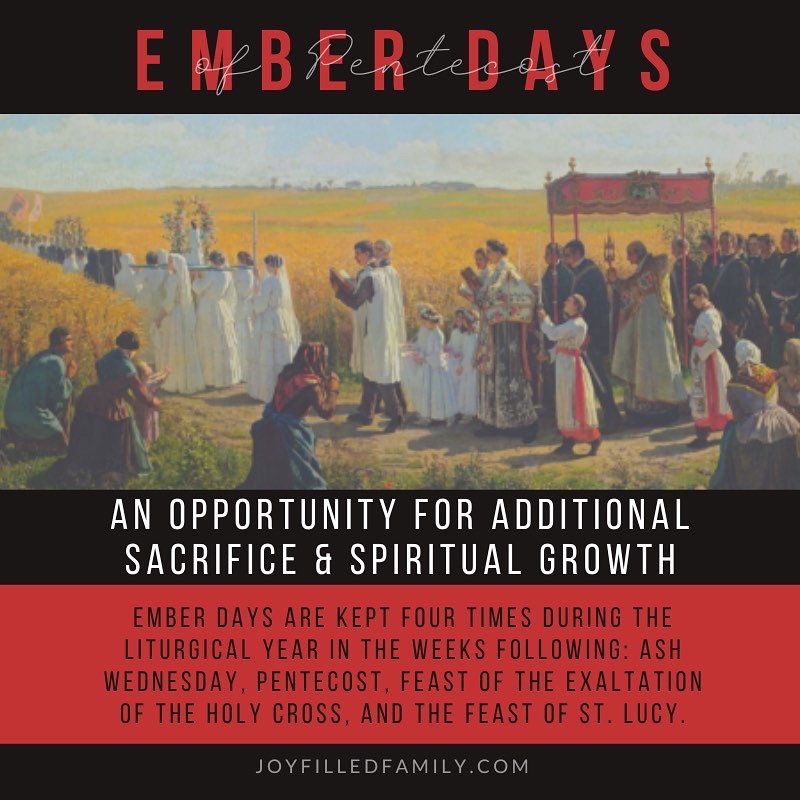
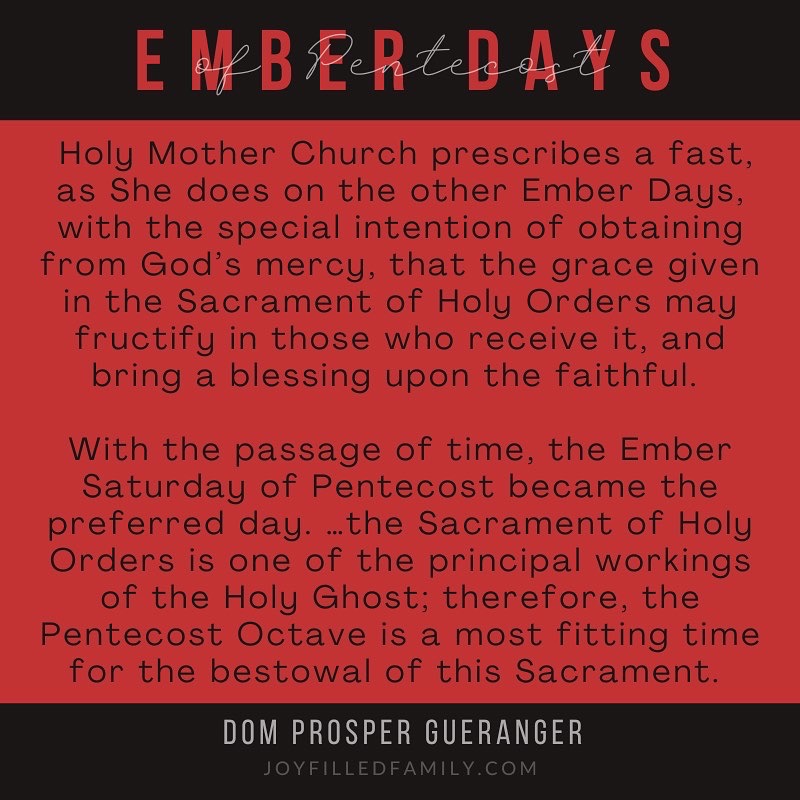
We remain in the Octave of Pentecost, in which the Church celebrates more especially the glories of the grace of the Holy Ghost and His secret work of sanctification in the Mystical Body of Christ.

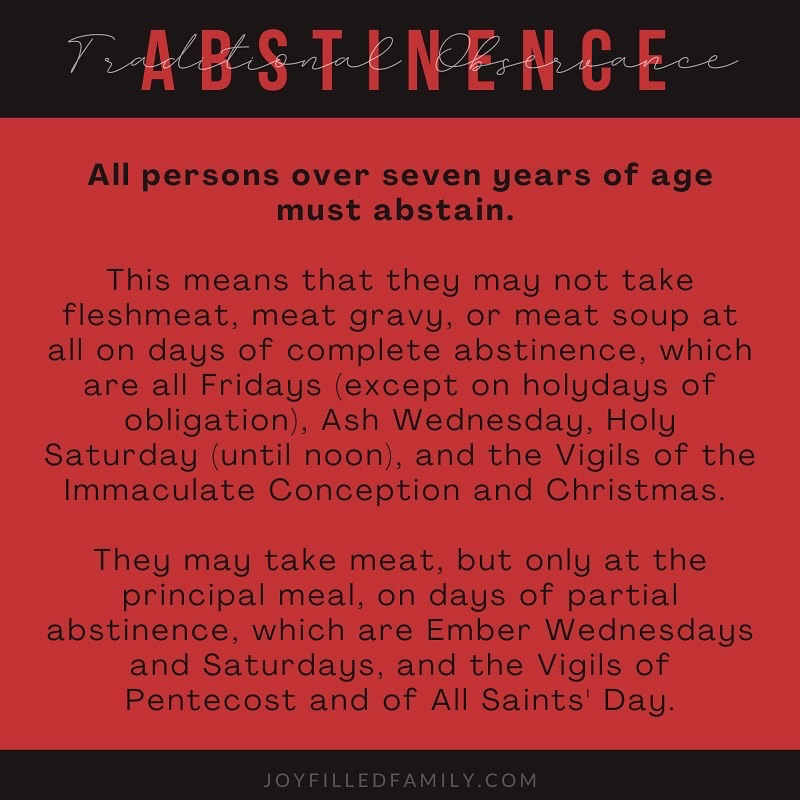
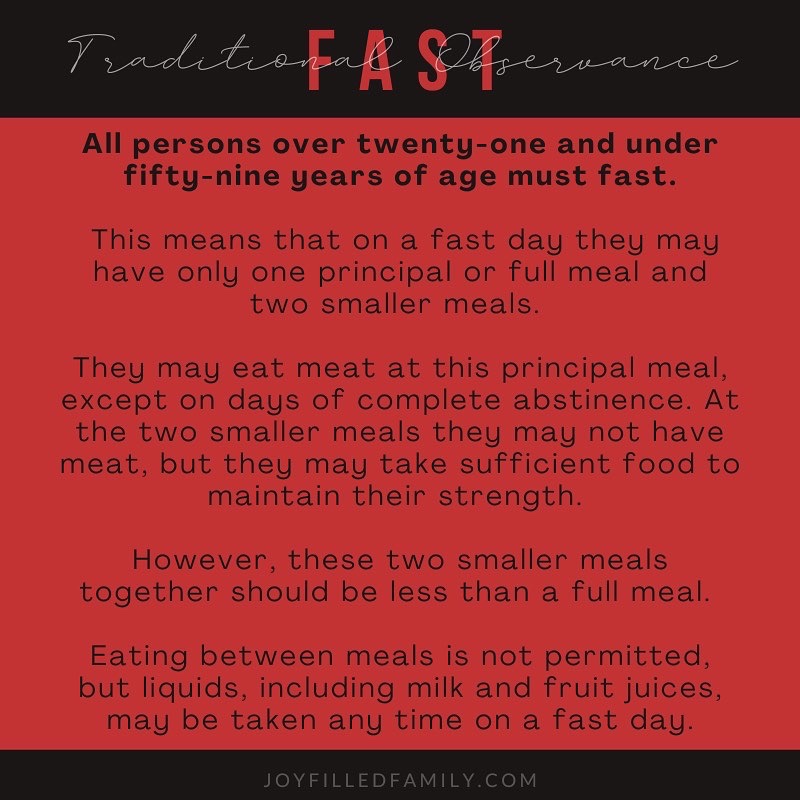
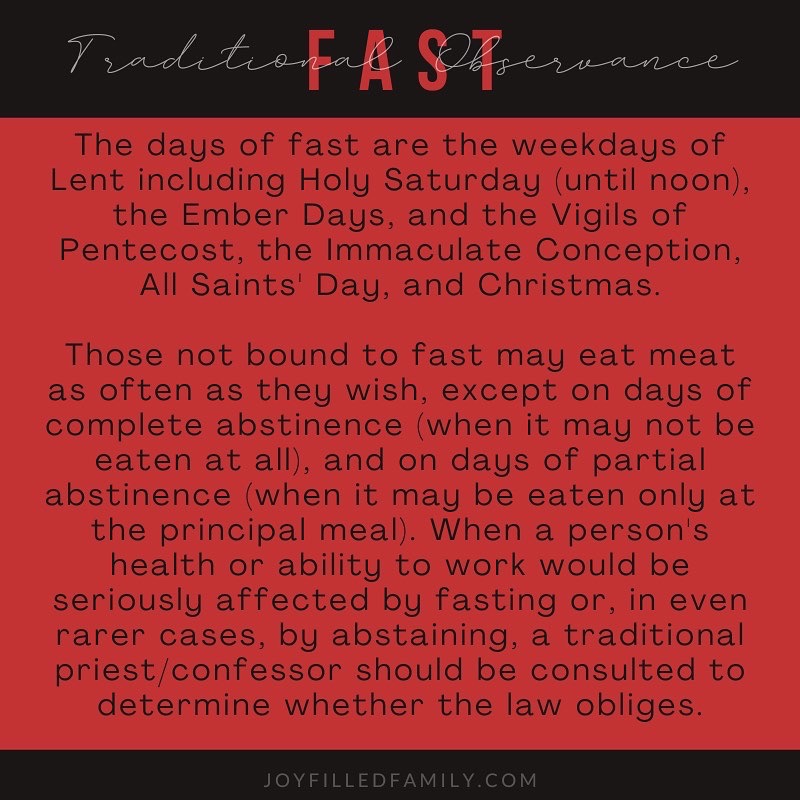
Wednesday, Friday, and Saturday in the week are the Ember Days of Pentecost.

Pope St. Leo the Great extended the Pentecost Festivities, like the Octave of Easter, through the entire week.

For many centuries, Pentecost Monday and Pentecost Tuesday were Holy Days of Obligation.

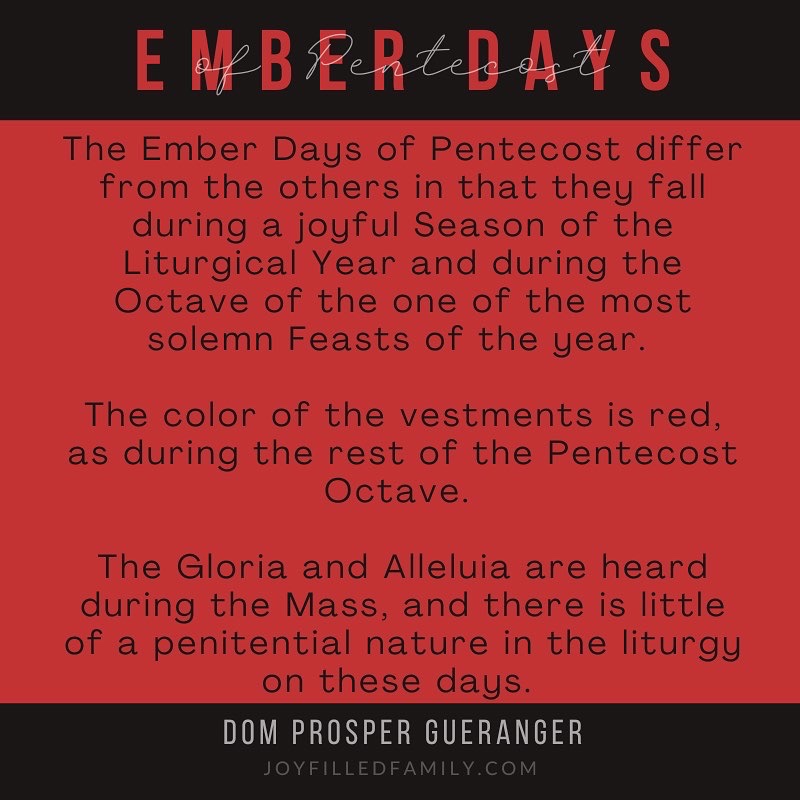
The fasting and abstinence on the Ember Days of Pentecost is unique in the Church as these are the only Ember Days celebrated without violet vestments. The Ember Days of Pentecost are meant to be a joyful fast.

Read the images below for instruction from #domprospergeuranger and the traditional observances of fasting & abstinence.

Ember & Rogation Days Explained by Fr. Ripperger

Memorial Day

May 30, 2022 by Lena {JOYfilledfamily} Filed Under: 05 May Leave a Comment

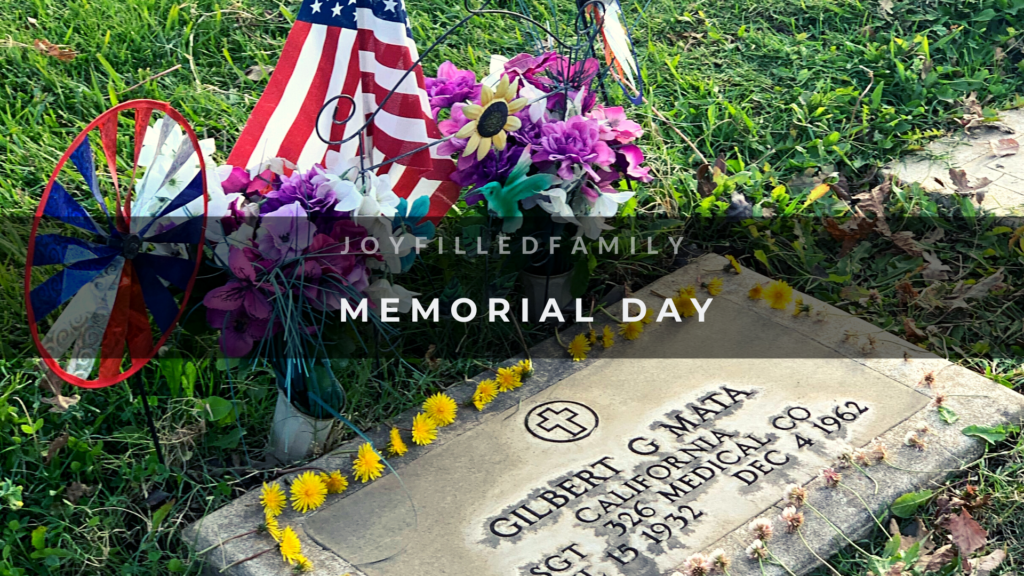
We decorate & pray on this Memorial Day — in honor of heroic sacrifice of those which nobly gave of themselves, even unto death in military service to their country. 🇺🇸 🙏🏼

May God bless the fallen soldiers in their labors on behalf of patriotism and its highest and most noble work, the preservation of our nation and its God-given freedoms.

💛
COMMEMORATION OF THE DEAD

Remember, O Lord, Thy servants, (name them), who have gone before us with the sign of faith and rest in the sleep of peace.

To these, O Lord, and to all who rest in Christ, grant, we pray Thee, a place of refreshment, of light, and of peace. Through the same Christ our Lord. Amen.

Tomb of maternal Great/grandfather

💛
PRAYER FOR THE WAR

Our Father, Who art in Heaven: give us, we pray Thee, the courage and the strength to stamp out the threat of paganism and slavery that hangs over the world today.

Be merciful to all those who have died in the service of our country.

Console those who have lost their loved ones in the struggle.

Help our fighting men to be always clean of heart and therefore unafraid.

Soothe the wounded in battle.

Sustain the courage of those who suffer persecution for conscience’ sake.

Have pity on all who have been insulted, robbed, tortured, defiled, enslaved by their conquerors.

Grant wisdom to our leaders, civil and military, that they may most effectively direct our efforts, at home and abroad.

Teach us all to walk humbly with Thee, so that we may be worthy to conquer, and having conquered may build a peace with justice, under the Fatherhood of God.
Amen.

💛
FOR OUR ARMED FORCES

O God, I beg Thee, watch over those exposed to the dangers of a soldier’s, sailor’s, or airman’s life. Give them such strong faith that no human respect may ever lead them to deny it or fear to practice it. Strengthen them by Thy grace against the influence of bad examples so that, being preserved from vice and by serving Thee faithfully, they may be ready to meet death, if it should come to them on land, at sea, or in the air.

Most Sacred Heart of Jesus, inspire them with sorrow for sin and grant them pardon. Mary, Immaculate Mother of God, protect them. Amen.

Prayers from Catholic Tradition

The Tradition of Rogation Days

May 23, 2022 by Lena {JOYfilledfamily} Filed Under: 05 May, Rogation Day Leave a Comment

Monday, Tuesday, and Wednesday of this week are Rogation Days in anticipation of Ascension Thursday.

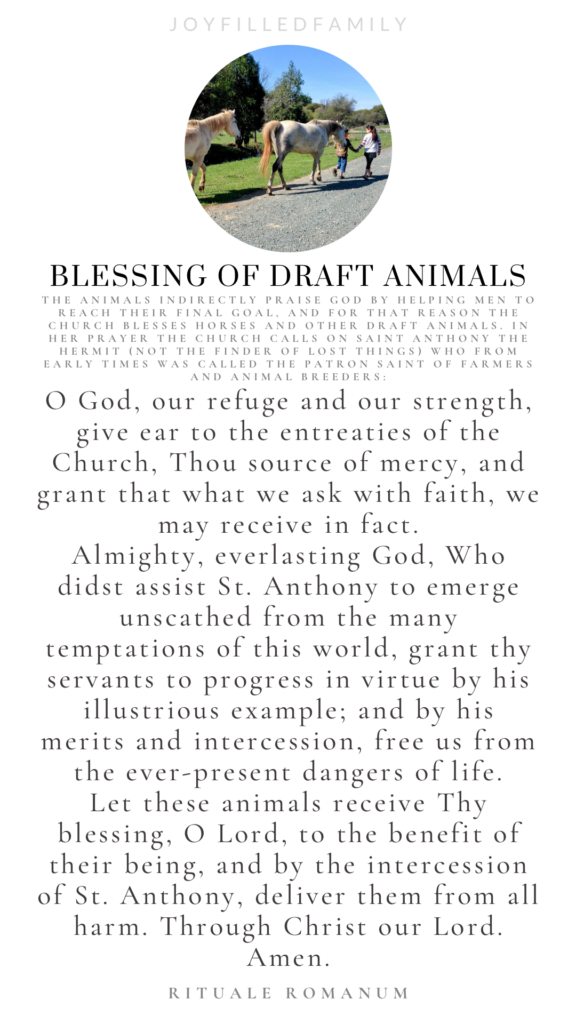
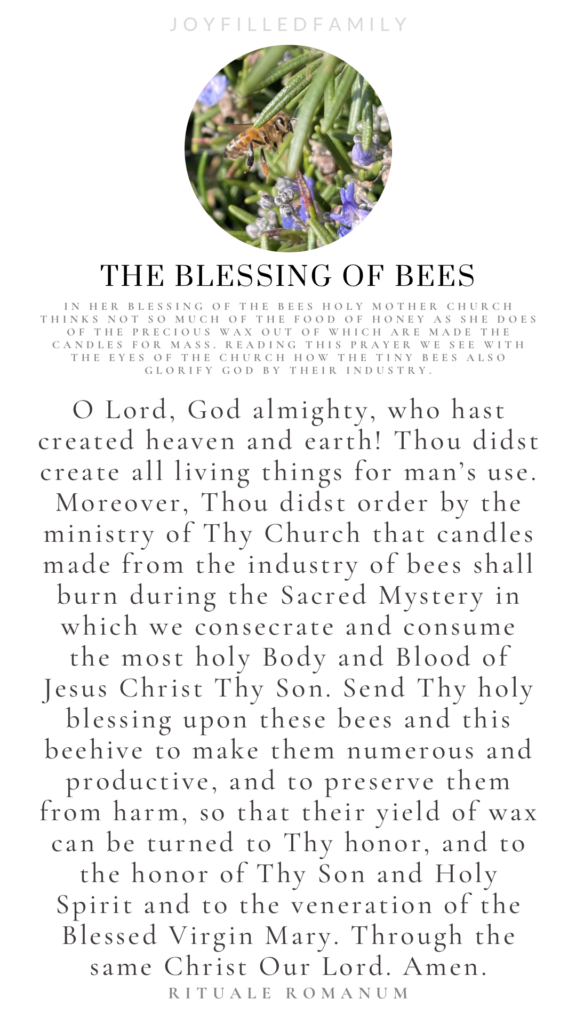
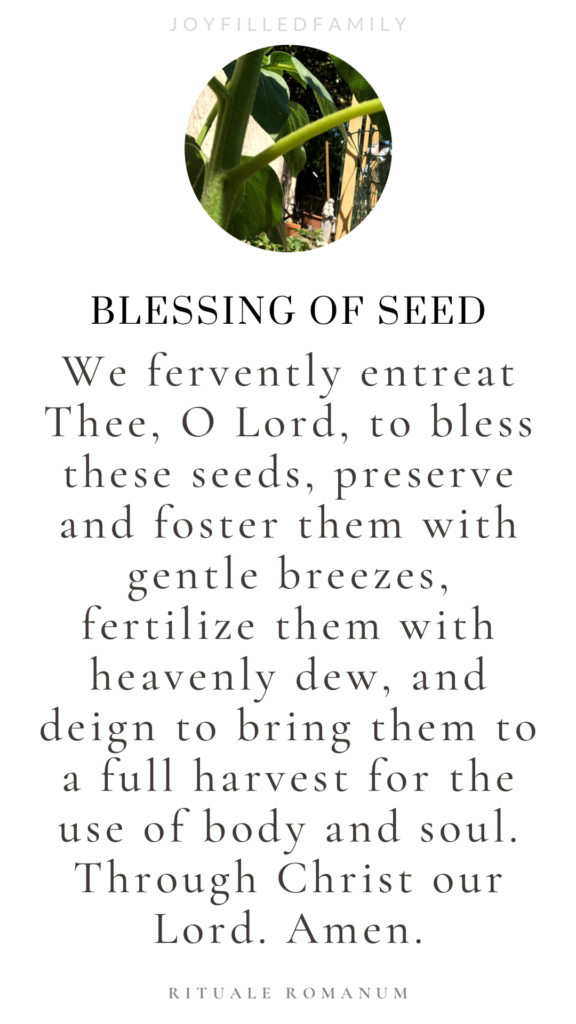
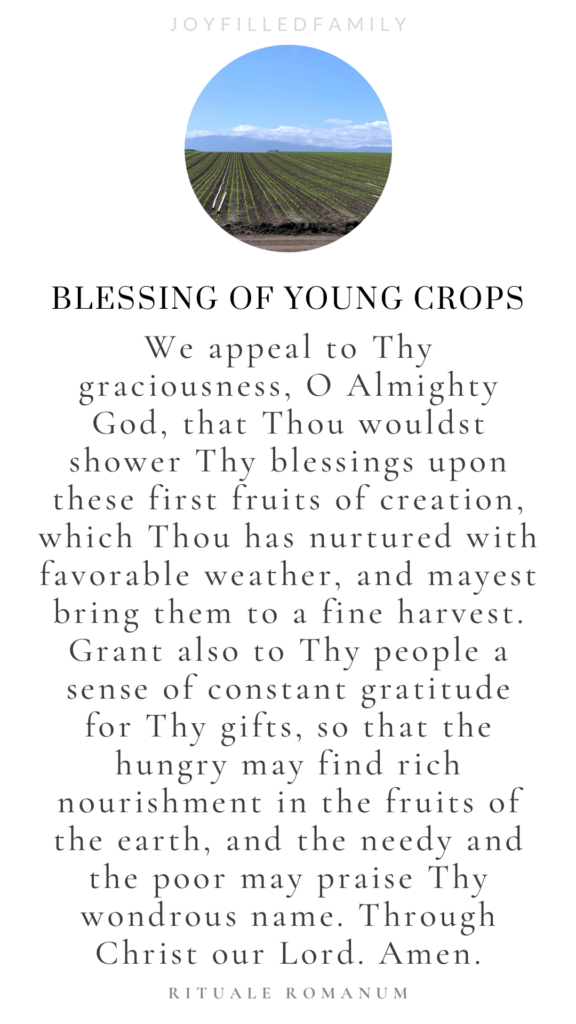
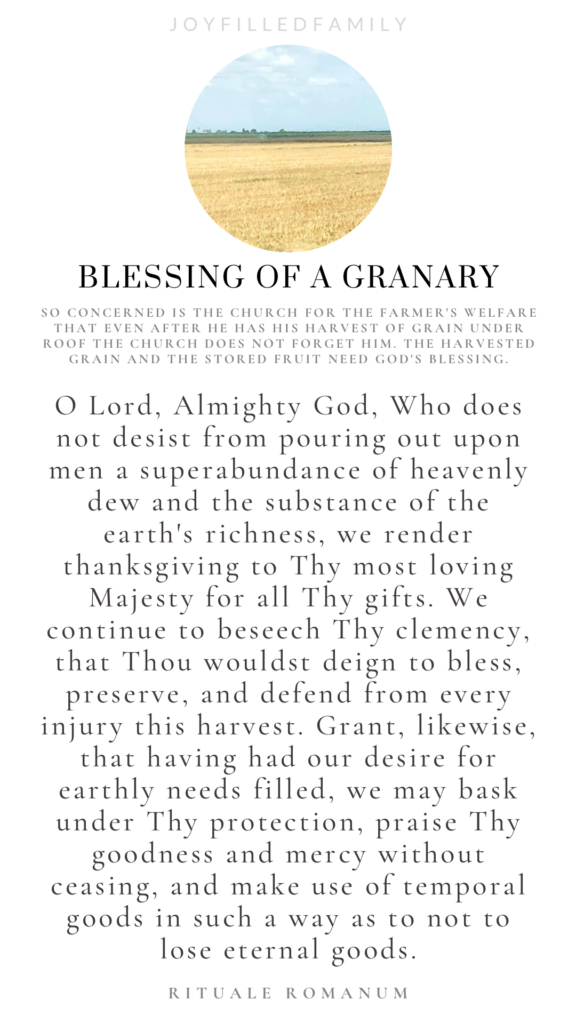
Below are directions from Fr. Sullivan, OSB, 1952 and a few blessings from the traditional Roman Ritual.

➕

If our Holy Mother the Church seems to multiply her blessings over the farm home, and have few left for the city apartment, it is not because she is partial to her children in the country and forgetful of city children, but because she is a realist—like every woman. She knows that from the farm homes comes the world’s food supply.

That is why she has composed so many sacramental blessings for the farmer. That is why she has instituted the rogation days, the three days before the Feast of the Ascension of Our Lord.

But these rogation prayers and the sacramental blessings for the farmer are not for the exclusive welfare of the country people; such blessings are for the welfare of all the members of Christ’s Body on earth—for those who live in little towns and big towns—for the rosy cheeked country urchin who has the wide open fields for a playground, and for the pale little girls whose backyard is closed in by smokestacks and ugly unpainted buildings—for the farmer plowing in his field in the bright sun, and for the subway guard who seldom sees the light of day. For all members of Our Lord’s Body are dependent on one another.

If the farmer is blessed with a good harvest, the city dweller has plenty of good food; if the city dweller makes a living wage, he can buy the farmer’s food. It is this universal dependence of the members of Christ’s Body on one another that makes the blessing of the farmer a blessing also for the dwellers in the city apartments.

It is faith that traces the origin of good food beyond the corner grocery store to the wholesale dealer to the shipper—beyond the shipper to the farmers whose job it is to produce food, and beyond the farmer to God the Creator Who gives the increase to the harvest.

So it is fitting for the man or woman in the city cathedral as well as the farmer in the little rural church to pray together on rogation days: “That Thou wouldst please to give and preserve the fruits of the earth…we beseech Thee hear us.”

The litany of the Saints and the psalms sung during procession on rogation days are supplications—hence the word, rogation (from the word rogare which means to ask). During this season the faithful ask God to protect them from danger and disaster, and to bless especially the harvest so that the whole of Christ’s Body may be fed.

The rogation days are also called the days of the minor litanies, because according to the rubric of the ritual, it is customary for the pastor and his flock to go in procession through the fields of the parish changing the litany of the Saints and other prayers. There is another solemn procession through the fields on the 25th of April which is called the major litanies. This also happens to be St. Mark’s day, but there is no connection between the Evangelist’s feast and the procession.

Because most of our modern parishes are in the city and small town, and have no fields through which to march, the rogation day procession usually takes place on the parish property, or even inside the parish church itself; here at St. Meinrad’s the student-body together with the people of the parish march in solemn procession to the chapel of Our Lady of Monte Cassino a mile through the village and across the valley, chanting the litany of the Saints. There the Mass of rogation is offered by the priest in charge of the abbey farm.

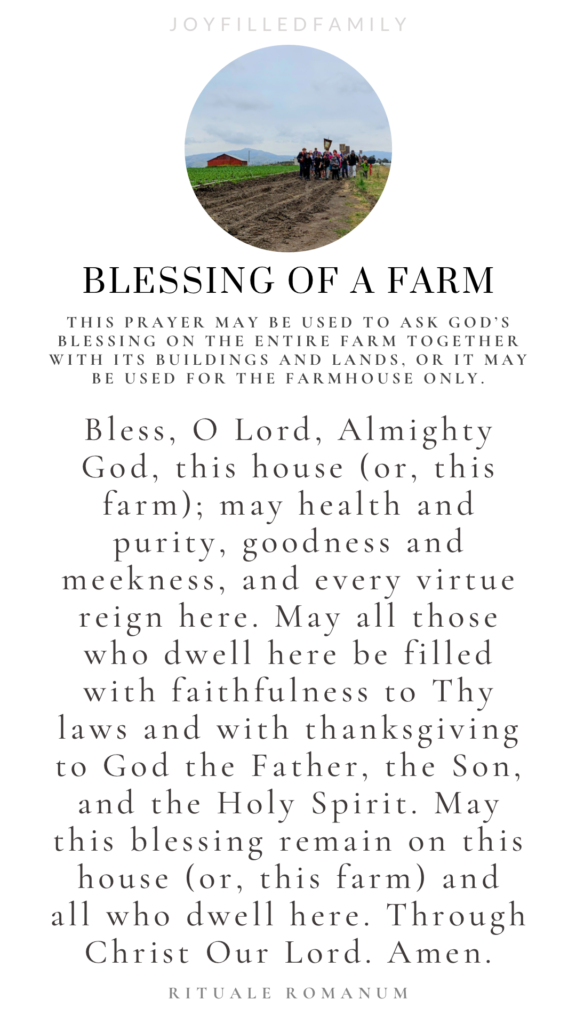
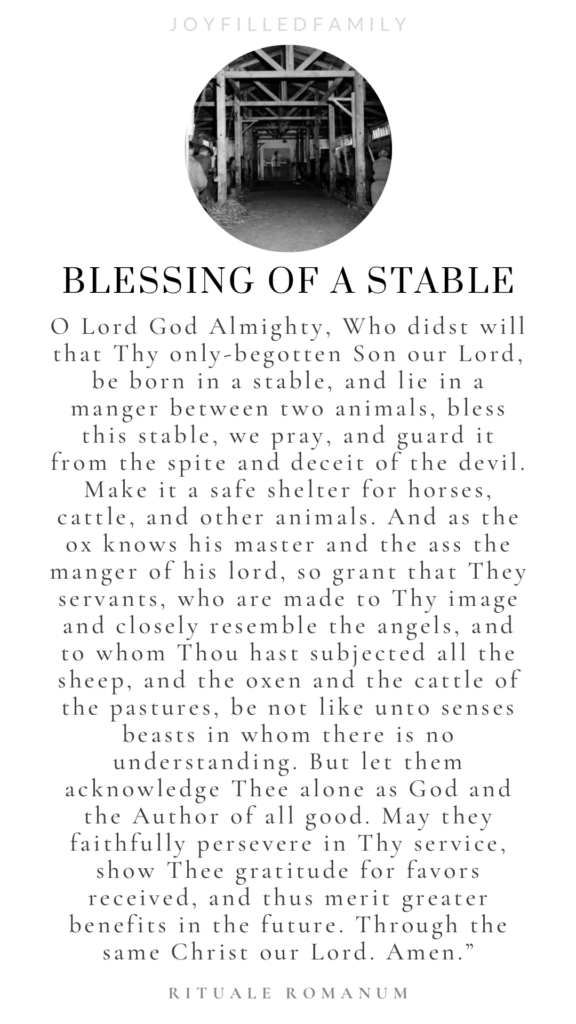
The celebration of the minor and major litanies are only four days during the year when the Church solemnly asks blessings upon the harvest, but besides the rogation day blessings there are numerous sacramentals in the Roman ritual which may be used with spiritual profit by the faithful especially by the folks who live on the farm. Here are some the principal blessings which the Christian farmer may use.

Monday of Passion Week

April 4, 2022 by Lena {JOYfilledfamily} Filed Under: Holy Week, Lent, Passiontide Leave a Comment

Today, the Monday of Passion Week, we meditate on the illustrious title of the Name of Jesus.

JESUS OF NAZARETH, KING OF THE JEWS

It is a scared and powerful title which ought to be said with great reverence.

Thomas A Kempis offers the following mediation:

O Jesus of Nazareth, bright flower of the Virgin Mary; O illustrious Son of David, the Only-Begotten of the Supreme Father, write, I pray Thee, with a strong and clear hand, upon the tablets of my heart, Thy sweet and glorious Name, along with that sacred and brightly-shining Title of Thy Passion, which declared the cause of Thy death, that so I may keep it ever before my eyes, and may often read it to the praise of Thy Most Holy Name.

May that Title be the comfort of my heart in
distress, may it be my special protection when temptations assail me; may the evil spirit depart from me; may the lust of concupiscence die out within me; may the whole world have a bitter taste to me, when I think, or read of “Jesus of Nazareth, the King of the Jews.”

For of a truth nothing is more sweet than Jesus, nothing more wholesome, nothing more helpful. Nothing can be brighter, nothing more pure, nothing more holy than the Nazarene.

Nothing can be more worthy of honor than the King of the Jews, nothing more powerful, nothing more exalted.

Therefore let no enemy think to withstand me. Let no plague think to touch me. Let no calamity think to crush me, so long as I humbly invoke Thy aid, O my Jesus, or call to mind Thy Passion, or dwell with heart and lips upon Thy Title “Jesus of Nazareth, the King of the Jews.”

O Jesus, above all else deserving of my love, Thou art my King and my God, dear to me above everything, far above all the praise that I can give Thee.

Dear to me wert Thou in the Manger, still dearer wert Thou on the Cross.

Dearest of all art Thou, when sitting upon the Throne of Thy Kingdom. For though, in the weakness of Thy flesh, Thou didst hang upon the Cross, yet now, by the Power of God, Thou livest, and art sitting at the Right Hand of the Father, exalted above every creature forever and ever. Amen. #passionofchrist

Consecration of Russia

March 18, 2022 by Lena {JOYfilledfamily} Filed Under: Uncategorized Leave a Comment

A priest of tradition speaks clearly to refute the mixed messages and compel us to remain steadfast in prayer.

Is anyone outside of being reached by the Holy Ghost?

What did Our Lady actually ask?

What is our role?

What will it (true Consecration of Russia) lead to, usher in, and mean?

O Mary, conceived without sin, pray for us who have recourse to Thee!

O Mary, conceived without sin, pray for us who have recourse to Thee!

O Mary, conceived without sin, pray for us who have recourse to Thee!

And for those who do not have recourse to thee especially all Communists, Freemasons, and other enemies of Holy Mother Church.

  • « Previous Page
  • 1
  • …
  • 17
  • 18
  • 19
  • 20
  • 21
  • …
  • 124
  • Next Page »

Stay Connected

Search

Categories

Archives

Hi! I'm Lena, mama of JOYfilledfamily.
We are a traditional Catholic family striving to live for Jesus Christ in everything we do. We pray to completely surrender our will to His and to become His servants. Our mission of this blog is to share our JOY.

This blog serves as a journal of us making good memories, living the liturgical year, and our spiritual journey.

Subscribe to our Newsletter

  • Home
  • About
  • Blog

Copyright © 2026 swank WordPress Theme <a PDCD