• Email
  • Facebook
  • Instagram
  • Pinterest
share our JOY

JOY{filled}family

striving to radiate Him always

  • Home
  • Blog
  • Brown Scapular
  • Liturgical Calendars & Planners
  • Wellness
    • Essential Oils
    • Fitness
    • Nutrition
  • Homeschool
  • Sacraments
    • Baptism
    • First Communion
    • Confirmation

Our Yes

January 22, 2021 by Lena {JOYfilledfamily} Filed Under: Pro-Life Leave a Comment

Here’s a story that we share openly to offer hope and witness to God’s abundant grace.

We were sixteen when I became pregnant (while attending a Catholic highschool, no less). I told no one until I was about 8 months along (doctors did not even suspect it at any of the multiple visits I had for a previous sport’s injury).

I was full of fear and shame for my poor choice. He showered His mercy upon me — bringing me out of despair and I was able to welcome a beautiful healthy girl into the world.

My parents and close loved ones also said YES to life by loving us and supporting us through it all.

My husband, then boyfriend, stood by me. We finished school, received college degrees, and ultimately opted to hang up our dreams to better fulfill our duties as mother & father.

Together, we have 8 children on earth, and six whom we pray are with Our Lord.

Know that your “yes” matters.

Know that with your “yes” to life comes abundant grace from the Divine Creator which can carry you through anything.

Know that you matter and are loved just as you are — return to Him and allow His love to wash over you & heal you.

Do not let the lies of the Evil one pervert you into thinking that you have a better way.

And, if you have been deceived, walked in darkness, or feel unworthy, spend not another hour/day in bondage but run to the Good Lord who desires to have you, His beloved child, in His embrace.

For support in pregnancy or pre/post abortion counseling, visit optionsforpregnancy.com.

You may also message me directly if you are pregnant and need someone to walk you through it.

Second Sunday After Epiphany

January 17, 2021 by Lena {JOYfilledfamily} Filed Under: 01 January, Marriage, Second Sunday After Epiphany Leave a Comment

Today is the Second Sunday After Epiphany – The First Public Miracle of Our Lord

Called by St. Thomas the “greatest” of Our Lord’s miracles, the feast of Cana shows the abiding love Christ has for a sacred union.

Below is instruction on today’s readings from Fr. Leonard Goffine.

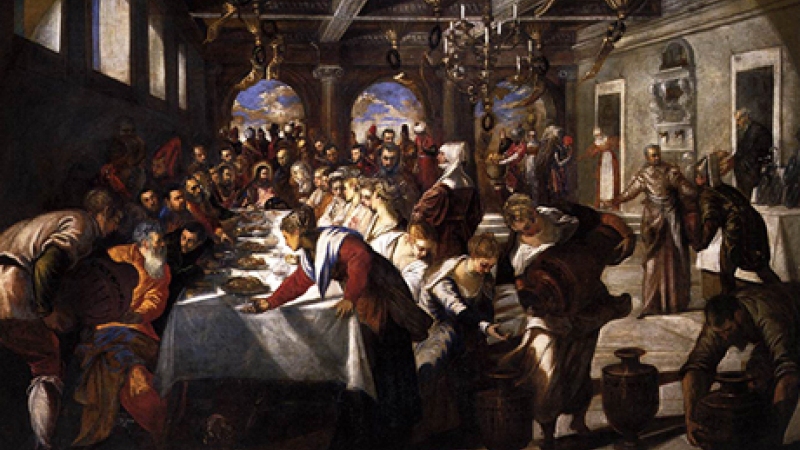
Marriage at Cana, 1561 – Tintoretto

SECOND SUNDAY AFTER EPIPHANY

In the Introit of this day’s Mass the Church calls upon all creatures to thank God for the Incarnation of His only-begotten Son.

INTROIT Let all the earth adore Thee, O God and sing to Thee: let it sing a psalm to Thy name (Ps. 65:4). Shout with joy to God all the earth, sing ye a psalm to His name: give glory to His praise (Ps. 65:1-2). Glory be to the Father.

COLLECT Almighty and eternal God, Who disposest all things in heaven and on earth: mercifully hear the supplications of Thy people, and give Thy peace to our times. Through our Lord.

EPISTLE (Rom.12:6-16). Brethren: We have different gifts, according to the grace that is given us: either prophecy, to be used according to the rule of faith, or ministry in ministering, or he that teacheth in doctrine, he that exhorteth in exhorting, he that giveth with simplicity, he that ruleth with carefulness, he that sheweth mercy with cheerfulness. Let love be without dissimulation. Hating that which is evil, cleaving to that which is good: loving one another with the charity of brotherhood: with honor inspiring one another: in carefulness not slothful: in spirit fervent: serving the Lord: rejoicing in hope: patient in tribulation: instant in prayer: communicating to the necessities of the saints: pursuing hospitality: bless them that persecute you: bless and curse not. Rejoice with them that rejoice, weep with them that weep: being of one mind, one towards another: not minding high things, but consenting to the humble. Be not wise in your own conceits.

EXPLANATION. St. Paul in this epistle exhorts every Christian to make good use of the gifts of God; if one receives an office, he must see well to it, so that he can give an account to God of the faithful performance of his duties. He exhorts especially to brotherly love which we should practice by charitable works; such as, receiving strangers hospitably, giving alms to those who are in need, and to those who by misfortune or injustice have lost their property; he commands us, at the same time, to rejoice in the welfare of our neighbor, as we rejoice at our own good fortune, and to grieve at his misfortunes as we would over those which befall us.

How is brotherly love best preserved?

By the virtue of humility which makes us esteem our neighbor above ourselves, consider his good qualities only, bear patiently his defects, and always meet him in a friendly, respectful, and indulgent manner. Humility causes us to live always in peace with our fellowmen, while among the proud, where each wishes to be the first, there is continual strife and dissatisfaction (Prov. 13:10).

INSTRUCTION FOR SUPERIORS

Those have to expect a severe sentence from God, who merely for temporal gain, seek profitable offices, and thrust themselves therein whether capable or not, and if capable care very little whether they fulfill the duties required, or perhaps make the fulfillment of them depend upon bribes. Of such God makes terrible complaint: Thy princes (judges) are faithless, companions of thieves: they all love bribes, they run after rewards. They judge not for the fatherless; and the widow’s cause comes not into them (Is. 1:23). A most severe judgment shall be for them that bear rule (Wisd. 6:6).

ASPIRATION Grant us, O Lord, Thy grace, that according to Thy will, we may follow the instructions of St. Paul in regard to humility and love, have compassion upon all suffering and needy, think little of ourselves, and descend to the lowest, that we may, one day, be elevated with them in heaven.

GOSPEL (Jn. 2:1-11). At that time there was a marriage in Cana of Galilee: and the mother of Jesus was there. And Jesus also was invited, and his disciples, to the marriage. And the wine failing, the mother of Jesus saith to him: They have no wine. And Jesus with to her: Woman, what is it to me and to thee? my hour is not yet come. His mother saith to the waiters: Whatsoever he shall say to you, do ye. Now there were set there six water-pots of stone, according to the manner of the purifying of the Jews, containing two or three measures apiece. Jesus saith to them: Fill the water-pots with water. And they filled them up to the brim. And Jesus saith to them: Draw out now, and carry to the chief steward of the feast. And they carried it. And when the chief steward had tasted the water made wine, and knew not whence it was, but the waiters knew who had drawn the water; the chief steward calleth the bridegroom, and saith to him: Every man at first setteth forth good wine; and when men have well drank, then that which is worse: but thou hast kept the good wine until now. This beginning of miracles did Jesus in Cana of Galilee: and manifested his glory, and his disciples believed in him.

Why was Christ and His mother present at this marriage?

In order to honor this humble and God-fearing couple who, with faithful hearts, had invited Him and His mother to their wedding; to give us an example of humility; to assist them in their poverty, and save their good name by changing water into wine; to reveal His dignity as the Messiah to His disciples by this miracle; and to sanctify by His presence the marriages that are contracted in the spirit of the Church.

Alas! how few marriages of our time could Jesus honor with His presence, because He is invited neither by fervent prayer, nor by the chaste life of the couple: He is excluded rather, by the frequent immorality of the married couple and their guests.

Why was Mary interested in this married couple?

Because she is merciful, and the Mother of Mercy, and willingly assists all the poor and afflicted who fear God. From this incident, St. Bonaventure judges of the many graces which we can hope for through Mary, now that she reigns in heaven; “For,” says he, “if Mary while yet on earth was so compassionate, how much more so is she now, reigning in heaven!” He gives the reason by adding: “Mary now that she sees the face of God, knows our necessities far better than when she was on earth, and in proportion to the increase of her compassion, her power to aid us has been augmented.” Ah! why do we not take refuge in all our necessities to this merciful mother, who although unasked assists the needy?

Why did Christ say to Mary: Woman, what is it to me and to thee?

This seemingly harsh reply of Christ was no reproach, for Mary had made her request only through love and mercy, and Christ calls those blessed who are merciful, but he wished to show that in the performance of divine work, the will of His heavenly Father alone should be consulted. He meant to remind her that He had not received the gift of miracles from her as the son of woman, but from His eternal Father, in accordance with whose will He would do that which she asked when the hour designed by God would come. Though the hour had not come, yet He granted the wish of His mother, who knew that her divine Son refused none of her requests, and so she said to the servants: “Whatsoever He shall say to you, do ye.” Behold the great power of Mary’s intercession! Neglect not, therefore, to take refuge in this most powerful mother!

What are we taught by the words: My hour is not yet come?

These words teach us that we should in all things await God’s appointed time, and in things belonging to God and His honor, act only by divine direction, without any human motives.

What does the scarcity of wine signify?

In a spiritual sense the want of wine may be understood to signify the lack of love between married people, which is principally the case with those who enter this state through worldly motives, for the sake of riches, beauty of person, or who have before marriage kept up sinful intercourse. These should ask God for the forgiveness of their sins, bear the hardships of married life in the spirit of penance, and change the wrong motives they had before marriage; by doing so God will supply the scarcity of wine, that is the lack of true love, and change the waters of misery into the wine of patient affection.

Why did Christ command them to take the wine to the steward?

That the steward, whose office required him to be attentive to the conduct of the guests, and to know the quality of the wine, should give his judgment in regard to the excellence of this, and be able to testify to the miracle before all the guests.

ASPIRATION O my most merciful Jesus! I would rather drink in this world the sour wine of misery than the sweet wine of pleasure, that in heaven I may taste the perfect wine of eternal joy.

INSTRUCTION ON THE HOLY SACRAMENT OF MATRIMONY

What is Matrimony?

Matrimony is the perfect, indissoluble union of two free persons of different sex, for the purpose of propagating the human race, mutually to bear the burdens of life and to prevent sin (I Cor. 7:2).

Who instituted Matrimony?

God Himself, the Creator of all things (Gen. 1:27-28). He brought to man the helpmate, whom He formed from one of the ribs of Adam, that she who came from his heart, might never depart therefrom, but cling to him in the indissoluble bond of love (Gen. 2:18, 24). To this original, divine institution Christ refers (Mt. 19:4-6), and the Church declares the bond of marriage perpetual and indissoluble.

Is Matrimony a Sacrament?

Yes; according to the testimony of the Fathers, the Church has held it such from the times of the apostles, which she could not do, had Christ not raised it to the dignity of a Sacrament. St. Paul even calls it a great Sacrament, because it is symbolical of the perpetual union of Christ with His Church; and the Council of Trent declares: “If any one says that Matrimony is not really and truly one of the seven Sacraments of the Church instituted by Christ, but an invention of men that imparts no grace, let him be anathema” (Conc. Trid., Sess. XXIV, can. 1).

What graces does this Sacrament impart?

The grace of preserving matrimonial fidelity inviolate: the grace of educating children as Christians; of patiently enduring the unavoidable difficulties of married life, and of living peaceably with each other. Married people are indeed greatly in need of these graces, in order to fulfil their mutual obligations.

What is the external sign in the Sacrament of Matrimony?

The union of two single persons in Matrimony, which according to the regulations of the Council of Trent (Conc. Trid., Sess. XXIV, can. 1), must be formed publicly in the presence of the pastor, or with his permission before another priest, and two witnesses.

What preparations are to be made to receive the grace of this Sacrament?

1. The first and best preparation is a pure and pious life. 

2. The light of the Holy Ghost should be invoked to know whether one is called to this state of life. 

3. The parents and the father-confessor should be asked for advice. 

4. The choice should be made in regard to a Christian heart, and a gentle disposition rather than to beauty and wealth. 

5. The immediate preparation is, to purify the conscience, if it has not already been done, by a good general confession, and by the reception of the most holy Sacrament of the Altar.

Before their marriage the young couple should ask their parents’ blessing, should hear the nuptial Mass with devotion, with the intention of obtaining God’s grace to begin their new state of life well, and finally they should commend themselves with confidence to the protection of the Blessed Virgin Mary and her spouse St. Joseph.

Why are there so many unhappy marriages?

Because so many people prepare the way by sins and vices, and continue to sin without interruption, and without true amendment until marriage, therefore always make sacrilegious confessions, even perhaps immediately before marriage. Besides this many enter the married life on account of carnal intentions, or other earthly motives; in many cases they do not even ask God for His grace; without any proper preparation for such an important, sacred act, on their marriage day they go to church with levity and afterwards celebrate their wedding with but little modesty. Is it any wonder that such married people receive no blessing, no grace, when they render themselves so unworthy?

Why did God institute married life?

That children might be brought up honestly and as Christians, and that they should be instructed especially in matters of faith; that married people should sustain each other in the difficulties of life, and mutually exhort one another to a pious life; and lastly, that the sin of impurity might be avoided. For they who in such manner receive matrimony as to shut out God from themselves, and from their mind, and to give themselves to their lust, as the horse and mule which have not understanding, over them the devil hath power (Too. 6:17).

‘With what intentions should the married state be entered?

With such intentions as the young Tobias and his bride had, who before the marriage ceremony, ardently prayed God for His grace, and took their wedding breakfast in the fear of the Lord (Too. 14:15). Hence God’s blessing was with them until death. If all young people would enter the married state thus, it would certainly be holy, God-pleasing and blessed, and the words of St. Paul, spoken to wives, would come true unto them: Yet she shall be saved by bearing children, if she continue in faith, and love, and sanctification with sobriety (I Tim. 2:15).

Why are the banns of marriage published three times in Church?

That all impediments which would render the marriage unlawful may be made known. Such impediments are: consanguinity, clandestine marriages, etc. Therefore, any one who is aware of such impediments, is bound to make them known to the pastor.

Why is the marriage performed in the presence of the parish priest?

Because the Catholic Church expressly declares that those marriages which are not performed in presence of the pastor, or with his permission before another priest, and two witnesses, are null and void (Conc. Trid., Sess. XXIV can. 1)1; and because the blessing of the priest, which he imparts in the name of the Church, gives the couple, if they are in a state of grace, strength, fortitude and grace to be faithful to each other, to endure all trials patiently, and to be safe from all the influences of the evil enemy.”

Why do they join hands before the priest, and two witnesses?

By this they bind themselves before God and His Church to remain true to each other, and to be ready to assist each other in all adversities. The bridegroom puts a ring on the bride’s finger which should remind her of her duty of inviolable fidelity; to this end the priest signs and seals this holy union with the unbloody Sacrifice of the New Law.

Can the bond of marriage be dissolved in the Catholic Church?

A valid marriage, contracted with the free consent of each of the parties, can according to the plain doctrine of the Scriptures, the constant teaching and practice of the Church, be dissolved only by the death of one of the parties. If the pope or a bishop, for important reasons, gives a divorce, this is only partial, and neither can marry again while the other lives. Such a marriage would not be valid. How pure and holy are the doctrine and practice of the Catholic Church in this the most important and sacred of all human relations, preserving its inviolability and sanctity; while, on the contrary, by means of the wanton doctrine of the heretics, which for trivial reasons entirely dissolves the marriage contract, this sacred union is made the deepest ignominy of mankind, and the play-ball of human passions and caprice!

What is thought of mixed marriages, or marriages between Catholics and Protestants?

The Catholic Church has always condemned such marriages, because of the great dangers to which the Catholic party is unavoidably exposed as well as the offspring. Such marriages promote indifference in matters of religion, by which the spiritual life of the soul is destroyed; they are a hindrance to domestic peace, cause mutual aversion, quarrels, and confusion; they give scandal to servants; they interfere with the Christian education of the children, even render it impossible, and they frequently lead to apostasy and despair. But the Catholic Church condemns especially those mixed marriages, in which either all or a number of the children are brought up in heresy, and she can never bless and look upon those as her children who do not fear to withdraw themselves and their own children from the only saving faith, and expose them to the danger of eternal ruin. Therefore, those Catholics who enter the matrimonial union with Protestants, although the marriage if lawfully contracted is valid, commit a mortal sin if they permit their children to be brought up in heresy, and should it not be their full intention to bring up their children in the Catholic faith at the time of their marriage, they would commit a sacrilege.

What should the newly married couple do immediately after the ceremony is performed?

They should kneel and thank God for the graces received in this holy Sacrament, in such or similar words: “Ratify, we beseech Thee, O Lord, that which by Thy grace Thou hast wrought in us, that we may keep that which in Thy presence we have promised unto the day of our Lord Jesus Christ.” That they may keep their promise made at the altar, they should always remember the duties laid down to them by the priest at the time of their marriage, and the exhortations which are taken from the epistle of St. Paul to the Ephesians (Eph. 5:29, 31), wherein he instructs married people how they should comport themselves towards each other, and recalls to them as an example the union of Christ with His Church, and His love for her. To the husbands he says, they should love their wives as Christ loved His Church, for which He even gave Himself up to death; from this is seen, that men should assist their wives even unto death, in all need, and not treat them as servants. To the wives St. Paul says, that they as the weaker should be in all reasonable things obedient to their husbands, as the Church is obedient to Christ; for as Christ is the head of the Church, so is the husband the head of the wife. Experience proves there is no better way for women to win the hearts of their husbands than by amiable obedience and ready love, while, on the contrary, a querulous, imperative deportment robs them of their husbands’ affections, and even causes them to be regarded with aversion. St. Paul says further; that husbands should love their wives (and consequently wives their husbands) as their own bodies, because married people are, as it were, one. They shall be two in one flesh; no man ever hated his own flesh, but nourisheth and cherisheth it, as also Christ doth the Church (Eph. 5:29, 31). How unjustly and barbarously do those act, who, instead of loving one another, rather hate and outrage each other, and cause the loss of their property, and by detraction steal their honor! These do not consider that he who hates and disgraces his partner in life, hates and disgraces himself; while according to the words of St. Paul he who loves her, loves himself. If married people would remain in constant love and unity, it is most necessary that they should patiently bear with each other’s infirmities, wrongs, and defects, exhort one another with mildness and affection, keep their adversities, trials, and sufferings as much as possible to themselves, and complain in prayer only to God, who alone can aid them. By impatience, quarrels, and complaints the cross becomes only heavier and the evil worse. Finally, not only on their wedding day, but often through life, they should earnestly consider that they have not entered the married state that they may inordinately serve the pleasures of the body, but to have children who will one day inhabit heaven according to the will of God; as the angel said to Tobias: “For they who in such manner receive matrimony, as to shut out God from themselves and from their mind, and to give themselves to their lust as the horse and mule, which have not understanding, over them the devil hath power” (Tob. 6:17).

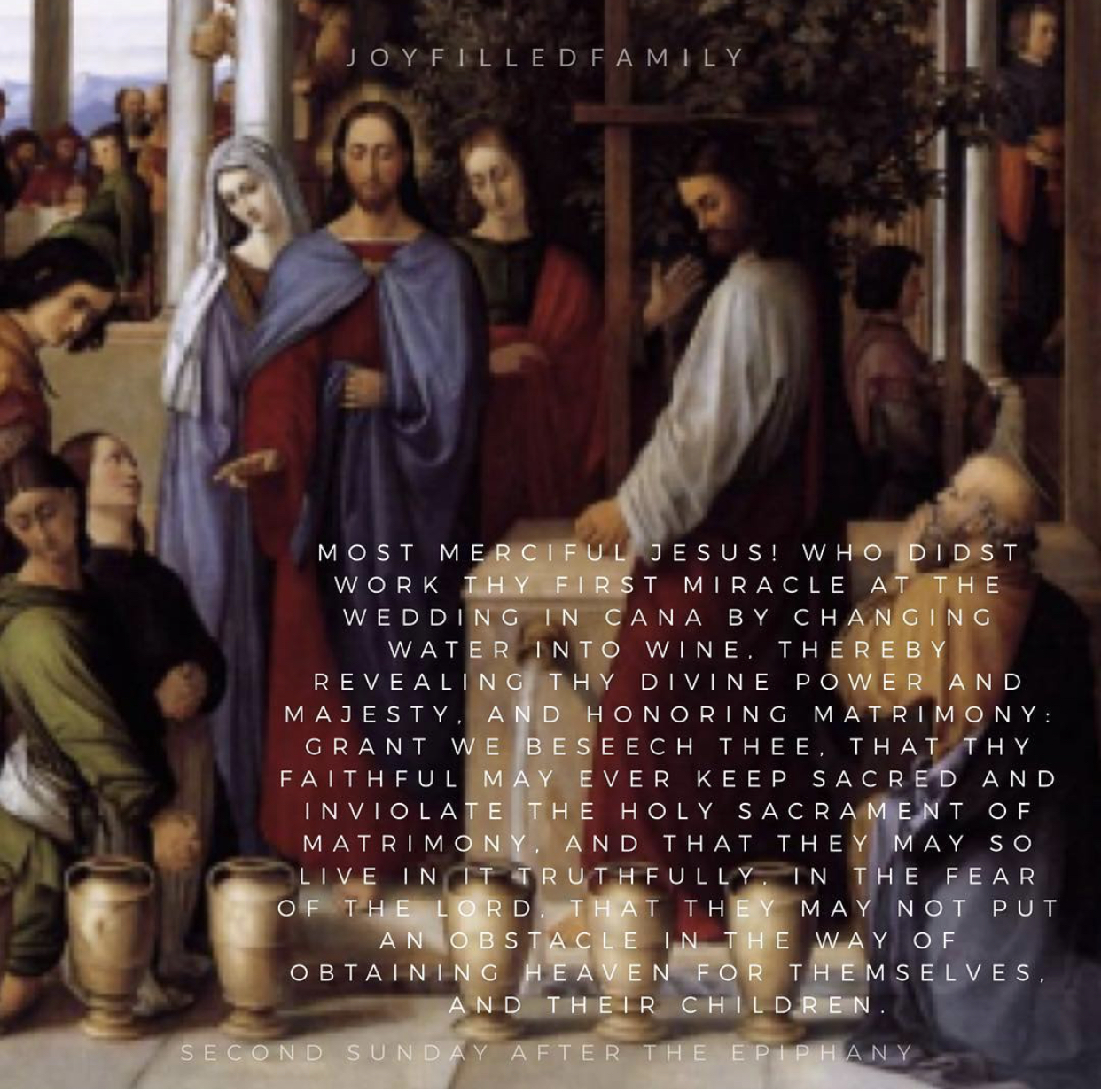
PRAYER Most merciful Jesus! who didst work Thy first miracle at the wedding in Cana by changing water into wine, thereby revealing Thy divine power and majesty, and honoring matrimony: grant we beseech Thee, that Thy faithful may ever keep sacred and inviolate the holy sacrament of Matrimony, and that they may so live in it truthfully, in the fear of the Lord, that they may not put an obstacle in the way of obtaining heaven for themselves, and their children.

1. In all such dioceses of the United States, where the Council of Trent has not been published, civil marriages are considered valid. The Catholic, however, who becomes married by civil authority commits a mortal sin, except in case of extreme necessity. To be married by a sectarian preacher is looked upon as a denial of faith, and incurs excommunication.

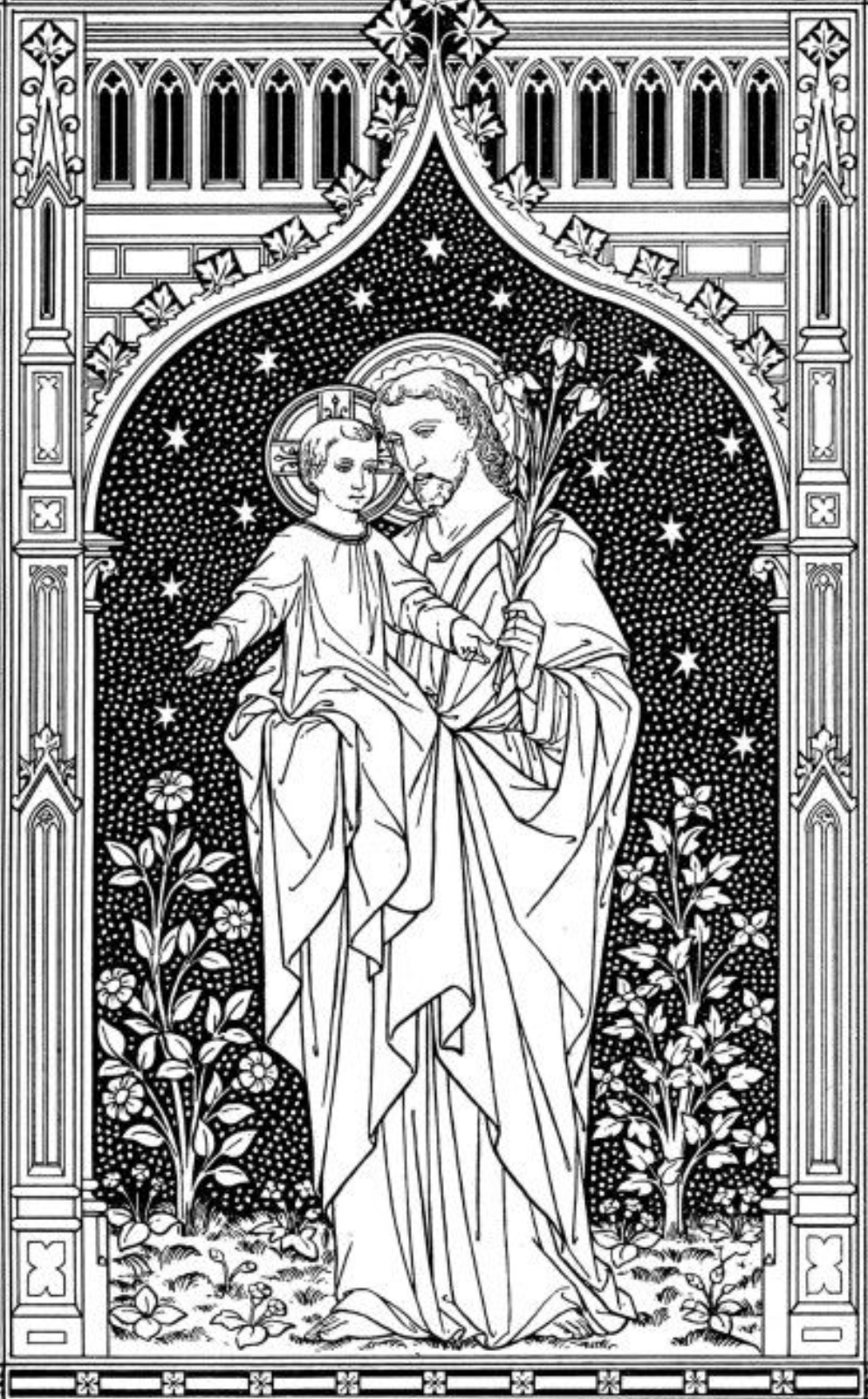
St. Joseph: Model of the Hidden Life

January 15, 2021 by Lena {JOYfilledfamily} Filed Under: St. Joseph 1 Comment

We are seeking to increase our devotion to St. Joseph this year along with all of our patron saints for the year.  

May we follow the example of St. Joseph in leading a hidden life in God.  


Follow the Example of St. Joseph by Leading a Hidden Life in God

The diversity of vocations tends to teach the children of God this truth, that all Christian perfection consists only in submission. 

He who glorifies the apostles with the honor of preaching glorifies St. Joseph with the humility of silence; we should learn from this that the glory of Christians is not brilliant works but in doing what God wants.

While all cannot have the honor of preaching Jesus Christ, all can have the honor of obeying Him; and that is the glory of St. Joseph.

Do not ask what St. Joseph did in his hidden life; it is impossible for me to tell you.

Ordinarily, the life of sinners causes more talk than that of the just, for it is greed and passion that make things move in the world.  

The just man does nothing for the eyes of men because he does all for the eyes of God. That is how the just St. Joseph lived. 

He saw Jesus Christ; he savored Him and said nothing; he contented himself with God alone. He fulfilled his vocation.

Jacques-Bénigne Bossuet, First Panegyric of St. Joseph

The Reward for a Hidden Life with Jesus, Mary and Joseph

When Jesus appears in majesty, then will it be time to appear. O how beautiful will it be to appear on that day, when Jesus will praise us before His holy angels, in the face of the entire universe and before His heavenly Father! 

What night, what obscurity could last long enough to make us deserve this glory?

Let men be eternally silent about us, so long as Jesus Christ speaks of us on that day.

But let us fear, Christians, these terrible words He pronounced in His Gospel: “You have received your reward” (Mt. 6:2). You wanted the glory of men, you have had it; you have been paid, there is nothing more to expect. O ingenious envy of our enemy, who gives us men’s eyes in order to take God’s from us; who with a malicious justice offers to reward our virtues so that God will not reward them!

Miserable creature, I want none of your glory. I shall wait to receive my crown from a far dearer hand and my reward from a far more powerful arm. When Jesus appears in His majesty, then do I wish to appear.

Jacques-Bénigne Bossuet, First Panegyric of St. Joseph

Prayers to St. Joseph

January 15, 2021 by Lena {JOYfilledfamily} Filed Under: St. Joseph Leave a Comment

Prayer to St. Joseph, Patron of the Universal Church

composed to St. Joseph by Pope Leo XIII upon declaring Christ’s Foster Father as the Church’s Universal Protector

Most powerful patriarch St. Joseph, Patron of the Universal Church, which has always invoked thee in anxiety and trouble, from the exalted seat of thy glory cast a loving glance upon the whole Catholic world. Let thy fatherly heart be touched at the sight of the mystical spouse and the Vicar of Christ overwhelmed with sorrow and persecuted by powerful enemies.

Oh! by the bitter anguish thou didst experience upon earth, dry the tears of the venerable Pontiff, defend him, liberate him, intercede for him with the Giver of peace and charity, that, all adversity being removed, and all error dissipated, the entire Church may serve God in perfect liberty: Ut destructis adversitatibus et erroribus universis Ecclesia secura Deo serviat libertate. Amen.

Leo XIII, March 4, 1882.


Prayer to St. Joseph for Sanctification of Labor

composed by Pope St. Pius X.

Glorious St. Joseph, model of all who are devoted to labor, obtain for me the grace to work in the spirit of penance in expiation of my many sins; to work conscientiously by placing love of duty above my inclinations; to gratefully and joyously deem it an honor to employ and to develop by labor the gifts I have received from God, to work methodically, peacefully, and in moderation and patience, without ever shrinking from it through weariness or difficulty; to work above all, with purity of intention and unselfishness, having unceasingly before my eyes death and the account I have to render of time lost, talents unused, good not done, and vain complacency in success, so baneful to the work of God. 

All for Jesus, all for Mary, all to imitate thee, O patriarch St. Joseph! This shall be my motto for life and eternity.

Amen. 

For the Catholics of the United States, devotion to St. Joseph takes on special importance as the first missionaries of North America brought with them a special devotion to St. Joseph. Let me simply quote Fr. Francis L. Filas, a Jesuit who wrote in The Man Nearest to Christ: The Nature and Historic Development of Devotion to St. Joseph:

On the North American missions the name of St. Joseph appeared frequently. In Canada he was regarded as patron of the land ever since it was called New France. In 1633, St. John de Brebeuf founded the first mission among the Hurons and dedicated it to St. Joseph. The first Algonquin mission was likewise placed under his care. Both the Recollect Fathers and the Jesuits often named islands and rivers in his honor. In 1675, Fr. Allouez called Lake Michigan Lake St. Joseph. At Montreal the Sulpician Fathers followed in the steps of their founder, Fr. Olier, by inspiring the faithful to turn to the spouse of Mary in their need. The Ursulines and Grey Nuns always paid him exceptional veneration, for Mother Mary of the Incarnation (foundress of the Ursulines at Quebec) led the way in imitating St. Teresa not only in her sublime contemplation and active zeal but also in her love for Mary’s spouse. 

In the United States one of the first churches in the section under British rule was old St. Joseph’s in Philadelphia, founded in 1738 by the Jesuit Josiah Greaton. The conversion of General Ethan Allen’s daughter during the late eighteenth century caused a sensation, especially when she became the first American nun. Frances Allen, when 12 years old, had beheld an unknown man who protected her. Not until 13 years later did she recognize his identity as that of St. Joseph, to whom she attributed her conversion and her vocation. At Emmitsburg, Maryland, Mother Elizabeth Seton placed her community and her loved ones under Joseph’s protection, calling her nuns the ‘Sisters of St. Joseph.’ Her motherhouse still bears his name. Another pioneer, Bishop Flaget of Bardstown, was wholeheartedly devoted to the guardian of the Holy Family and begged him to watch over his struggling diocese and its needs. Today a number of place names on our American maps tell their own story: San Jose, California; St. Joseph, Missouri and Michigan; and St. Joseph County, Indiana.” 


To thee, O Blessed Joseph 

written by Pope Leo XIII

To thee, O blessed Joseph, do we come in our tribulation, and having implored the help of thy most holy Spouse, we confidently invoke thy patronage also. Through that charity which bound thee to the immaculate Virgin Mother of God and through the paternal love with which thou embraced the Child Jesus, we humbly beg thee to graciously regard the inheritance which Jesus Christ has purchased by his Blood, and with thy power and strength to aid us in our necessities.

O most watchful Guardian of the Holy Family, defend the chosen children of Jesus Christ; O most loving father, ward off from us every contagion of error and corrupting influence; O our most mighty protector, be propitious to us and from heaven assist us in our struggle with the power of darkness; and, as once thou rescued the Child Jesus from deadly peril, so now protect God’s Holy Church from the snares of the enemy and from all adversity; shield, too, each one of us by thy constant protection, so that, supported by thy example and thy aid, we may be able to live piously, to die holy, and to obtain eternal happiness in heaven. Amen.

From the Raccolta #476 & Enchridion #6.


Latin version

Ad te beate Joseph, in tribulatione nostra confugimus, atque, implorato Sponsae tuae sanctissimae auxilio, patrocinium quoque tuum fidenter exposcimus. Per eam, quaesumus quae te cum immaculata Virgine Dei Genetrice conjunxit, caritatem, perque paternum, quo Puerum Jesum amplexus es, amorem, supplices deprecamur, ut ad hereditatem, quam Jesus Christus acquisivit Sanguine suo, benignus respicias, ac necessitatibus nostris tua virtute et ope succurras.

Tuere, o Custos providentissime divinae Familiae, Jesu Christi subolem electam; prohibe a nobis, amantissime Pater, omnem errorum ac corruptelarum luem; propitius nobis, sospitator noster fortissime, in hoc cum potestate tenebrarum certamine e caelo adesto; et sicut olim Puerum Jesum e summo eripuisti vitae discrimine, ita nunc Ecclesiam sanctam Dei ab hostilibus insidiis atque ab omni adversitate defende: nosque singulos perpetuo tege patrocinio, ut ad tui exemplar et ope tua suffulti, sancte vivere, pie emori, sempiternamque in caelis beatitudinem assequi possimus. Amen.


Litany of St. Joseph 

Lord, have mercy on us.
Christ have mercy on us.
Lord, have mercy on us.
Christ, hear us.
Christ, graciously hear us.

God the Father of Heaven, have mercy on us.
God the Son, Redeemer of the world, have mercy on us.
God the Holy Ghost, have mercy on us.
Holy Trinity, One God, have mercy on us.

Holy Mary, pray for us

St. Joseph,
Noble son of David,
Light of the Patriarchs,
Spouse of the Mother of God,
Chaste Guardian of the Virgin,
Foster-father of the Son of God,
Sedulous Defender of Christ,
Head of the Holy Family,
Joseph most just,
Joseph most chaste,
Joseph most prudent,
Joseph most valiant,
Joseph most obedient,
Joseph most faithful,
Mirror of patience,
Lover of poverty,
Model of all who labor,
Glory of family life,
Protector of virgins,
Pillar of families,
Consolation of the afflicted,
Hope of the sick,
Patron of the dying,
Terror of the demons,
Protector of Holy Church,

Lamb of God, Who takes away the sins of the world, spare us, O Lord.
Lamb of God, Who takes away the sins of the world, graciously hear us, O Lord.
Lamb of God, Who takes away the sins of the world, have mercy on us.

V. He made him the lord of his household.
R. And prince over all his possessions.

Let us pray. God, Who, in Thine ineffable Providence didst vouchsafe to choose blessed Joseph to be the Spouse of Thy most holy Mother; grant, we beseech Thee, that we may be worthy to have him for our intercessor in Heaven whom, on earth, we venearate as our protector. Who livest and reignest world without end. Amen.


Act of Consecration to St. Joseph

O Glorious Patriarch and Patron of the Catholic Church! O Virgin Spouse of God, and guardian and foster father of the Incarnate Word! In the presence of Jesus and Mary, I choose thee this day to be my guardian and father.

O thou whom God has constituted Head of the Holy Family, accept me, I beseech thee, though utterly unworthy, to be a poor little servant in thy holy house. Present me to thy Immaculate Spouse, ask her also to accept me as a servant and to adopt me as a child. With her, teach me, thou who art a master of the interior life, how to converse constantly with Jesus and how to serve Him faithfully in all things to the end of my life.

To thy custody was committed the Living Bread of Heaven, to be dispensed to thy starving brethren. O, with Mary help me to prepare the poor stable of my heart to receive, worthily and often, the Bread of my salvation. Let me receive it from thy hands and from those of Mary, as often as I approach the Holy Table.

O my tender and watchful father, I hereby consecrate myself to thee; and I firmly purpose and resolve never to leave thee, and never to say or do anything, nor to suffer anyone under my charge to say or do anything, against thy honor! O thou head of the house of God upon earth, in faithful imitation of Jesus and Mary, I place myself and all my concerns under thy care and protection. To thee, after Jesus and Mary, I consecrate my body and soul with all their faculties, my spiritual progress, my home, and all my affairs and undertakings.

Forsake me not, but adopt me as a servant and a child of the Holy Family. Watch over me at all times, but especially in the last awful hour of my life on earth: then visit, console, and strengthen me with Jesus and Mary, that with them and thee I may sing the praises of the adorable Trinity for all eternity. Amen.

31-Day St. Joseph Daily Reflection


Originally composed by St. Alphonsus Liguori, the text in this booklet was adapted by Hugh J. O’Connell, C.SS.R. Printed with an Imprimatur in 1962, it is now difficult to find. The text was recently arranged as a pdf download, ready to print at home for family devotions. The booklet is composed of 31 short but fervent devotions to St. Joseph, arranged for each day in the month. Every line bears testimony to the respect, confidence, and love which St. Alphonsus felt for the foster father of Jesus. 

Download the PDF

Resources:
(growing list that will be be added to as we increase our devotion to St. Joseph)

  • Motu Proprio Bonum Sane. — Translation in English —- On July 25, 1920, Pope Benedict XV promoted devotion to St. Joseph to combat the Marxist revolutions and the breakdown in family morals after World War I.

Baptismal Gown & Other Custom Creations

January 13, 2021 by Lena {JOYfilledfamily} Filed Under: Baptism, Sacraments Leave a Comment

I was recently asked where to purchase a Baptismal gown.  I’ve purchased my children’s gowns from all sources and even borrowed from godparents.  

I even opted for a “short” style Baptismal outfit for my first boy. But went back to gowns for the following 4 boys since “shorts” in various seasons didn’t work and sizing the outfit was more of a challenge.

I desired to have one beautiful keepsake gown but could never find one — not even my local high-end children’s boutique carried such a gown worthy of being an heirloom. 


Now, I finally have a great source to share for pretty much any custom creation.  My daughter’s mother-in-law is an exceptional seamstress & artesian.  

She offers an eclectic mix of hand made and embellished goods — from purses to vestments. Her shop is Santa Chiara Textiles.


I would have loved to have one of her baptismal gowns for my children & family heirloom that could have been passed through the generations. I would have even purchased it for my last baby, #8.  

Contact Alice of Santa Chiara Textiles if you would like to have such a gown for your beloved baby, entire family, and future generations.

  • « Previous Page
  • 1
  • …
  • 52
  • 53
  • 54
  • 55
  • 56
  • …
  • 233
  • Next Page »

Hi! I'm Lena, mama of JOYfilledfamily.
We are a traditional Catholic family striving to live for Jesus Christ in everything we do. We pray to completely surrender our will to His and to become His servants. Our mission of this blog is to share our JOY.

This blog serves as a journal of us making good memories, living the liturgical year, and our spiritual journey.

Subscribe to our Newsletter

  • Home
  • About
  • Blog

Copyright © 2026 swank WordPress Theme <a PDCD