• Email
  • Facebook
  • Instagram
  • Pinterest
share our JOY

JOY{filled}family

striving to radiate Him always

  • Home
  • Blog
  • Brown Scapular
  • Liturgical Calendars & Planners
  • Wellness
    • Essential Oils
    • Fitness
    • Nutrition
  • Homeschool
  • Sacraments
    • Baptism
    • First Communion
    • Confirmation

Purification of the Blessed Virgin Mary {Candlemas}

February 1, 2020 by Lena {JOYfilledfamily} Filed Under: 02 February, 02 February Saints, Candlemas, Purification of the Blessed Virgin Mary Leave a Comment

The Church’s Year

INSTRUCTION ON THE FEAST OP THE PURIFICATION OF THE BLESSED VIRGIN MARY, COMMONLY CALLED CANDLEMAS-DAY. [February 2.]

What is this festival?

This the festival on which the Church venerates the humility and obedience of Mary who, though not subject to the law of Moses, which required purification and presentation in the temple, yet subjected herself to it. From this comes the name Purification of the Blessed Virgin Mary, or the Presentation of Jesus in the temple. It is also called Candlemas, because before Mass on this day the candles used in divine service are blessed and carried in procession.

Why are the candles blessed on this day and carried in procession?

In remembrance of the presentation of Jesus to His Heavenly Father on this day, when the aged Simeon called Him: A light to the revelation of the Gentiles, and the glory of the people of Israel (Luke 2:32), and to remind us that, like the five wise virgins, we should go to meet Christ with the light of faith and good works.

With what intention are candles blessed?

With the intention of obtaining from God by their pious use and the prayers of those who devoutly carry them, health of body and soul; that our hearts, through the doctrine of Jesus and the grace of the Holy Ghost, may be interiorly enlightened; and that the fire of the love of God may be kindled in our hearts, purify them from all remains of sin, and make us partakers in the joyous light of heaven, which will never be extinguished.

The INTROIT of the Mass is: We have received Thy mercy, O God, in the midst of Thy temple: according to Thy name, O God, so also is Thy praise, unto the ends of the earth: Thy right hand is full of justice. Great is the Lord, and exceedingly to be praised: in the city of our God, in His holy mountain. (Ps. 57) Glory, etc.

COLLECT Almighty, ever-living God, we humbly beseech Thy Majesty, that as Thine only-begotten Son was this day presented in the temple in the substance of our flesh; so we also may, with purified hearts, be presented unto Thee. Thro’., etc.

EPISTLE (Malach. 3:1-4) Thus saith the Lord God: Behold, I send my Angel, and he shall prepare the way before my face. And presently the Lord, whom you seek, and the Angel of the testament, whom you desire, shall come to his temple. Behold, he cometh, saith the Lord of hosts, and who shall be able to think of the day of his coming, and who shall stand to see him? For he is like a refining fire, and like the fuller’s herb: and he shall sit refining and cleansing the silver, and he shall purify the sons of Levi, and shall refine them as gold and as silver: and they shall offer sacrifices to the Lord in justice. And the sacrifice of Juda and of Jerusalem shall please the Lord, as the days of old, and the ancient years: saith the Lord Almighty.

EXPLANATION The angel or messenger who shall prepare the way for the Lord, is John the Baptist, (Matt. 11:10) and the long desired Ruler and Messiah is Christ, who on this day comes into his temple. He is called the Angel of the testament, because He has arranged between God and man a new and far more excellent covenant than God had made with the Jews; inasmuch as He has given to the Christians not merely temporal but eternal good. This Angel of the testament, Christ, came the first time in all the humility of a little child into the temple, but His second coming at the end of the world will be terrible. The prophet likens Him to a fire which purifies the gold, and to that herb with which cloth is whitened in the fuller’s machine; under which figures he alludes to the severity of judgment, with which Christ will judge the just and the unjust. Pure as refined gold, and as the white linen (corporal) on which the Body of Christ is laid in the holy Sacrifice of the Mass, must be the heart of those who receive Christ in the Blessed Sacrament, or seek worthily to offer the holy Sacrifice with the priest.
  
GOSPEL (Luke 2:22-32) At that time, After the days of Mary’s purification, according to the law of Moses, were accomplished, they carried Jesus to Jerusalem, to present him to the Lord, as it is written in the law of the Lord: Every male opening the womb shall be called holy to the Lord. And to offer a sacrifice, according as it is written in the law of the Lord, a pair of turtle doves, or two young pigeons. And behold, there was a man in Jerusalem named Simeon, and this man was just and devout, waiting for the consolation of Israel, and the Holy Ghost was in him. And he had received an answer from the Holy Ghost, that he should not see death, before he had seen the Christ of the Lord. And he came by the Spirit into the temple. And when his parents brought in the child Jesus, to do for him according to the custom of the law: he also took him into his arms, and blessed God, and said: Now thou dost dismiss thy servant, O Lord, according to thy word, in peace: Because my eyes have seen thy salvation: which thou hast prepared before the face of all peoples: a light to the revelation of the Gentiles, and the glory of thy people Israel.

Why was Jesus brought into the temple of Jerusalem?

That He might be offered to God, who had commanded the Jews to offer their first-born sons to Him in grateful commemoration of the destroying angel having spared their first-born at the departure from Egypt, when all the firstborn of the Egyptians were slain. (Exodus 12:12) These children had to be redeemed afterwards by certain gifts. (Exodus 13:13)

How soon after birth was this offering to be made?

On the fortieth day; for according to the law the mother’s impurity lasted for this length of time after the birth of a boy, after which she went to the temple, and in order to be declared purified, made her offering of purification. (Lev. 12)

Was Mary subject to this law of purification?

No, for she had not, like other mothers, conceived in sin, and, therefore, did not need purification; but she placed herself with her divine Child among sinners and fulfilled the law by which these were bound. “Nothing“, says St. Bernard, “was impure in her conception, nothing impure in her birth; there was nothing to be cleansed, for the Child itself was the origin of all purity, and came into the world to purify it from sin. Truly, O happy Virgin, thou wast not in need of purification, but thou wouldst pass as a woman among women, as thy Son also passed for a child among children.”

Why did Mary comply with the law of purification?

She did this to give us an example of obedience and true humility, for she interiorly thought little of herself and wished externally to be so regarded; to teach us to thank God for the favors He has shown to our ancestors, for the law of the Jews was given to encourage them to gratitude for the preservation of the first-born of their ancestors from the hands of the destroying angel; (Exodus 12:12) and in order not to scandalize, by being regardless of this law, those who did not know that she was not required to observe it.

Learn, O Christian, from Mary’s example to be truly humble and obedient, to be grateful to God for the benefits which your ancestors and parents have received, and to be on your guard never to give scandal, by failing to observe the commandments of God and His Church.

Why did not Mary offer a lamb as did the rich, (Lev. 12:6). but merely, like the poor, a pair of doves?

Because she was poor, and was not ashamed to appear as such before the world. Mary loved humility and the poverty connected with it. Be not ashamed, therefore, if thou art poor, love poverty the more; but if rich, be poor in spirit, and love the poor and distressed.

How did it come to pass that Simeon met the Savior in the temple?

Because he was a pious and faithful servant of God, it had been promised him that he should not die, until he had seen the Savior. When Jesus was brought into the temple, Simeon was inspired by God to go there also, and when he found Jesus there, he by divine inspiration knew Him to be the Messiah, and gave testimony of Him.

See how God rewards those who sincerely love and serve Him, giving Himself to them to be known always more and more!

Why was Simeon ready to die when he had held Jesus in his arms?

Because his wish was fulfilled; for since he had not only seen with his own eyes, but had held in his arms the Desired of all nations, for whom the patriarchs had so vainly longed, what more could he wish than to leave this miserable world, and commend his spirit into the hands of his Savior?

Why did Simeon call Jesus a light for the revelation of the Gentiles?

Because Jesus had come into the world as the true light, (John 1:9) which was to free the Gentiles from the darkness of superstition and idolatry, and from the blindness and slavery of Satan, as well as to conduct the Jews out of the bondage of the Mosaic Law into the liberty of the children of God. (Gal. 4:31)

PRAYER Heavenly Father! look down from Thy throne of mercy upon the face of Thy Anointed in whom Thou art well pleased. Behold, He is this day offered to Thee in the temple for the sins of His brethren. Let this offering please Thee, and move Thee to have compassion on us sinners. In consideration of His humility and obedience, forgive us our pride and disobedience, and grant us, that purified by His blood, we may one day, having like Simeon departed this life in peace, behold Thee as the eternal Light which shall never be extinguished in the temple of Thy glory, be presented to Thee by Mary, our beloved Mother, and love and praise Thee forever. Amen.

Instruction on the Churching of Women

In the Jewish law (Lev. 12) women for forty days after the birth of a boy, and for eighty after that of a girl, were regarded as unclean and kept out of the temple, and required, at the end of that time, to bring a lamb as a holocaust, and a dove as a propitiatory sacrifice to the temple, and be pronounced pure by the prayer of the priest. This law does not, it is true, apply to Christian women, because the Church has abolished the Jewish ceremonies: but the Church, nevertheless, permits them to remain absent from church for six weeks, or so long as circumstances may require, after the birth of a child, in order to take care of their health. This should be remembered by husbands, who should see that their wives have the necessary quiet and attendance which nature requires for recovery after the birth of a child.

The Church desires that at the end of this time the mother, following Mary’s example, should resort to the church to obtain the blessing of the priest, thank God for her delivery, offer the child to God, praying with the priest for the grace to bring up her offspring in sanctity and piety. This comprises the Churching of women, which is a very old and praiseworthy custom and should not be neglected.

This practice was not instituted to prevent their being harmed by the devil, by malicious persons, or by ghosts, and it would be not only a foolish fear, but a superstition to be condemned, if one were to suppose that a woman were liable to harm if she should go abroad before she were churched. The delicate health of women and of children is generally owing to their having injured themselves by want of proper care and attention.

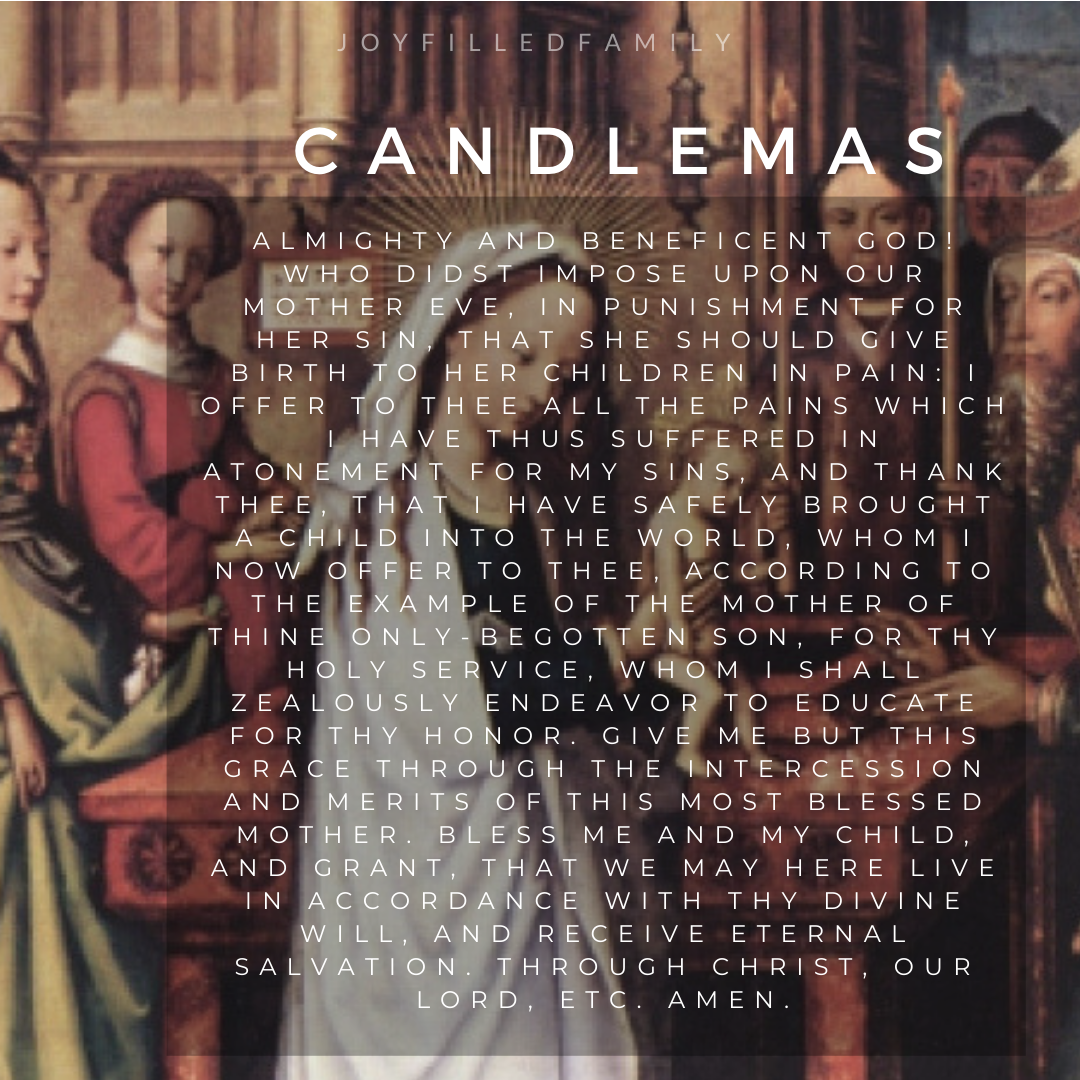
PRAYER Almighty and beneficent God! who didst impose upon our mother Eve, in punishment for her sin, that she should give birth to her children in pain: I offer to Thee all the pains which I have thus suffered in atonement for my sins, and thank Thee, that I have safely brought a child into the world, whom I now offer to Thee, according to the example of the Mother of Thine only-begotten Son, for Thy holy service, whom I shall zealously endeavor to educate for Thy honor. Give me but this grace through the intercession and merits of this most blessed Mother. Bless me and my child, and grant, that we may here live in accordance with Thy divine will, and receive eternal salvation. Through Christ, our Lord, etc. Amen.

II Sunday After Epiphany

January 19, 2020 by Lena {JOYfilledfamily} Filed Under: 01 January, 01 January Saints, Epiphany Leave a Comment

SECOND SUNDAY AFTER EPIPHANY

In the Introit of this day’s Mass the Church calls upon all creatures to thank God for the Incarnation of His only-begotten Son.

INTROIT Let all the earth adore Thee, O God and sing to Thee: let it sing a psalm to Thy name (Ps. 65:4). Shout with joy to God all the earth, sing ye a psalm to His name: give glory to His praise (Ps. 65:1-2). Glory be to the Father.

COLLECT Almighty and eternal God, Who disposest all things in heaven and on earth: mercifully hear the supplications of Thy people, and give Thy peace to our times. Through our Lord.

EPISTLE (Rom.12:6-16). Brethren: We have different gifts, according to the grace that is given us: either prophecy, to be used according to the rule of faith, or ministry in ministering, or he that teacheth in doctrine, he that exhorteth in exhorting, he that giveth with simplicity, he that ruleth with carefulness, he that sheweth mercy with cheerfulness. Let love be without dissimulation. Hating that which is evil, cleaving to that which is good: loving one another with the charity of brotherhood: with honor inspiring one another: in carefulness not slothful: in spirit fervent: serving the Lord: rejoicing in hope: patient in tribulation: instant in prayer: communicating to the necessities of the saints: pursuing hospitality: bless them that persecute you: bless and curse not. Rejoice with them that rejoice, weep with them that weep: being of one mind, one towards another: not minding high things, but consenting to the humble. Be not wise in your own conceits.

EXPLANATION. St. Paul in this epistle exhorts every Christian to make good use of the gifts of God; if one receives an office, he must see well to it, so that he can give an account to God of the faithful performance of his duties. He exhorts especially to brotherly love which we should practice by charitable works; such as, receiving strangers hospitably, giving alms to those who are in need, and to those who by misfortune or injustice have lost their property; he commands us, at the same time, to rejoice in the welfare of our neighbor, as we rejoice at our own good fortune, and to grieve at his misfortunes as we would over those which befall us.

How is brotherly love best preserved?

By the virtue of humility which makes us esteem our neighbor above ourselves, consider his good qualities only, bear patiently his defects, and always meet him in a friendly, respectful, and indulgent manner. Humility causes us to live always in peace with our fellowmen, while among the proud, where each wishes to be the first, there is continual strife and dissatisfaction (Prov. 13:10).

INSTRUCTION FOR SUPERIORS

Those have to expect a severe sentence from God, who merely for temporal gain, seek profitable offices, and thrust themselves therein whether capable or not, and if capable care very little whether they fulfill the duties required, or perhaps make the fulfillment of them depend upon bribes. Of such God makes terrible complaint: Thy princes (judges) are faithless, companions of thieves: they all love bribes, they run after rewards. They judge not for the fatherless; and the widow’s cause comes not into them (Is. 1:23). A most severe judgment shall be for them that bear rule (Wisd. 6:6).

ASPIRATION Grant us, O Lord, Thy grace, that according to Thy will, we may follow the instructions of St. Paul in regard to humility and love, have compassion upon all suffering and needy, think little of ourselves, and descend to the lowest, that we may, one day, be elevated with them in heaven.

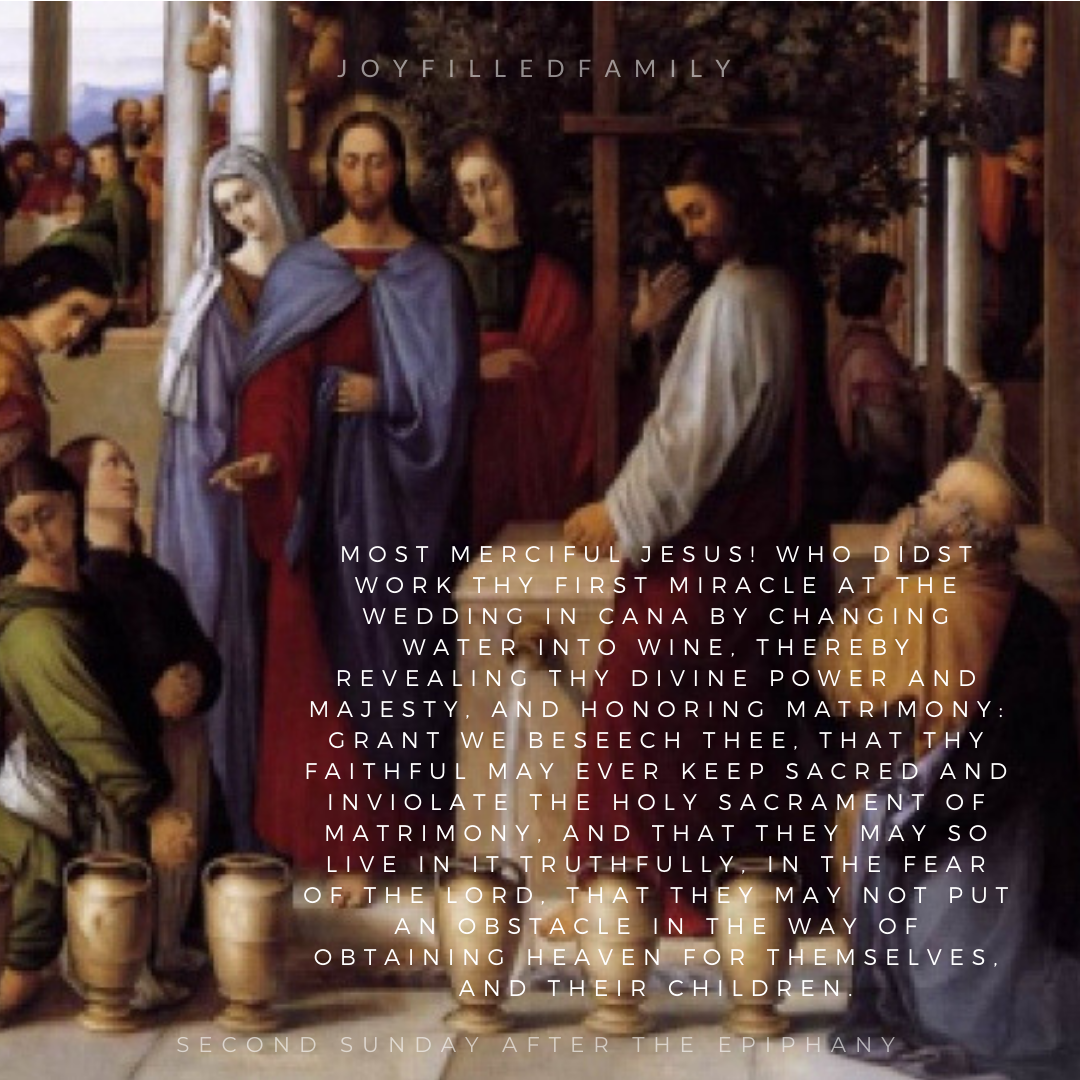
GOSPEL (Jn. 2:1-11). At that time there was a marriage in Cana of Galilee: and the mother of Jesus was there. And Jesus also was invited, and his disciples, to the marriage. And the wine failing, the mother of Jesus saith to him: They have no wine. And Jesus with to her: Woman, what is it to me and to thee? my hour is not yet come. His mother saith to the waiters: Whatsoever he shall say to you, do ye. Now there were set there six water-pots of stone, according to the manner of the purifying of the Jews, containing two or three measures apiece. Jesus saith to them: Fill the water-pots with water. And they filled them up to the brim. And Jesus saith to them: Draw out now, and carry to the chief steward of the feast. And they carried it. And when the chief steward had tasted the water made wine, and knew not whence it was, but the waiters knew who had drawn the water; the chief steward calleth the bridegroom, and saith to him: Every man at first setteth forth good wine; and when men have well drank, then that which is worse: but thou hast kept the good wine until now. This beginning of miracles did Jesus in Cana of Galilee: and manifested his glory, and his disciples believed in him.

Why was Christ and His mother present at this marriage?

In order to honor this humble and God-fearing couple who, with faithful hearts, had invited Him and His mother to their wedding; to give us an example of humility; to assist them in their poverty, and save their good name by changing water into wine; to reveal His dignity as the Messiah to His disciples by this miracle; and to sanctify by His presence the marriages that are contracted in the spirit of the Church.

Alas! how few marriages of our time could Jesus honor with His presence, because He is invited neither by fervent prayer, nor by the chaste life of the couple: He is excluded rather, by the frequent immorality of the married couple and their guests.

Why was Mary interested in this married couple?

Because she is merciful, and the Mother of Mercy, and willingly assists all the poor and afflicted who fear God. From this incident, St. Bonaventure judges of the many graces which we can hope for through Mary, now that she reigns in heaven; “For,” says he, “if Mary while yet on earth was so compassionate, how much more so is she now, reigning in heaven!” He gives the reason by adding: “Mary now that she sees the face of God, knows our necessities far better than when she was on earth, and in proportion to the increase of her compassion, her power to aid us has been augmented.” Ah! why do we not take refuge in all our necessities to this merciful mother, who although unasked assists the needy?

Why did Christ say to Mary: Woman, what is it to me and to thee?

This seemingly harsh reply of Christ was no reproach, for Mary had made her request only through love and mercy, and Christ calls those blessed who are merciful, but he wished to show that in the performance of divine work, the will of His heavenly Father alone should be consulted. He meant to remind her that He had not received the gift of miracles from her as the son of woman, but from His eternal Father, in accordance with whose will He would do that which she asked when the hour designed by God would come. Though the hour had not come, yet He granted the wish of His mother, who knew that her divine Son refused none of her requests, and so she said to the servants: “Whatsoever He shall say to you, do ye.” Behold the great power of Mary’s intercession! Neglect not, therefore, to take refuge in this most powerful mother!

What are we taught by the words: My hour is not yet come?

These words teach us that we should in all things await God’s appointed time, and in things belonging to God and His honor, act only by divine direction, without any human motives.

What does the scarcity of wine signify?

In a spiritual sense the want of wine may be understood to signify the lack of love between married people, which is principally the case with those who enter this state through worldly motives, for the sake of riches, beauty of person, or who have before marriage kept up sinful intercourse. These should ask God for the forgiveness of their sins, bear the hardships of married life in the spirit of penance, and change the wrong motives they had before marriage; by doing so God will supply the scarcity of wine, that is the lack of true love, and change the waters of misery into the wine of patient affection.

Why did Christ command them to take the wine to the steward?

That the steward, whose office required him to be attentive to the conduct of the guests, and to know the quality of the wine, should give his judgment in regard to the excellence of this, and be able to testify to the miracle before all the guests.

ASPIRATION O my most merciful Jesus! I would rather drink in this world the sour wine of misery than the sweet wine of pleasure, that in heaven I may taste the perfect wine of eternal joy.

Sancta Familia

January 12, 2020 by Lena {JOYfilledfamily} Filed Under: 01 January Saints, Holy Family Leave a Comment

“And He went down with them, and came to Nazareth: and was subject to them”

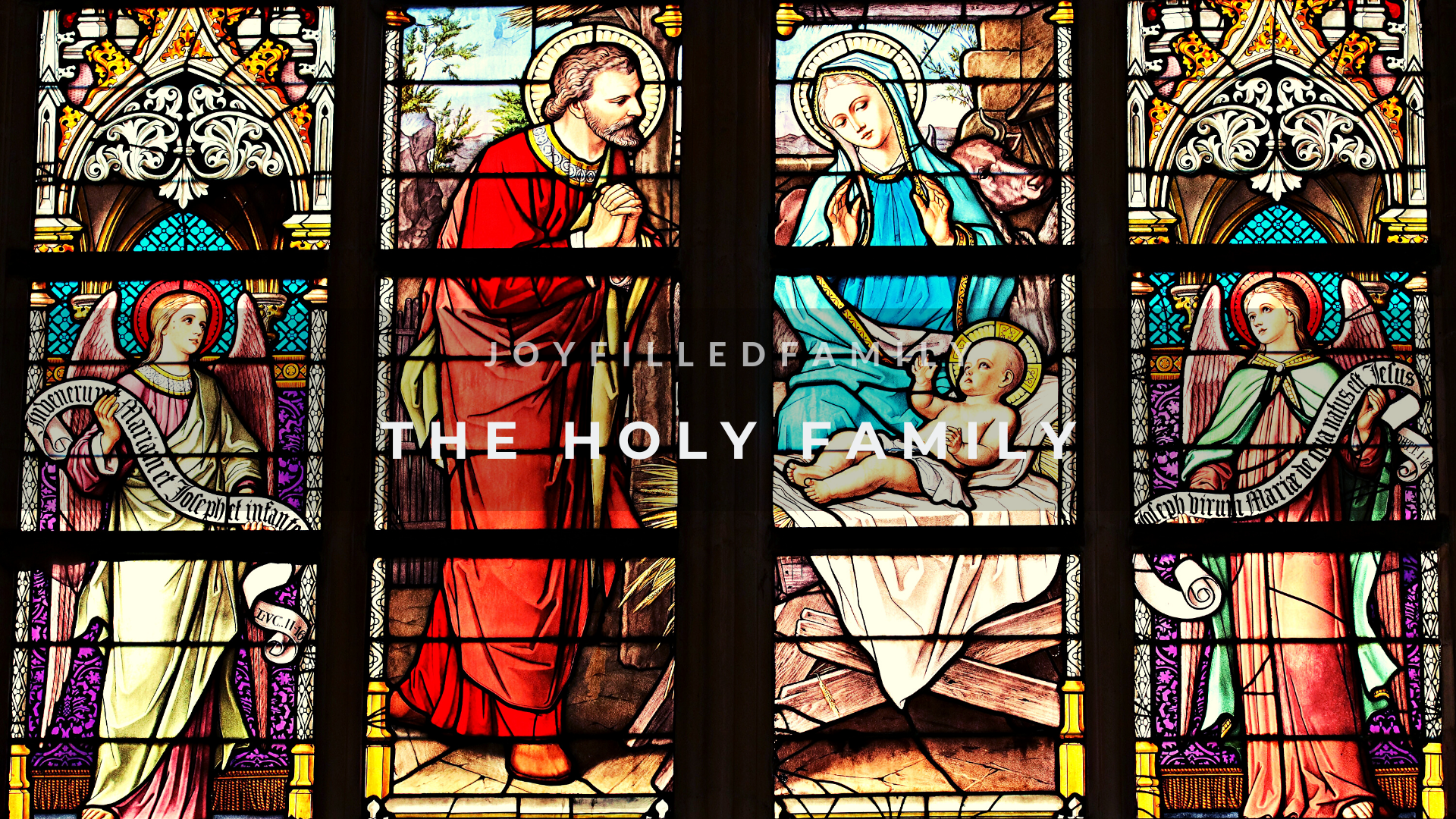
The feast of the Holy Family commemorates the household life of the Child Jesus, His Blessed Virgin Mother and Foster-Father, and presents some familial lessons that never cease in application throughout the year. 

Below is a brief explanation of the feast’s history from the Roman Catholic Daily Missal and some excerpts from Dom Prosper Gueranger’s, The Liturgical Year.


The origins of the Feast of the Holy Family

The special devotion which sets forth the Holy Family of Jesus, Mary, and Joseph as the model of virtue for all Christian households began in the 17th century. It commenced almost simultaneously in Canada and France: the Association of the Holy Family being founded in Montreal in 1663, and the Daughters of the Holy Family in Paris in 1674.

Numerous other congregations and associations under the patronage of the Holy Family have been established since that time, and they are spread over the world. The archconfraternity was established by Pius IX in 1847. In 1893 Leo XIII approved a feast for Canada, and Benedict XV extended the Feast of the Holy Family to the whole Church and ordered its celebration to take place on the Sunday after the Epiphahy.


From Dom Gueranger

On the Mass propers

GOSPEL (Lk.2:42-52) When Jesus was twelve years old, they went up to Jerusalem, according to the custom of the feast; and having fulfilled the days, when they returned, the Child Jesus remained in Jerusalem, and His parents knew it not. And thinking that He was in the company, they came a day’s journey, and sought Him among their kinsfolk and acquaintance. And not finding Him, they returned into Jerusalem, seeking Him.

And it came to pass, that after three days they found Him in the temple, sitting in the midst of the doctors, hearing them, and asking them questions. And all that heard Him were astonished at His wisdom and His answers.

And seeing Him, they wondered. And His Mother said to Him: Son, why hast Thou done so to us? Behold Thy father and I have sought Thee sorrowing. And He said to them: How is it that you sought Me? Did you not know that I must be about My Father’s business? And they understood not the word that He spoke unto them.

And He went down with them, and came to Nazareth, and was subject to them. And His Mother kept all these words in her heart. And Jesus advanced in wisdom, and age, and grace with God and men.

ASPIRATION Thus, O Jesus! — didst Thou come down from Heaven to teach us. The tender age of Childhood, which Thou didst take upon Thyself, is no hindrance to the ardor of Thy desire that we should know the one only God, Who made all things, and Thee, His Son, Whom He sent to us. When laid in the Crib, Thou didst instruct the Shepherds by a mere look; when swathed in Thy humble swaddling-clothes, and subjected to the voluntary silence thou hadst imposed on Thyself, Thou didst reveal to the Magi the light they sought in following the star.

When twelve years old, Thou explainest to the Doctors of Israel the Scriptures which bear testimony to Thee. Thou gradually dispellest the shadows of the Law by Thy presence and Thy words. In order to fulfill the commands of Thy heavenly Father, Thou dost not hesitate to occasion sorrow to the heart of Thy Mother, by thus going in quest of souls that need enlightening. Thy love of man will pierce that tender Heart of Mary with a still sharper sword, when she shall behold Thee hanging on the Cross, and expiring in the midst of cruelest pain.

Blessed be Thou, sweet Jesus, in these first Mysteries of Thine Infancy, wherein Thou already showest Thyself devoted to us, and leavest the company of Thy Blessed Mother for that of sinful men, who will one day conspire thy Death.

COMMENT The Offertory takes us through the Feast of the Purification; let us again offer ourselves to the Lord.

OFFERTORY (Lk. 2:22) The parents of Jesus carried Him to Jerusalem to present Him to the Lord.

COMMENT In the Secret the Church again prays that she may be strengthened in peace and grace; these gifts have been purchased for us by our Lord Himself; it is through the Holy Mass that we can be more strongly established in them.

SECRET We offer to thee, O Lord, an atoning Victim, humbly entreating that through the intercession of the Virgin Mother of God and blessed Joseph, Thou wouldst strongly establish our families in Thy peace and grace. Through the same Lord.

COMMUNION (Lk. 2:51) And He went down with them, and came to Nazareth, and was subject to them.

LESSON If we have kept before our eyes the example of the Holy Family, we may humbly trust that at the hour of our death we shall be helped and consoled and be found worthy to have fellowship with Christ in the eternal dwellings. Such is the last prayer of the Church, and may it be one we love to repeat and dwell on.


Hymn from the Office of II Vespers

Blest light of all the heavenly hosts,
Sole hope of them that dwell on earth,
The purest love that ever graced
A home, did smile upon Thy birth.

Mary, dear Mother, who but thee
Was ever yet so rich in grace?
Didst nourish Christ upon thy knee
And fold Him in a sweet embrace?

And Joseph, chosen out to guard
The Virgin with thy gentle might,
The Infant Jesus smiled on thee
And called thee father as by right.

You, Who to save a guilty race
Were born of David’s noble line,
O hear the humble prayers of all
Today, who gather round Your shrine.

The sun now wends his way to rest
And earth is veiled in shadows gray;
Yet hearts a-fire with joy and love
Still bid us linger on to pray.

O may the grace of that sweet home
Which held the earthly Trinity,
Be shed abroad upon the world
And bless the Christian family.

O Jesus, born of Virgin bright,
Immortal glory be to Thee;
Praise to the Father infinite
And Holy Ghost eternally. Amen.

V. I will make all thy children to be taught of the Lord.
R. And great the peace of thy children.


O Most Holy Family: Jesus, Mary & Joseph

O Holy Family—
Guardian of virgins,
Virgin of virgins,
Virgin-Birth—
image of the
Holy Trinity
here on earth;
model of
charity, chastity,
humility, modesty,
poverty, sanctity;
three-in-One,
One-in-three,
O most Holy Family…
Jesus, Mary, Joseph:
grant us,
we beseech thee
to live our lives
in unity,
that is…

Charity,
the bond of
perfection,[1]
with all
simplicity,
and meekness of heart,[2]
in humble subjection
to the will of God[3]

Instill in us
a meek and humble attitude;
Help us to live a life
of rectitude and gratitude,
a life founded, grounded
on the beatitudes,[4]
in all plenitude…
full of grace and truth[5]

Help us to crucify
our selfish self-love,[6]
that we may love others,
and God above,
with perfect charity;
For, these commandments
form the greatest two,[7]
they encapsulate all;
For, the love of God
and neighbor
is the fulfilling of the law[8]

Guide us along the
path of purgation;
enlighten us with
thine illumination,
that we may grow
to the age of perfection,[9]
and attain our
final destination…
the state of Divine affiliation;[10]
we, lowly, sinful creatures,
called to be partakers
of the Divine nature[11]

For, to this,
we are called,
in imitation of thee…
holiness,[12]
sanctity[13]…
without which,
God…
we shall not see[14]


Footnotes

  • 1 Colossians 3:14.
  • 2 Matthew 5:4, 11:29.
  • 3 Matthew 1:24, 12: 50, 26:39, 42;  Luke 1:38;  John 4:34, 8:29;  Hebrews 10:7; Psalm 39:8-9.
  • 4 Matthew 5:3-10.
  • 5 John 1:14.
  • 6 Colossians 3:5-9; Ephesians 4:22, 25.
  • 7 Matthew 22:35-40; Mark 12:28-31;  John 13:34-35.
  • 8 Romans 13:8, 10.
  • 9 Ephesians 4:13; Colossians 1:28.
  • 10 1 John 3:1-2.
  • 11 2 Peter 1:4.
  • 12 Leviticus 11:44, 46, 19:2, 20:7;  Ephesians 1:4, 4:24; 1 Peter 1:15-16.
  • 13 1 Thessalonians 4:3, 7; 1 John 3:3.
  • 14 Hebrews 12:14.

Feast of Epiphany

January 6, 2020 by Lena {JOYfilledfamily} Filed Under: 01 January, Epiphany Of Our Lord Leave a Comment

All Kings of the Earth Shall Adore Him

FEAST OF EPIPHANY

Fr. Goffine

What festival is this?

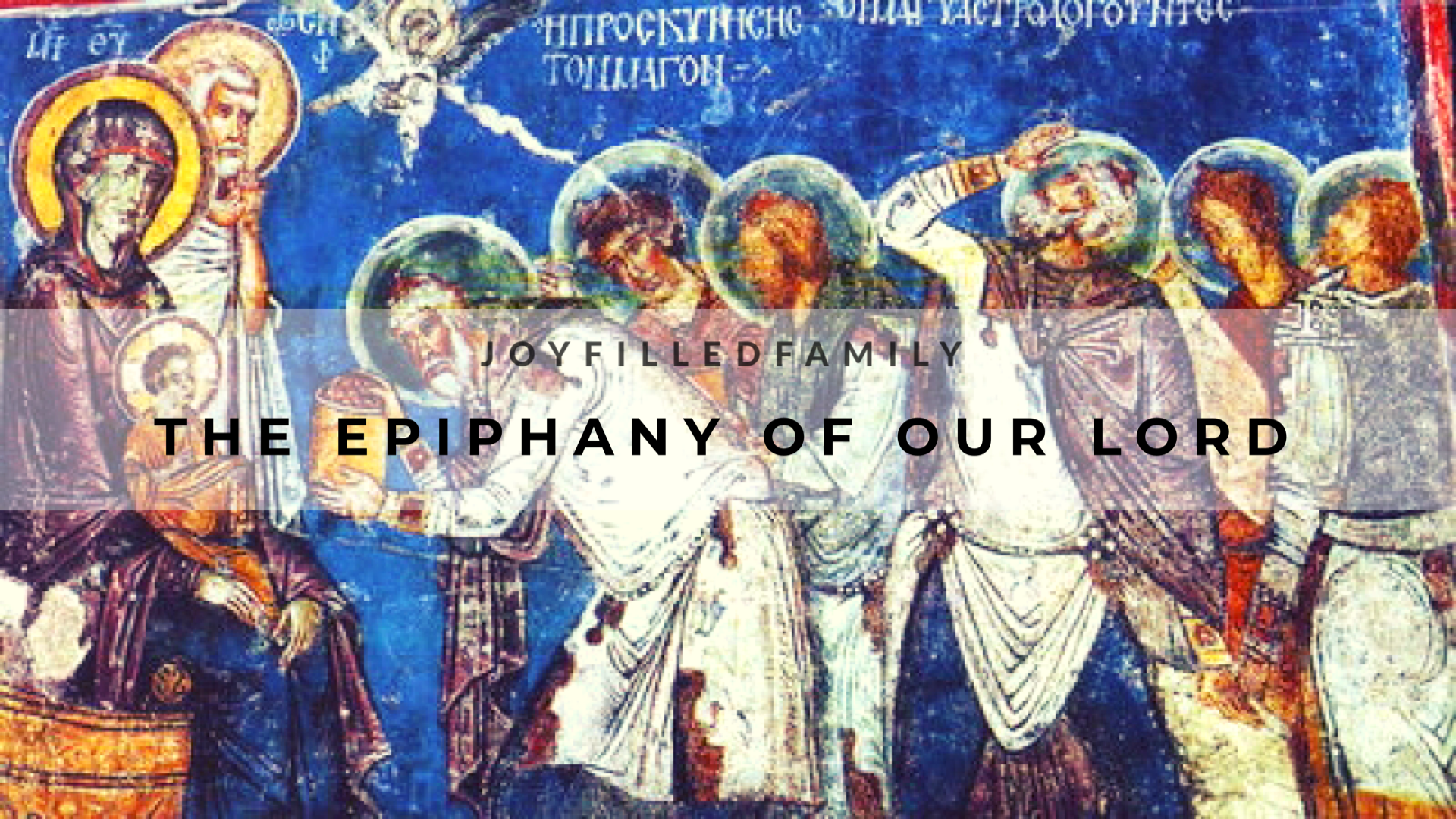
This festival is set apart to solemnly commemorate the coming of the three wise men from the East, guided by a miraculous star which appeared to them, and directed them to Bethlehem, where they found Christ in the stable; here they honored and adored Him and offered gifts to Him.

Why is this day called Epiphqnid Domini, or Apparition of the Lord?

Because the Church wishes to bring before our mind the three great events in the life of Christ, when He made known to man His divinity: the coming of the wise men from the East, through whom He revealed Himself to the Gentiles as the Son of God; His baptism, on which occasion His Divinity was made known to the Jews, and His first miracle at the marriage of Cana, by which He revealed Himself to His disciples.

INTROIT Behold the Lord the Ruler is come; and the kingdom is in his hand, and power and dominion (Mal. 3). Give to the king thy judgment, O God; and to the king’s son thy justice (Ps. 71:1). Glory be to the Father.

COLLECT God, Who on this day by the leading of a star didst reveal Thine only-begotten Son to the Gentiles; mercifully grant, that we who know Thee now by faith may be brought to contemplate the beauty of Thy majesty. Through our Lord.

EPISTLE (Is. 60:1-6). Arise, be enlightened, O Jerusalem; for thy light is come, and the glory of the Lord is risen upon thee, For behold, darkness shall cover the earth, and a mist the peoples; but the Lord shall arise upon thee, and his glory shall be seen upon thee. And the Gentiles shall walk in thy light, and kings in the brightness of thy rising. Lift up thy eyes round about, and see; all these are gathered together, they are come to thee: thy sons shall come from afar, and thy daughters shall rise up at thy side. Then shalt thou see, and abound, and thy heart shall wonder and be enlarged, when the multitude of the sea shall be converted to thee, the strength of the Gentiles shall come to thee. The multitude of camels shall cover thee, the dromedaries of Madian and Epha; all they from Saba shall come, bringing gold and frankincense, and showing forth praise to the Lord.

EXPLANATION The Prophet Isaias, in this epistle, predicts that the light of the Lord, which is Christ, will rise over Jerusalem, the prototype of the Church, and that the Gentiles who knew nothing of the true God, would come to walk in that light which Christ, by His doctrine and holy life, would cause to shine, and that numberless nations, from all parts of the world, would assemble as her children to adore the one true God. The fulfillment of this prophecy commenced with the adoration of the Magi, who are to be regarded as the first Christian converts of the Gentiles; the Church, therefore, very properly celebrates this day with great solemnity. We ought also to share in the joy of the Church, because our ancestors were Gentiles, and like the three wise men were called to the true faith. Let us exclaim with Isaias: Give praise, O ye heavens, and rejoice, O earth, ye mountains give praise with jubilation: because the Lord hath comforted his people, and will have mercy on his poor ones (Is. 49:13).

GOSPEL (Mt. 2:1-12). When Jesus was born in Bethlehem of Juda, in the days of king Herod, behold there came wise men from the East to Jerusalem, saying: Where is he that is born King of the Jews? For we have seen his star in the East, and are come to adore him. And king Herod hearing this, was troubled, and all Jerusalem with him. And assembling together all the chief priests and the scribes of the people, he inquired of them where Christ should be born. But they said to him: In Bethlehem of Juda; for so it is written by the prophet: And thou, Bethlehem, the land of Juda, art not the least among the princes of Juda, for out of thee shall come forth the ruler that shall rule my people Israel. Then Herod, privately calling the wise men, learned diligently of them the time of the star which appeared to them; and sending them into Bethlehem, said: Go and diligently inquire after the child, and when you have found him, bring me word again, that I also may come and adore him. Who having heard the king, went their way; and behold, the star which they had seen in the East went before them, until it came and stood over where the child was. And seeing the star, they rejoiced with exceeding great joy. And entering into the house, they found the child with Mary his mother and falling down they adored him. And opening their treasures, they offered him gifts; gold, frankincense, and myrrh. And having received an answer in sleep that they should not return to Herod, they went back another way into their own country.

What caused the three kings to undertake so tedious a journey?

A star which God permitted to appear in their land, at the sight of which they were inwardly enlightened, so that they at once recognized its signification. Let us learn from these kings who so readily responded to the inspiration of God, by immediately undertaking so difficult a journey, to follow without delay the promptings of divine grace, and from their zeal, and the fearlessness with which they asked Herod where the Messiah would be found, we should learn to seek and practice, without fear of men, whatever is necessary for our salvation.

Why did Herod fear, and all Jerusalem with him?

Because Herod, a proud, imperious, cruel, and therefore jealous king, was afraid, when he heard of a new-born king, that he would be deprived of his throne, and punished for his vices. A bad conscience is always ill at ease, and has no peace. There is no peace to the wicked, saith the Lord God (Is. 57:21). Jerusalem, that is, the inhabitants of Jerusalem, feared because many of them were attached to Herod, and others, especially the chief priests and the scribes, feared they would be punished for their secret crimes, when the Messiah would come, of whom they knew that He shall judge the poor with justice, and with the breath of his lips he shall slay the wicked (Is. 11:4).

Why did Herod assemble the chief priests and the scribes?

Partly to find from them where the Messiah was to be born, partly and principally because God so directed it, that Herod and the chief priests, knowing the time and place of the Messiah’s birth, would have no excuse for their infidelity. In the same way God often makes known to us, in the clearest manner the most wholesome truths, yet we heed them as little as did the Jews who had sufficient knowledge of the Messiah, indeed, even showed the way to the three kings, but made no use of it for themselves, and were therefore cast away.

Why did Herod say he wished to adore the child?

This he did out of wicked hypocrisy and dissimulation. He had no other intention than to put Jesus to death, and therefore affected piety to find out exactly the time and place of His birth. Thus do those murderers of souls who desire the fall of the innocent; they do not let their evil intentions be made known at once, and so they put on sheep’s clothing, feign piety and devotion, until they creep into the heart from which, by flattery and irony about religion and virtue, and by presents, they expel shame, the fear of God, and thus murder the soul.

Why did the kings fall down and adore Christ?

Because by the light of faith they saw in the Infant at Bethlehem God Himself, and, notwithstanding the poverty of His surroundings, recognized in Him the expected Messiah, the new-born king of the Jews, and by prostrating themselves before Him paid Him the homage of their country.

Why did the kings offer gold, frankincense and myrrh?

Because it was the ancient Eastern custom, never to appear without presents before a prince or king, and the three kings, as the holy Fathers universally teach, enlightened by the Holy Ghost, desired by their presents to honor Christ as God, as king, and as man. Of this the venerable Bede writes: “The first of the kings, named Melchior, offered gold to Christ the Lord and king; the second, named Caspar, frankincense to the divinity of Christ; and the third, Balthassar, myrrh, by which was expressed that Christ, the Son of man, must die.”

How can we bring similar offerings to Christ?

We offer gold to Him, when we love Him with our whole heart, and out of love to Him, present Him our will by perfect obedience and continual self-denial, as our will is our most precious treasure. We also offer Him gold when we assist the poor by alms given in His name. We offer Him frankincense when we devoutly and ardently pray to Him, especially when we meditate upon His omnipotence, love, goodness, justice and mercy. We offer Him myrrh when we avoid carnal desires, mortify our evil inclinations and passions, and strive for purity of body and soul.

Why did the kings return by another way to their own country?

This they did by command of God. From the example of the three wise men we should learn to obey God rather than man, that we must be obedient to His directions, even if we do not understand them; so the three kings obeyed, although they may not have understood why God commanded them to flee from Herod. After we have found God we should walk in the path of virtue, and not return to our old sinful ways. “Our fatherland is paradise, heaven,” writes St. Gregory. “We have departed from it by pride, disobedience, abuse of the senses, therefore it is needed that we return to it by obedience, contempt of the world, and by taming the desires of the flesh; thus we return to our own country by another road. By forbidden pleasures we have forfeited the joys of paradise, by penance we must regain them.”

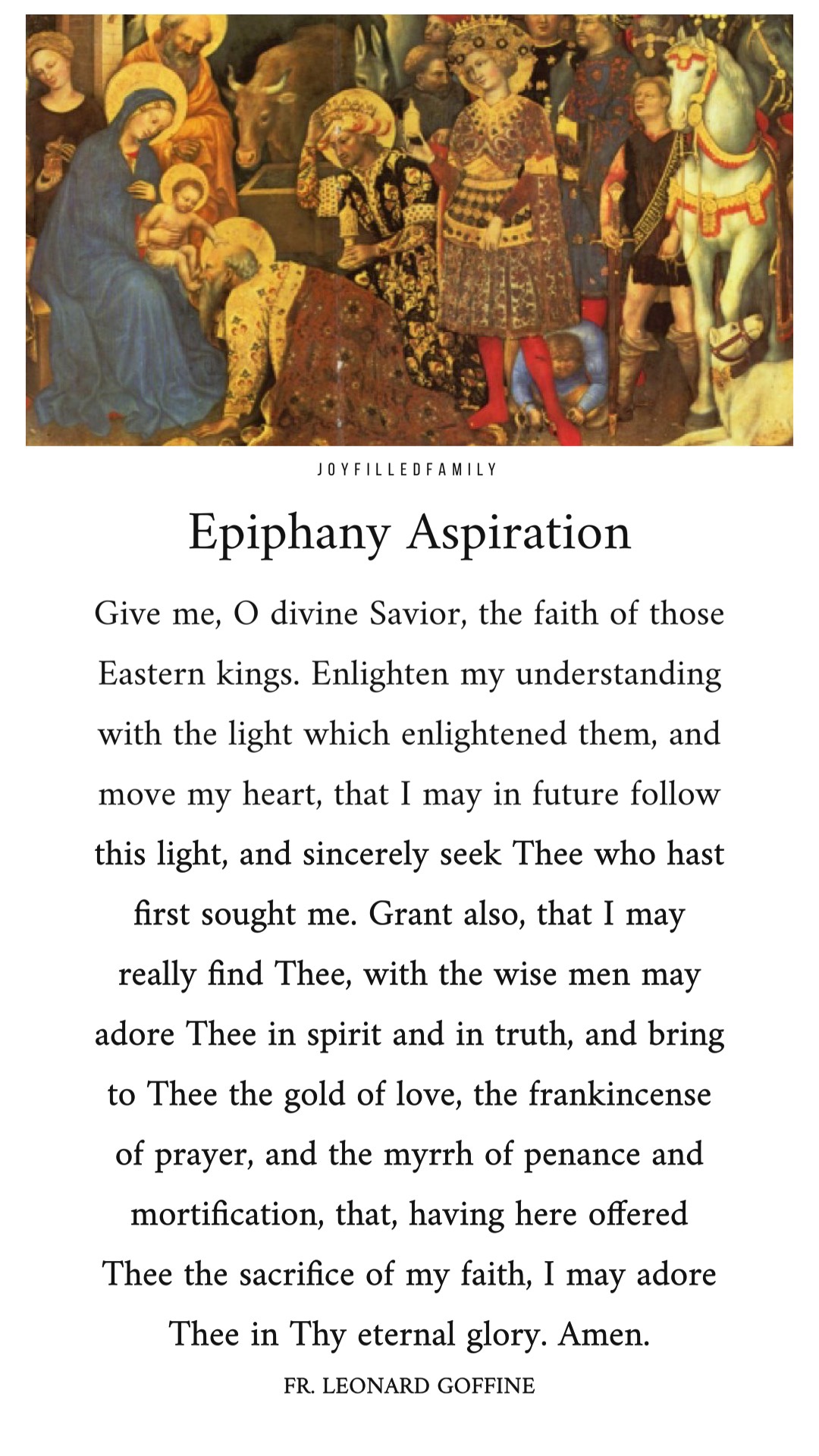
ASPIRATION Give me, O divine Savior, the faith of those Eastern kings. Enlighten my understanding with the light which enlightened them, and move my heart, that I may in future follow this light, and sincerely seek Thee who hast first sought me. Grant also, that I may really find Thee, with the wise men may adore Thee in spirit and in truth, and bring to Thee the gold of love, the frankincense of prayer, and the myrrh of penance and mortification, that, having here offered Thee the sacrifice of my faith, I may adore Thee in Thy eternal glory. Amen.

Epiphany House Blessing

January 6, 2020 by Lena {JOYfilledfamily} Filed Under: 01 January, Epiphany Of Our Lord, Uncategorized Leave a Comment

To bless your home this Epiphany, read the Prologue of St. John’s Gospel (i.e., the Last Gospel used at Mass), followed by the Our Father, and the Collect of the Epiphany; then write the inscription for this year above your front door with blessed chalk.

COLLECT God, Who on this day by the leading of a star didst reveal Thine only-begotten Son to the Gentiles; mercifully grant, that we who know Thee now by faith may be brought to contemplate the beauty of Thy majesty. Through Our Lord, etc.

EPIPHANY CHALK BLESSING

The lintel of the main door of the house is marked with the blessed chalk by the head of the household in the following manner.

Inscribe 20+C+M+B+20 while sayingthe following prayer:

The Three Wise Men …
C             Caspar …
M            Melchior …
B             & Balthasaar, followed the star of God’s Son who became Man …
20           Two-thousand …
20           and twenty years ago …
+              May Christ …
+              bless our home …
+              and remain with us …
+              through the new year. …

Almighty God, incline Thine ear. Bless us and all who are gathered here. Send Thy holy angel who will defend us, and fill with grace all who dwell here. Amen.

The father/senior member may then proceed to sprinkle the interior of the home with the blessed Epiphany Water.

  • « Previous Page
  • 1
  • …
  • 67
  • 68
  • 69
  • 70
  • 71
  • …
  • 233
  • Next Page »

Hi! I'm Lena, mama of JOYfilledfamily.
We are a traditional Catholic family striving to live for Jesus Christ in everything we do. We pray to completely surrender our will to His and to become His servants. Our mission of this blog is to share our JOY.

This blog serves as a journal of us making good memories, living the liturgical year, and our spiritual journey.

Subscribe to our Newsletter

  • Home
  • About
  • Blog

Copyright © 2026 swank WordPress Theme <a PDCD