• Email
  • Facebook
  • Instagram
  • Pinterest
share our JOY

JOY{filled}family

striving to radiate Him always

  • Home
  • Blog
  • Brown Scapular
  • Liturgical Calendars & Planners
  • Wellness
    • Essential Oils
    • Fitness
    • Nutrition
  • Homeschool
  • Sacraments
    • Baptism
    • First Communion
    • Confirmation

Twenty-fifth Sunday after Pentecost

November 12, 2023 by Lena {JOYfilledfamily} Filed Under: Twenty-fifth Sunday after Pentecost Leave a Comment

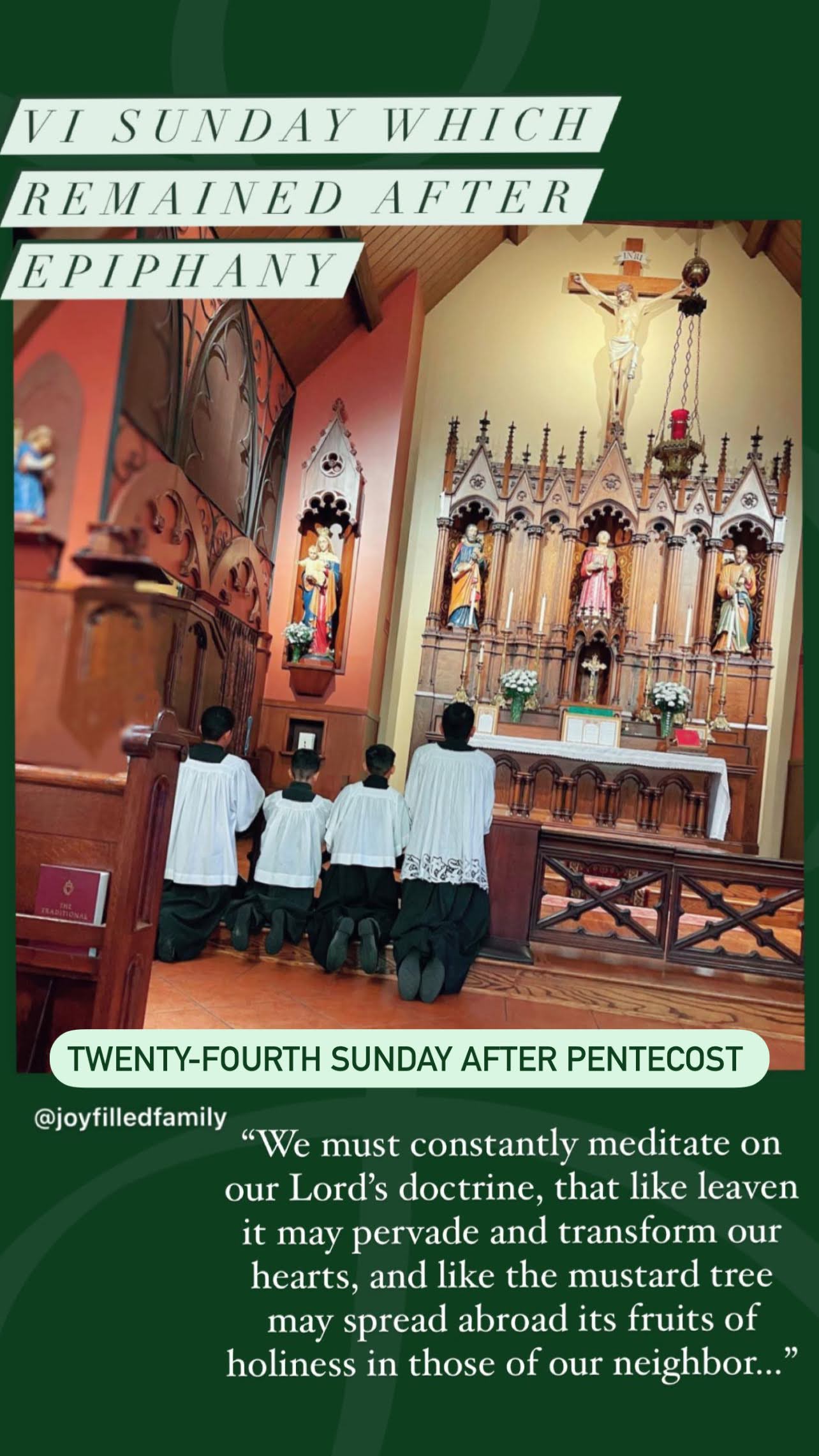
25th Sunday after Pentecost – 6th Sunday after Epiphany

REMARKThe Mass of this Sunday is always the last, even if there are more than twenty-four Sundays after Pentecost; in that case  the Sundays remaining after Epiphany, which are noticed in the calendar,   are inserted between the twenty-third  and the Mass of the twenty-fourth Sunday.

For the Introit of this day’s Mass see the Introit of the third Sunday after Epiphany.]

INTROIT Adore God, all ye His angels: Sion heard, and was glad; and the daughters of Juda rejoiced. The Lord hath reigned; let the earth rejoice; let the many islands be glad. (Ps. XCVI. 1.) Glory be to the Father, etc.

COLLECT Grant, we beseech Thee, Almighty God, that ever fixing our thoughts on such things as are reasonable, we may both in our words and works do what is pleasing in Thy sight. Through our Lord Jesus Christ, etc.

EPISTLE (I. Thess. I. 2-10.) Brethren, we give thanks to God for you all, making a remembrance of you in our prayers without ceasing; being mindful of the work of your faith, and labor, and charity, and of the enduring of the hope of our Lord Jesus Christ before God and our Father: knowing, brethren, beloved of God, your election: for our gospel hath not been unto you in word only, but in power also, and in the Holy Ghost, and in much fullness, as you know what manner of men we have been among you for your sakes. And you became followers of us and of the Lord, receiving the word in much tribulation, with joy of the Holy Ghost: so that you were made a pattern to all that believe, in Macedonia and in Achaia. For from you was spread abroad the word of the Lord, not only in Macedonia and in Achaia, but also in every place, your faith, which is towards God, is gone forth; so that we need not to speak anything. For they themselves relate of us what manner of entering in we had unto you; and how ye turned, to God from idols, to serve the living and true God, and to wait for His Son from heaven (whom he raised from the dead), Jesus, who both delivered us from the wrath to come.

EXPLANATION The apostle gives thanks to God in prayer for those inhabitants of Thessalonia, who have been converted to Christianity by his words, and declares to them his joy at their Christian life which they prove by their good works and their perseverance, even through all trials, in expectation of eternal reward through Christ. He assures them also of their salvation, (election) because God had caused the preaching of His gospel, which they so willingly received, to produce in them such extraordinary fruit. He praises them not only for having listened to the gospel and abandoned idolatry, but for having regulated their lives in accordance with the faith, and having become a model to distant nations, for the report of their faith had spread far, and everywhere their zealous reception of the gospel was spoken of. Would that the same could be said of all Christians!

GOSPEL (Matt. XIII. 31-35.) At that time, Jesus spoke this parable to the multitudes: The kingdom of heaven is like to a grain of mustard-seed, which a man took and sowed in his field: which is the least indeed of all seeds; but when it is grown up, it is greater than all herbs, and becometh a tree, so that the birds of the air come, and dwell in the branches thereof. Another parable he spoke to them: The kingdom of heaven is like to leaven, which a woman took and hid in three measures of meal, until the whole was leavened. All these things Jesus spoke in parables to the multitude, and without parables he did not speak to them, that it might be fulfilled which was spoken by the prophet, saying: I will open my mouth in parables, I will utter things hidden from the foundation of the world.

What is here understood by the kingdom of heaven?

The Church and the doctrine of Christ.

Why is the Church compared to a grain of mustard-seed?

Because there is a great similarity between them. The mustard-seed, though so small, grows in Palestine so high and so rapidly, that it becomes a broad tree, in which birds can build their nests. In like manner the Church of Christ was in the beginning very small like the mustard-seed, but it soon spread so wide that numberless people, even great philosophers and princes, came to find peace and protection under its branches.

Why is Christ’s doctrine compared to leaven?

Because like the leaven, which quickly penetrates the flour, and makes it palatable bread, the doctrine of Christ, spreading with surprising swiftness over the then known parts of the globe, gave the Gentiles a taste for divine things and for heavenly wisdom. Thus Christ’s doctrine penetrates him who receives it, sanctifies all his thoughts, words, and deeds, and makes him pleasing to God.

By what means, in particular, was the Church of Christ propagated?

By the omnipotence of God and the miracles which He so frequently wrought to prove the truth and divinity of the Christian religion; the courageous faith, and the pure moral life of the early Christians, which led many pagan minds to accept the doctrine of Christ; and the persecution of Christianity, for, as Tertullian says: “The blood of the martyrs was the seed of the Church.” The false doctrine of Mahomet, the erroneous teachings of Luther, Calvin, and earlier and later heretics have, it is true, also spread quickly far and wide; but this is not to be wondered at, for it is easy to lead people to a doctrine that encourages sensuality, and to which they are carried by their evil inclinations, as was the case with the doctrine of the impostor Mahomet, and three hundred years ago with the heresy of Luther; but to spread a doctrine which demands the subduing of the carnal, earthly inclinations, and to bend the will to the yoke of obedience to faith, something more than human eloquence is required. Thus, the Chancellor of England, Thomas More, who gave his blood for the true doctrine of Christ, wrote to Luther, who was boasting of the rapid increase of his sect: “It is easy to descend; seducing the people to a bad life is nothing more marvellous than that a heavy stone should fall of its own accord to the ground;” and Melanchton, a friend of Luther, in answer to his mother’s question, whether she should remain a Catholic or receive Luther’s doctrine, wrote : “In this religion it is easy to live, in the Catholic it is easy to die.”

Why did Christ always speak in parables?

That His teaching by being simple might be more easily understood, and better remembered. He who is called upon to teach others, should, as did Christ, always speak to them according to their ability to understand, and by no means seek his own honor, but the honor of God, and the benefit of those who hear him.

PRAYER O most benign Jesus. How much do we give Thee thanks that Thou hast permitted us to be born in Thy holy Church, and instructed in Thy holy doctrine, which, like the mustard-seed, has grown to be a large tree, spreading over the whole earth. Grant that under the shadow of this tree, in Thy holy Church, we may ever rest securely, cling to her faithfully, and penetrated, as by leaven, with her doctrine may bring Thee pleasing fruits of faith and virtue.  Amen.

Twenty-Fourth Sunday After Pentecost

November 12, 2023 by Lena {JOYfilledfamily} Filed Under: Fifth Sunday After Epiphany, Twenty-fourth Sunday after Pentecost Leave a Comment


FIFTH SUNDAY AFTER EPIPHANY
– Taken from Fr. Goffine’s The Church’s Year

REMARK The Mass of this Sunday is always the last, even if there are more than twenty-four Sundays after Pentecost; in that case  the Sundays remaining after Epiphany, which are noticed in the calendar,   are inserted between the twenty-third  and the Mass of the twenty-fourth Sunday.

In 2023, 24th Sunday after Pentecost is the 5th Sunday after Epiphany.

Rev. Fr. Leonard Goffine’s
The Church’s YearFIFTH SUNDAY AFTER EPIPHANY


[For the Introit of this day see the Introit in the Mass of the third Sunday after Epiphany]

INTROIT Adore God, all ye His angels: Sion heard, and was glad; and the daughters of Juda rejoiced. The Lord hath reigned; let the earth rejoice; let the many islands be glad. (Ps. XCVI. 1.) Glory be to the Father, etc.


On this Sunday mention is made of the practice of Christian virtues, and of God’s sufferance of the wicked upon earth, that by them the just may be exercised in patience.COLLECT Keep, we beseech Thee, O Lord, Thy household by Thy continual mercy; that as it leans only upon the hope of Thy heavenly grace, so it may ever be defended by Thy protection. Through our Lord Jesus Christ, etc.

EPISTLE (Col. III. 12-17.) Brethren, put ye on, as the elect of God, holy and beloved, the bowels of mercy, benignity, humility, modesty, patience; bearing with one another, and forgiving one another, if any have a complaint against another; even as the Lord hath forgiven you, so you also. But above all these things, have charity, which is the bond of perfection: and let the peace of Christ rejoice in your hearts, wherein also you are called in one body; and be ye thankful. Let the word of Christ dwell in you abundantly, in all wisdom; teaching and admonishing one another, in psalms, hymns, and spiritual canticles, singing in grace in your hearts to God. All whatsoever you do in word or in work, all things, do ye in the name of the Lord Jesus Christ, giving thanks to God and the Father through Jesus Christ our Lord.

Why does St. Paul call charity the bond of perfection?

Because charity comprises in itself and links all the virtues in which perfection consists. For whoever truly loves God and his neighbor, is also good, merciful, humble, modest, patiently bears the weakness of his neighbor, willingly forgives offences, in a word, practices all virtues for the sake of charity.

When does the peace of God rejoice in our hearts?

When we have learned to conquer our evil inclinations, passions, and desires, and have placed order and quiet in our hearts instead. This peace then, like a queen, keeps all the wishes of the soul in harmony, and causes us to enjoy constant peace with our neighbor, and thus serve Christ in concord, as the members of one body serve the head. The best means of preserving this peace are earnest attention to the word of God, mutual imparting of pious exhortations and admonitions, and by singing hymns, psalms, and spiritual canticles.

Why should we do all in the name of Jesus?

Because only then can our works have real worth in the sight of God, and be pleasing to Him, when they are performed for love of Jesus, in His honor, in accordance with His spirit and will. Therefore the apostle admonishes us to do all things, eat, drink, sleep, work &c. in the name of Jesus, and so honor God, the Heavenly Father, and show our gratitude to Him. Oh, how grieved will they be on their deathbed who have neglected to offer God their daily work by a good intention, then they will see, when too late, how deficient they are in meritorious deeds. On the contrary they will rejoice whose consciences testify, that in all their actions they had in view only the will and the honor of God! Would that this might be taken to heart especially by those who have to earn their bread with difficulty and in distress, that they might always unite their hardships and trials with the sufferings and merits of Jesus, offering them to the Heavenly Father, and thus imitating Christ who had no other motive than the will and the glory of His Heavenly Father.

ASPIRATION O God of love, of patience, and of mercy, turn our hearts to the sincere love of our neighbor, and grant, that whatever we do in thoughts, words and actions, we may do in the name of our Lord Jesus Christ, and through Him render thanks to Thee.

ON CHURCH SINGING

“Admonish one another in psalms, hymns, and spiritual canticles, singing in grade in your hearts to God.” (Col. III. 16.)The custom of singing in the Church-choir* has its foundation as far back as the Old Testament, when by the arrangement of David, Solomon, and Ezechias, the psalms and other sacred canticles were sung by the priests and Levites. This custom the Catholic Church has retained, according to the precepts of the apostles, (I. Cor. XIV. 26; Eph. V. 19.) and the example of Jesus who, after they had eaten the Pasch, intoned a hymn of praise with His apostles, Matt XXVI. 30) that Christians on earth, like the angels and saints in heaven, (Apoc. V. 8. 9., XIV. 3.) who unceasingly sing His praises, might at certain hours of the day, at least, give praise and thanks to God. In the earliest ages of the Church, the Christians sang hymns of praise and thanksgiving during the holy Sacrifice and other devotional services, often continuing them throughout the whole night; in which case the choir-singers probably were bound to keep the singing in proper order and agreement. In the course of time this custom of all the faithful present singing together ceased in many churches, and became confined to the choir, which was accompanied later by instruments in accordance with the words of David who calls to the praise of the Lord with trumpets, with timbrels, with pleasant psaltery and harps. (Ps, CL. 3, 4., LXXX. 3. 4.) In many churches, where the faithful still sing in concert, if done with pure hearts and true devotion, it is as St. Basil says, “a heavenly occupation, a spiritual burnt offering; it enlightens the spirit, raises it towards heaven, leads man to communion with God, makes the soul rejoice, ends idle talk, puts away laughter, reminds us of the judgment, reconciles enemies. Where the singing of songs resounds from the contrite heart there God with the angels is present.”*The choir is usually a gallery in the Church in which the singers are stationed; the place where the clergy sing or recite their office, is also called the choir.

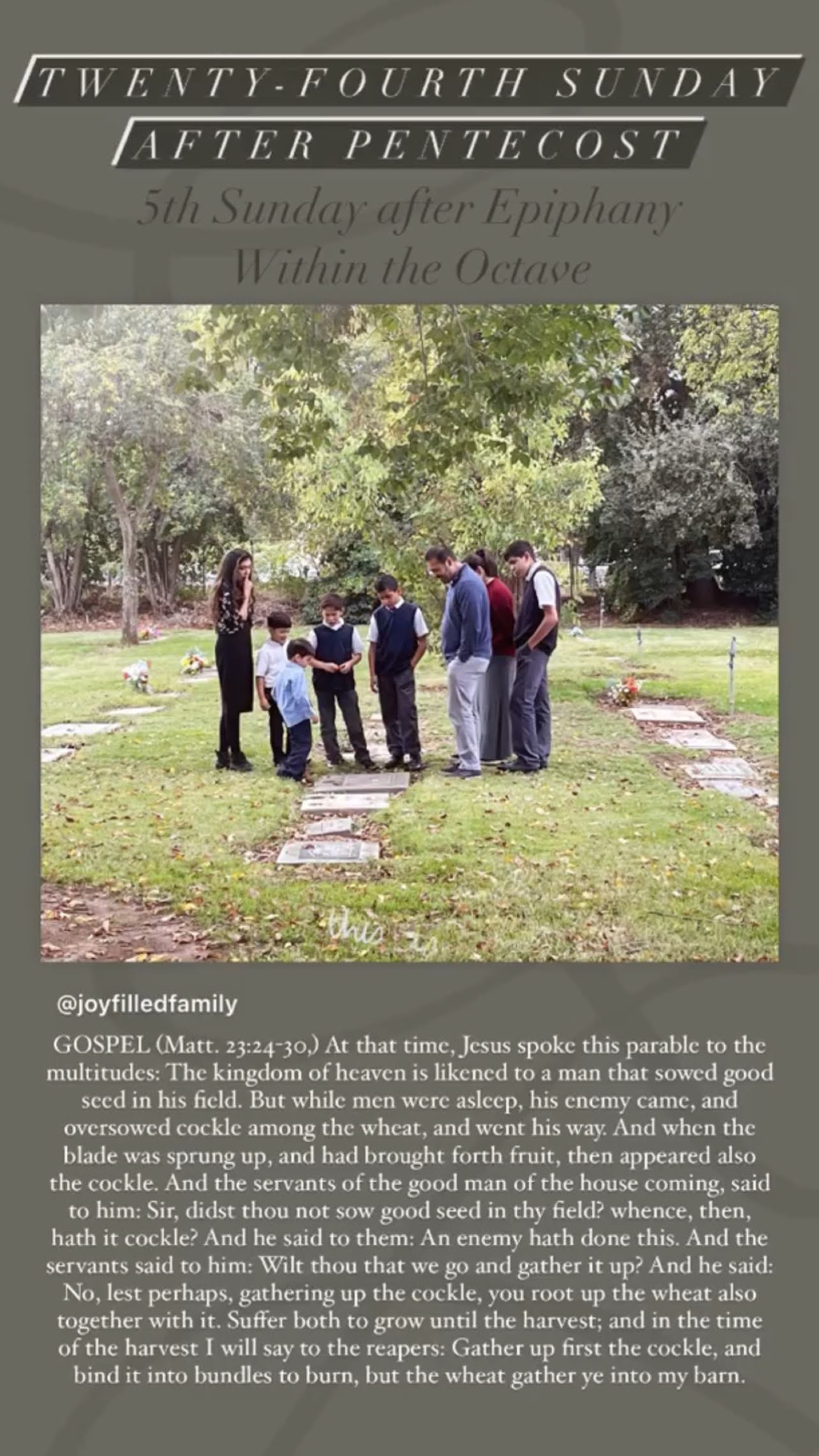
GOSPEL (Matt. XIII. 24-30,) At that time, Jesus spoke this parable to the multitudes: The kingdom of heaven is likened to a man that sowed good seed in his field. But while men were asleep, his enemy came, and oversowed cockle among the wheat, and went his way. And when the blade was sprung up, and had brought forth fruit, then appeared also the cockle. And the servants of the good man of the house coming, said to him: Sir, didst thou not sow good seed in thy field? whence, then, hath it cockle? And he said to them: An enemy hath done this. And the servants said to him: Wilt thou that we go and gather it up? And he said: No, lest perhaps, gathering up the cockle, you root up the wheat also together with it. Suffer both to grow until the harvest; and in the time of the harvest I will say to the reapers: Gather up first the cockle, and bind it into bundles to burn, but the wheat gather ye into my barn.

What is understood by the kingdom of heaven?
The Church of God, or the collection of all orthodox Christians on earth, destined for heaven.

What is meant by the good seed, and by the cockle?

The good seed, as Christ Himself says, (Matt. XIII. 38.) signifies the children of the kingdom, that is, the true Christians, the living members of the Church, who being converted by the word of God sown into their hearts become children of God, and bring forth the fruit of good works. The cockle means the children of iniquity, of the devil, that is, those who do evil; also every wrong, false doctrine which leads men to evil.

Who sows the good seed, and by the cockle?

The good seed is sown by Jesus, the Son of Man not only directly, but through His apostles, and the priests, their successors; the evil seed is sown by the devil, or by wicked men whom he uses as his tools.

Who are the men who were asleep?
Those superiors in the Church; those bishops and pastors who take no care of their flock, and do not warn them against seduction, when the devil comes and by wicked men sows the cockle of erroneous doctrine and of crime; and those men who are careless and neglect to hear the word of God and the sacrifice of the Mass, who neglect to pray, and do not receive the Sacraments. In the souls of such the devil sows the seeds of bad thoughts, evil imaginations and desires, from which spring, later, the cockle of pride, impurity, anger, envy, avarice, etc.

Why does not God allow the cockle, that is, the wicked people, to be rooted out and destroyed?

Because of His patience and long suffering towards the sinner to whom He gives time for repentance, and because of His love for the just from whom He would not, by weeding out the unjust, take away the occasion of practicing virtue and gathering up merits for themselves; for because of the unjust, the just have numerous opportunities to exercise patience, humility, etc.

When is the time of the harvest?

The day of the last judgment when the reapers, that is, the angels, will go out and separate the wicked from the just, and throw the wicked into the fiery furnace; while the just will be taken into everlasting joy. (Matt. XIII. 29.)

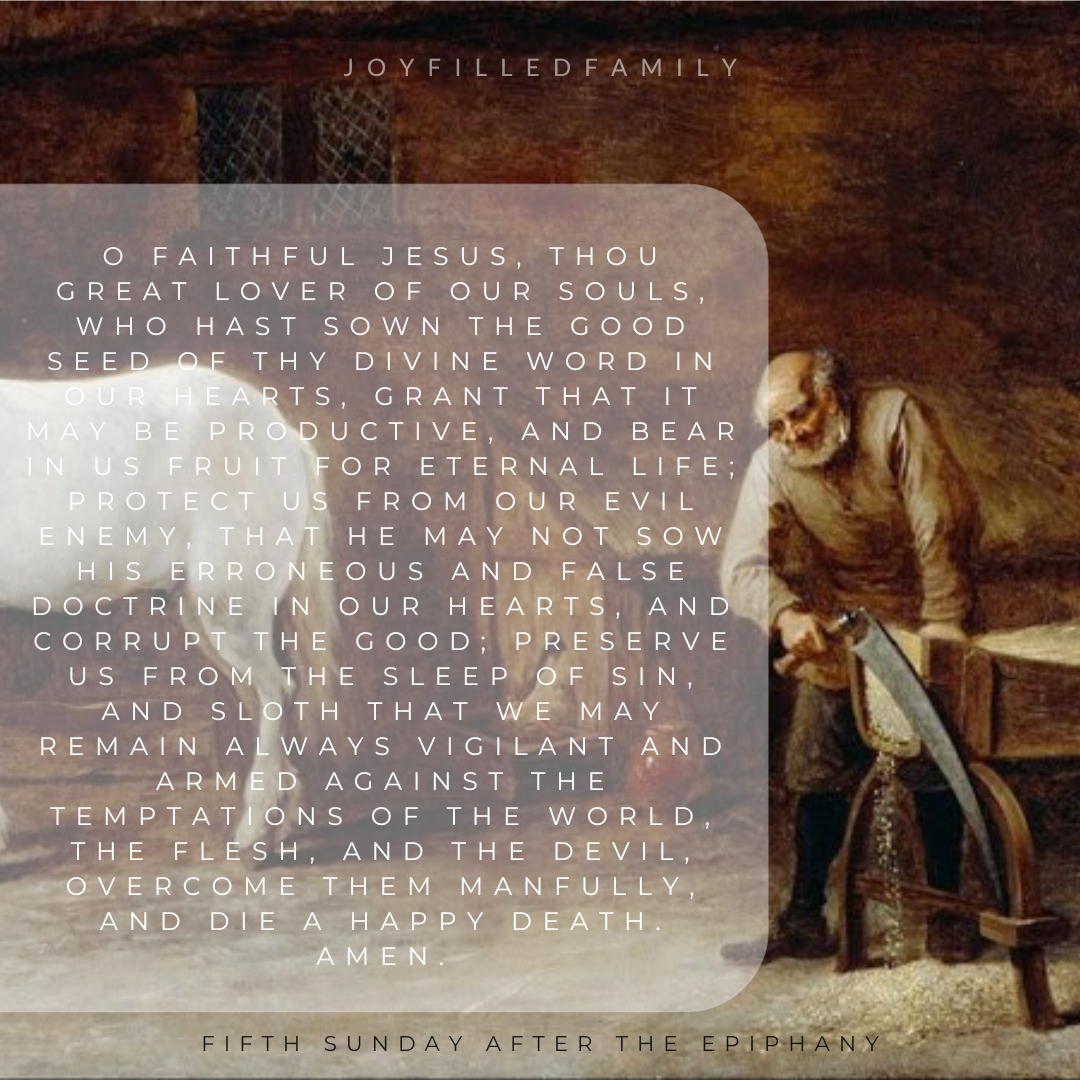
PRAYER O faithful Jesus, Thou great lover of our souls, who hast sown the good seed of Thy Divine Word in our hearts, grant that it may be productive, and bear in us fruit for eternal life; protect us from our evil enemy, that he may not sow his erroneous and false doctrine in our hearts, and corrupt the good; preserve us from the sleep of sin, and sloth that we may remain always vigilant and armed against the temptations of the world, the flesh, and the devil, overcome them manfully, and die a happy death. Amen.

ON INCLINATION TO EVIL

Whence then hath it cockle? (Matt. XIII. 27.)Whence comes the inclination to evil in man?

It is the sad consequence of original sin, that is, of that sin which our first parents, by their disobedience, committed in paradise, and which we as their descendants have inherited. This inclination to evil remains even in those who have been baptized, although original sin with its guilt and eternal punishment is taken away in baptism, but it is no sin so long as man does not voluntarily yield. (Cat. Rom. Part. II. 2. .43.)

Why, the sin being removed, does the inclination remain?

To humble us that we may know our frailty and misery, and have recourse to God, our best and most powerful Father, as did St. Paul, when he was much annoyed by the devil of the flesh; (II. Cor. XII. 7. 8.) that the glory of God and the power of Christ should be manifested in us, which except for our weakness could not be; that we might have occasion to fight and to conquer. A soldier cannot battle without opposition, nor win victory and the crown without a contest. Nor can we win the heavenly crown, if no occasion is given us, by temptations, for fight and for victory. “That which tries the combatant,” says St. Bernard, “crowns the conqueror.” Finally, the inclination remains, that we may learn to endure, in all meekness, the faults and infirmities of others and to watch ourselves, lest we fall into the same temptations.

Sermon LIII Twenty-Fourth Sunday after Pentecost – On Blasphemy
by St. Alphonsus Liguori

“When, therefore, you shall see the abomination of desolation.” MATT. xxiv. 15.

ALL sins are hateful in the sight of God; but the sin of blasphemy ought more properly to be called an abomination to the Lord. Every mortal sin, as the Apostle says, dishonours God. ”By transgression of the law, thou dishonourest God.” (Rom. ii. 23.) Other sins dishonour God indirectly by the violation of his law; but blasphemy dishonours him directly by the profanation of his most holy name. Hence St. Chrysostom teaches, that no sin exasperates the Lord so much as the sin of blasphemy against his adorable name. ”Nihil ita exacerbat Deum, sicut quando nomen ejus blasphematur.” Dearly beloved Christians, allow me, then, this day, to show you, first, the great enormity of the sin of blasphemy; and secondly, the great rigour with which God punishes it.

First Point. On the great enormity of the sin of blasphemy.  1. What is blasphemy? It is the uttering of language injurious to God; it is, according to the definition of theologians, “contumeliosa in Deum locutio;” or, contumely against God. God! whom does man assail when he blasphemes? He directly attacks the Lord. “He hath strengthened himself against the Almighty.” (Job. xv. 25.) Are you not afraid, blasphemer, says St. Ephrem, that fire will come down from heaven and devour you? or that the earth shall open and swallow you up? “Non metuis ne forte ignis de coelo descendat et devoret te, qui sic os adversus omnipotentem aperis? Neque vereris, ne terra te absorbeat?” (Paren. 3.) The devil, says St. Gregory Nazianzen, trembles at the name of Jesus: and we are not afraid to profane it. “Domones ad Christi nomen exhorrescunt, nos vero nomen adeo venerandum contumelia afficere nou veremur.” (Orat. xx.) The vindictive assail a man who is their own equal; but, by their blasphemies blasphemers appear to seek revenge against God, who does or permits what is displeasing to them. There is a great difference between an act of contempt towards the portrait of a king, and an insult offered to his person. Man is the image of God; but the blasphemer offends God himself. “He who blasphemes” says St. Athanasius, “acts against the very Deity itself.” The man who violates the law is guilty of a crime; but he who attacks the person of his sovereign commits an act of treason; therefore he receives no mercy, but is chastised with the utmost severity. What, then, shall we say of the man who blasphemes and insults the majesty of God? “If,” says the high-priest Heli, “one man shall sin against another, God may be appeased in his behalf; but if a man shall sin against the Lord, who shall pray for him?”(1 Kings ii. 25.) The sin of blasphemy, then, is so enormous, that the saints themselves appear not to have courage to pray for a blasphemer.

2. Some sacrilegious tongues blaspheme the God who preserves their existence! “Tu Deo benefacienti tibi,” says St. Chrysostom, ”et tui curam agenti maledicis.” O God! you stand with one foot at the gate of hell; and if God, in his mercy, did not preserve your life you should be damned for ever: and, instead of thanking him for his goodness, you, at the very time that he bestows his favours upon you, blaspheme his holy name. ”If,” says the Lord, ”my enemy hath reviled me, I would verily have borne with it. (Ps. liv. 13.) Had you treated me with contumely and insult at the time that I chastised you, I would be more willing to bear with your impiety; but you revile me at the time that I confer my favours upon you. diabolical tongue! exclaims St. Bernardine of Sienna, what could have induced you to blaspheme your God, who has created you, and redeemed you with his blood? “0 lingua diabolica, quid, potest te inducere ad blasphemandum Deus tuum qui te plasmavit, qui te pretioso sanguine redemit?” (Serm. xxxiii.) Some expressly blaspheme the name of Jesus Christ of that God who died on a cross for the love of them. God! if we were not subject to death, we should be glad to die for Jesus Christ, in order to make some little return of gratitude to a God who gave his life for us. I say, a little return of gratitude; for there is no comparison between the death of a miserable creature, and the death of a God. But instead of loving and blessing this God, you, as St. Augustine says, revile and curse him. ”Christ was scourged by the lash of the Jews; but he is not less scourged by the blasphemies of false Christians.” (S. Aug. in Joan.) Some have blasphemed and insulted the Virgin Mary, that good mother, who loves us so tenderly, and prays continually for us. Some of these blasphemers have received a horrible chastisement from God. Surius relates, in the 7th August, that a certain impious Christian blasphemed the blessed Virgin, and pierced her image with a dagger. As soon as he went out of the church to which the image belonged, he was struck by a thunderbolt, and reduced to ashes. The infamous Nestorious blasphemed, and induced others to blaspheme, most holy Mary, by asserting that she was not the mother of God. But, before death, his impious tongue was eaten away by worms, and he died in despair.

3. “Who is this who speaketh blasphemies?” (Luke v. 21.) He is a Christian who has received the holy sacrament of baptism, in which his tongue has been in a certain manner consecrated to God. A learned author says, that on the tongue of all who are baptized is placed blessed salt, ”that the tongues of Christians may be made, as it were, sacred, and may be accustomed to bless God.” (Clericat. torn. 1. Dec. Tract. 52.) And the blasphemer afterwards makes his tongue, as St. Bernardine says, a sword to pierce the heart of God. “Lingua blasphemantis efficitur quasi gladius cor Dei penetrans.” (Tom. 4. serm. xxxiii.) Hence the saint adds that no sin contains in itself so much malice as the sin of blasphemy. “Nullum est peccatum quod habet in se tantem iniquitatem sicut blasphemia.” St. Chrysostom says, that ””here is no sin worse than blasphemy; for in it is the accumulation of all evils, and every punishment.” St. Jerome teaches the same doctrine. ”Nothing,” says the holy doctor, ”is more horrible than blasphemy; for every sin, compared with blasphemy, is small.” (In Isa. cxviii.) And here it is necessary to observe, that blasphemies against the saints, against holy things or holidays such as the sacraments, the Mass, Easter Sunday, Christmas Day, Holy Saturday are of the same species as blasphemies against God; for St. Thomas teaches, that, as the honour paid to the saints, to holy things, and holidays, is referred to God, so an insult offered to the saints is injurious to God, who is the foundation of sanctity. ”Sicut Deus, in sanctis suis laudatur,” as we read in the 150th Psalm, “laudate Dominum in sanctis ejus, ita et blasphemia in sanctos in Deum redundat.” (S. Thorn, qu. 13, a 1 3, a 1, ad 2.) The saint adds, that blasphemy is one of the greatest of the sins against religion. (Ibid. a. 3.)

4. Thus, from the works of St. Jerome we may infer, that blasphemy is more grievous than theft, than adultery, or murder. All other sins, says St. Bernardine proceeds from frailty or ignorance; but the sin of blasphemy proceeds from malice. “Omnia alia peccata vindentur procedere partim ex fragilitate, partim ex ignorantia, sed peccatum blasphemia procedit ex propria malitia.” (Cic. serm. xxx.) For it proceeds from a bad will, and from a certain hatred conceived against God. Hence the blasphemer renders himself like the damned, who, as St. Thomas says, do not now blaspheme with the mouth for they have no body, but with the heart, cursing the divine justice which punishes them. ”The detestation of the divine justice is in them an interior blasphemy of the heart.” (S. Thom. 2, 2, qu. 13, a. 4.) The saint adds, that we may believe that as the saints in heaven, after the resurrection shall praise God with the tongue, so the reprobates in hell shall also blaspheme him with the tongue. ”Et credibile est quod post resurrectionem erit in eis etiam vocalis blasphemiæ sicut in sanctis vocalis laus Dei.” Justly, then, has a learned author called blasphemy the language of hell; because, as God speaks by the mouth of the saints so the devil speaks by the mouth of blasphemers. “Blasphemia est peccatum diabolicum, loquela infernalis: sicut enim Spiritus Sanctus loquitur per bonos ita et diabolus per blasphemos.” (Mansi. Discors, 7, num. 2.) When St. Peter denied Christ in the Palace of Pilate, and swore that he did not know him, the Jews said, that his language showed that he was a disciple of Jesus, because he spoke the language of his Master. ”Surely,” they said, “thou also art one of them; for even thy speech doth discover thee.” (Matt. xxvi. 73.) Thus we may say to every blasphemer: You are from hell; you are a true disciple of Lucifer; for you speak the language of the damned. St. Antonine writes, that the entire occupation of the damned in hell consists in blaspheming and cursing God. “Non aliud apus inferno exercent nisi blasphemare Deum et maledicere.” (Part 2, tit. 7, cap. iii.) In proof of this doctrine the saint adduces the following text of the Apocalypse: ”And they gnawed their tongues for pain: and they blasphemed the God of heaven.” (Apoc. xvi. 10, 11.) The holy doctor afterwards adds, that he who indulges in the vice of blasphemy, already belongs to the number of the damned, because he practises their art. “Qui ergo hoc vitio detinetur ostendit se pertinere ad statum damnatorum, ex quo exercet artem eorum.” (Ibid.)

5. To the malice of blasphemy is added the malice of scandal, which generally accompanies blasphemy; for this sin is ordinarily committed externally and in presence of others. St. Paul reproved the Jews, because by their sins they caused the Gentiles to blaspheme our God, and to laugh at his law. “For the name of God, through you, is blasphemed by the Gentiles.” (Rom. ii. 24.) But how much more criminal are Christians, who, by their blasphemies, induce other Christians to imitate their example! How does it happen, that in certain provinces blasphemies are never, or at least very seldom, heard, and that in other places this horrible vice is so prevalent, that the Lord may say of them: ”My name is continually blasphemed all the day long.” (Isa. Iii, 5.) In the squares, houses, cities, villas, nothing is heard but blasphemies. How does this happen? Some of the inhabitants learn to blaspheme from others: children from their parents, servants from their masters, the young from the old. In some families particularly the vice of blasphemy seems to be transmitted as an inheritance. The father is a blasphemer; hence, the sons and nephews blaspheme: to this inheritance their descendants succeed. O accursed father! Instead of instructing your children to bless the name of God, you teach them to blaspheme him and his saint. ”But I reprove them when they blaspheme in my presence.” Of what use are these reproofs, when with your own mouth you give them bad example. For God’s sake, for God’s sake, O fathers of families, never blaspheme; but be particularly on your guard never to blaspheme in presence of your children. This is a crime which God can no longer bear in you. And whenever you hear any of your children utter a blasphemy, reprove them severely, and, in obedience to the advice of St. Chrysostom, strike him on the mouth, and you shall thus sanctify your hand. ”Contere os ipsius, manum tuam percussione sanctificat.” (Hom. i. ad pop.) Certain fathers unmercifully beat a child for the neglect of some temporal business; but if he blaspheme the saints, they either laugh at his blasphemies, or listen to them in silence. St. Gregory relates (Dial. 4., cap. xvii.), that a child of five years, the son of a Roman noble man, was in the habit of profaning the name of God. The father neglected to correct him; but he one day saw his son pursued by certain black men. The child ran to embrace his father; but they, who were so many devils, killed him in the father‟s arms, and carried him with them to hell.

Second Point. On the great rigour with which God punishes the sin of blasphemy.

6. “Woe to the sinful nation… they have blasphemed the Holy One of Israel.” (Isa. i. 4.) Woe to blasphemers, eternal woe to them: for, according to Tobias, they shall be condemned. ”They shall be condemned that blaspheme thee.” (Job xiii. 16.) The Lord has said by the mouth of Job, “Thou imitatest the tongue of blasphemers; thy own mouth shall condemn, and not I.” (Job xv. 5, 6.) In pronouncing the sentence of their condemnation, God will say: It is not I that condemn you to hell; it is your own mouth, with which you have dared to revile me and .my saints, that condemns you. Poor miserable blasphemers! They shall continue to blaspheme in hell for their greater torment: their very blasphemies in hell shall always remind them that they are damned for ever in punishment of their blasphemies on earth.

7. But blasphemers are punished not only in hell, but even on this earth. In the Old Law they were stoned by the people. “And he that blasphemeth the name of the Lord, dying let him die; all the multitude shall stone him.” (Lev. xxiv. 76.) In the New Law they were condemned to death by the Emperor Justinian. St. Louis, King of France, ordered them to be punished by perforating their tongue, and by branding their forehead with a red hot iron; and when they afterwards relapsed into blasphemy, he ordained that they should die on the scaffold. (Homo Bon. de cas. res. p. 2, c. i.) Another author says, that the law renders blasphemers (as being infamous) incapable of giving testimony. (Navarr. cons. 11, de offic. ord.) By the constitution of Gregory the Fourteenth, they were deprived of Christian burial. In the Authentica ut non luxur hom., it is said that blasphemies bring on famine, earthquakes, and pestilence. “Propter blasphemias, et fames, et terræmotus et pestilentia fiunt.” You, O blasphemer, complain that though you labour and submit to fatigue, you are always in poverty. You say: ”I know not why I am always in misery: some malediction must have fallen on my family.” No; the blasphemies which you utter are the cause of your wretchedness, and make you always an object of God’s malediction.

8. O! how many melancholy examples could I mention of blasphemers who have died a bad death. Father Segneri relates, (Tom. 1, Rag. 8,) that, in Gascony, two men who had blasphemed the blood of Jesus Christ, were soon after killed in a quarrel, and torn to pieces by dogs. In Mexico, a blasphemer being once reproved, answered: ”I will hereafter blaspheme more than I have hitherto done.” During the night he found his tongue sowed under the palate, and died in that miserable state without giving the least sign of repentance. Dresselius relates, that a certain person was struck blind in the very act of blaspheming. Another, in uttering a blasphemy against St. Anthony, was seized by a flame which issued from the image of the saint, and was burnt alive. In his book against blasphemy, Sarnelli relates, that in Constantinople, a man called Simon Tornaco, who had blasphemed God, began like a mad dog to lacerate his own flesh, and died in his madness. Cantapratensis states (cap. xlviii.), that a person who had been guilty of blasphemy, had his eyes distorted, and that falling on the ground he bellowed like an ox, and continued to roar aloud until he expired. In the Gallician Mercury (lib. x.) we read that a man named Michael, who had been condemned to be hanged, when he felt the pain of the halter, burst out into blasphemies, and died instantly. After death his head fell from the body, and the tongue remained hanging out from the neck, as black as coal. I abstain from fatiguing you with other terrible examples: you can find a great many of them in the work of Father Sarnelli against blasphemy.

9. But to conclude. Tell me, blasphemers, if there be any of you present, what benefit do you derive from your accursed blasphemies? You do not receive pleasure from them. Bellarmine says, that blasphemy is a sin which produces no pleasure. You derive no profit from them; for, as I have already said, your blasphemies are the cause of your poverty and wretchedness. You derive no honour from them; your fellow- blasphemers have a horror of your blasphemies, and call you a mouth of hell. Tell me, then, why you blaspheme. “Father, the habit which I have contracted is the cause of my blasphemies.” But can this habit excuse you before God? If a son beat his father, and say to him: ”My father, have compassion on me: for I have contracted a habit of beating you :” would the father take pity on him? You say that you blaspheme through the anger caused by your children, your wife, or your master. Your wife or your master put you into a passion, and you take revenge on the saints. What injury have the saints done to you? They intercede before God in your behalf, and you blaspheme them. But “the devil tempts me at that time.” If the devil tempts you, follow the example of a certain young man, who, when tempted to blaspheme, went for advice to the Abbot Pemene. The abbot told him, that as often as the devil tempted him to commit this sin, his answer should be: Why should I blaspheme that God who has created me, and bestowed so many benefits upon me? I will forever praise and bless him. The young man followed the advice, and Satan ceased to tempt him. When you are excited to anger, can you speak nothing but blasphemies? Say on such occasions:  “Accursed sin, I hate thee: Lord, assist me: Mary, obtain for me the gift of patience.” And if you have hitherto contracted the abominable habit of blaspheming, renew every morning, as soon as you rise, the resolution of doing violence to yourself to abstain from all blasphemies during the day: and then say three Aves to most holy Mary, that she may obtain for you the grace to resist every temptation by which you shall be assailed.

St. Elizabeth of Hungary

November 12, 2023 by Lena {JOYfilledfamily} Filed Under: 11 November Saints, St. Elizabeth of Hungary Leave a Comment

November 19 – St. Elizabeth of Hungary

Before her death I heard her confession. When I asked what should be done about her goods and possessions, she replied that anything which seemed to be hers belonged to the poor. She asked me to distribute everything except one worn-out dress in which she wished to be buried. When all this had been decided, she received the body of our Lord. Afterward, until vespers, she spoke often of the holiest things she had heard in sermons. Then, she devoutly commended to God all who were sitting near her, and as if falling into a gentle sleep, she died. – from a letter by Conrad of Marburg, spiritual director of Saint Elizabeth of Hungary

Daughter of the King of Hungary, Elizabeth was taken at the age of four to the castle of her future husband, Louis IV, Duke of Thuringia, who was then eleven. The pair grew up together, loved each other deeply, and were married in 1221. During their brief married life, Elizabeth extended her ceaseless charity toward the needy and the sick of the kingdom. After Louis had joined Emperor Frederick II on the Fifth Crusade, he caught the plague at Otranto and died. His uncle drove Elizabeth and her three children from the court in midwinter. After she had suffered great hardships, the Duke’s companions returned from the Crusade and she was restored. Her children provided for, Elizabeth became a Franciscan tertiary. She died at the age of 24.

Mass of a HOLY WOMAN, except

Patronage:

  • against in-law problems
  • against the death of children
  • against toothache
  • bakers
  • beggars
  • brides
  • charitable societies
  • charitable workers
  • charities
  • countesses
  • exiles
  • falsely accused people
  • hoboes
  • homeless people
  • hospitals
  • lacemakers
  • lace workers
  • nurses
  • nursing homes
  • nursing services
  • people in exile
  • people ridiculed for their piety
  • tertiaries
  • tramps
  • widows

Pictorial Lives of the Saints – Saint Elizabeth of Hungary

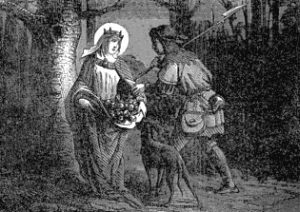
Elizabeth was daughter of a king of Hungary, and niece of Saint Hedwige. She was betrothed in infancy to Louis, Landgrave of Thuringia, and brought up in his father’s court. Not content with receiving daily numbers of poor in her palace, and relieving all in distress, she built several hospitals, where she served the sick, dressing the most repulsive sores with her own hands. Once as she was carrying in the folds of her mantle some provisions for the poor, she met her husband returning from the chase. Astonished to see her bending under the weight of her burden he opened the mantle which she kept pressed against her, and found in it nothing but beautiful red and white roses, although it was not the season for flowers. Bidding her pursue her way, he took one of the marvellous roses, and kept it all his life. On her husband’s death she was cruelly driven from her palace, and forced to wander through the streets with her little children, a prey to hunger and cold; but she welcomed all her sufferings, and continued to be the mother of the poor, converting many by her holy life. She died in 1231, at the age of twenty-four.

Reflection – This young and delicate princess made herself the servant and nurse of the poor. Let her example teach us to disregard the opinions of the world and to overcome our natural repugnances, in order to serve Christ in the persons of His poor.

Saints and Saintly Dominicans – 19 November

detail of a stained glass window of Saint Elizabeth of Hungary giving alms during the miracle of the roses; late 19th century by Glasmalerei Oidtmann; choir of the church of Saint Martin, Wormersdort, Germany; photographed on 6 October 2010 by Reinhardhauke; swiped from Wikimedia Commons

Saint Elizabeth of Hungary, Widow

She was a king’s daughter, and her brother Bela was the father of Blessed Margaret of Hungary, venerated in the Order of Saint Dominic. Whilst still a child, Elizabeth gave all her money to the poor, on condition that they should recite a Hail Mary for her. Rich ornaments displeased; her; she spoke little and very gravely, taking care not to speak to the prejudice of anyone. In the marriage state she was an example of charity and fidelity to duty to all her relations. Every day she fed several hundred of poor persons, without counting those whom she maintained in the country. Neither the difficulty of the roads, nor the dirtiness of the streets, or the bad odor and infection of their houses deterred her. Her docility of her director. Father Conrad, was absolute, and he tried her in various ways; in particular by removing from her two pious women who were her consolation, and in substituting for them two others who were rough and severe, reproving her wrongfully and disrespectfully. Having lost her husband, who died in Sicily on his way to fight for the deliverance of the Holy Land, she passed from abundance to want, from honor to abjection. But she loved her humiliation so well that she desired to remain in it up to her death. She is the Patroness of the Third Order of Saint Francis, as Saint Catherine of Siena is that of Saint Dominic. (1231)

Reflections

The poor in spirit have poverty for Queen; there are no wars in her kingdom, always peace, tranquillity and justice; the walls of the city are strong; its ornaments are piety and mercy. (Maxims of the saints).

Practice

Approach to God with so much the more confidence as you have less support from creatures.

– taken from the book Saints and Saintly Dominicans, by Blessed Hyacinthe-Marie Cormier, 

Fr. Weninger’s Lives of the Saints – Saint Elizabeth of Hungary, Landgravine of Hesse and Thuringia

illustration of Saint Elizabeth and a Beggar, artist unknown; from 'Saint Elizabeth of Hungary, Patroness of the Third Order', by Father Hilarion Duerk, OFM, 1919

Saint Elizabeth, a model of devotion and purity to those who live singly, a mirror of love and retirement for married people, a most perfect example of patience for widows, and whose virtues deserve to be followed by all, high and low, was born in Hungary. She was a daughter of Andrew II, King of Hungary, and of Gertrude, daughter of the Duke of Carinthia. According to the Roman Breviary, Elizabeth began in early childhood to fear God, and increased in piety with age. The walk she loved best of all was going to church, where she prayed with angelic devotion, and whence it was a difficult task to bring her home, as her greatest delight consisted in praying. At the door of the church, she always took off the jewelled coronet which she wore, and when asked why she did this, she replied: “God forbid that I should ever appear with such a crown before the face of Him who was crowned with thorns, and who, out of love for me, was nailed to the cross.” She called Mary, the divine Mother, her mother, and entertained great devotion towards Saint John, the Apostle and Evangelist, whom she chose as the special protector of her chastity. She never refused what was asked of her in the name of the Blessed Virgin or in that of Saint John. The money allotted to her for her recreation, she gave to the poor, requesting them to say the Ave Maria. She was an enemy to luxury, vain adornments and idleness. Nature had not only bestowed upon her unusual personal beauty, but had also endowed her with great qualities of mind.

In obedience to her parents, she gave her hand to Louis, Landgrave of Hesse and Thuringia, and lived with him in continual harmony, her conduct being as blameless in the married state as it had been during her maidenhood. She gave one hour every night to prayer, and spent the day in attendance at the divine service in the church, in devout reading and in working for the poor. She always treated her husband with love and respect, and was a model of all virtues to her subjects. She watched over her domestics with a most careful eye, in order that they might lead a Christian life; but took always a mother’s interest in seeing that their wages were punctually paid. She herself carried to the church the princes and princesses to whom she gave birth; and it was her custom, on these occasions to lay a rich offering on the Altar, and to give abundant alms to the poor. Under her royal robes, she continually wore a garment of hair-cloth. For the sick and the forsaken she had more than a mother’s care and solicitude. She erected a hospital in which she nursed the sick and sheltered orphans; besides feeding nine hundred poor people, every day, at the palace, and sending alms to the dwellings of those who were ashamed to beg. She also visited the sick in their houses, and served them most tenderly even when they were leprous. She kissed their hands and feet, and encouraged them to patience. Never did a poor person leave her without receiving alms, and more than once, when she had no money with her, she gave away the veil from her head. She did not hesitate even to mend the clothes of the needy, and during a severe famine, gave all her corn to the sufferers. In one word, she did not neglect anything that Christian charity could do; so that she was universally called the mother of the poor.

There were at court many who, on account of her great charity, laughed at and derided her; some even accused her of extravagance. Elizabeth, however, did not allow herself to be diverted from her deeds of kindness, and the Landgrave dismissed her accusers with indignation, probably because he perceived that the more charitable his spouse was, the more he was blessed with temporal goods. Hence he not only abstained from disturbing her in her kind deeds, but assisted her in them as long as he lived. He ended his life in a crusade, in which he joined with several other Christian princes in order to conquer the Holy Land from the infidels. Elizabeth grieved deeply when the news of his death reached her, but submitted to the will of the Almighty, saying: “It is known to Thee, O my God, that I loved no one on this earth more than my husband; not only because he was my husband, but also because he loved Thee with his whole heart. But as it has pleased Thee to call him, I am well contented with Thy holy will; and if I could, against Thy decree, raise him from the dead by reciting one Pater Noster, I would not do it. I only beg of Thee to give him eternal peace, and bestow upon me the grace to serve Thee faithfully until the end of my days.” After this heroic submission to the will of God, she caused many masses and prayers to be said for the deceased, gave large alms to the poor, divested herself of her royal robes, and, though but twenty years old, she vowed to live in chaste widowhood for the rest of her days. It pleased the Almighty to try His zealous handmaid most painfully. The nobility made the brother of the deceased Landgrave regent, and accused the holy princess of having impoverished the state by her charity to the poor. Under this pretext, they deprived her of all her possessions, and banished her from the Court, with three children, a son and two daughters. Her former vassals, fearing to draw upon themselves the disfavor of the new government, durst not give her lodgings. Even the hospitals, which she herself had founded, were closed against her. Hence she had to lodge mostly in a stable and to live on the bread she begged. In such unexpected and more than painful circumstances, Saint Elizabeth showed a truly heroic, and, to the children of the world, incomprehensible strength and patience. She complained to no one of the injustice of the nobility, not even to her royal father, who was still living; but rejoiced that she could suffer for the love of God. After the first night of her banishment, she went to the Church of the Franciscans and requested them to sing the “Te Deum,” or “Great God! we praise thee,” to give thanks to God for the sorrows with which He had visited her. The wrongs and outrages which the holy princess suffered, besides her banishment, can hardly be described. An old woman, who had formerly received clothing and nourishment from Saint Elizabeth, dared to push her into a pool of stagnant water, in the street, abusing her at the same time most shamefully, for not having immediately made way for her. This outrage aroused not in the least the wrath of the holy princess; she quietly raised herself out of the pool, cleansed her garments, and offered herself to the Almighty for more suffering. God did not fail to comfort His handmaid in her adversity. Christ appeared to her, during her prayers, encouraged her, and promised never to abandon her. After some time, through her father’s influence, a dwelling, suitable to her rank, was conceded to her, and her dowry was refunded. The Saint immediately used one part of the building for a hospital, made her home in the same, and nursed the sick, as if she had been a servant, hired to wait upon them. All her spare time was employed in prayer and other devout exercises. She also chastised her body by fasting and other penances. At the age of twenty-four years, she learned by revelation, that her end was approaching, for which she prepared herself by most devoutly receiving the holy sacraments. She exhorted all those who were around her death-bed, to love God with their whole heart and to assist the poor to the best of their ability. After this, she continued in prayer, until her soul, richly adorned with virtues and merits, went to her Creator, in the year of Our Lord 1231. The funeral took place at Marburg, in Hesse, where her holy remains still rest, honored not only by Catholics, but also by many Protestants. Luther himself, though a declared enemy of the Saints, believed our Elizabeth to have been one, and called her so, thereby acknowledging that one can be saved and become a saint in the Catholic faith. The miracles that have taken place at the shrine of the holy princess, have made her celebrated throughout the whole world. Sixteen dead persons are known to have been restored to life, through her intercessions, and the number of the sick, who were restored to health, is incomparably greater.

Practical Considerations

• The life of Saint Elizabeth may serve as a model to persons of every age and station. Children may learn to fear God from their earliest years, and to increase their devotion with their age; single persons, how to live chastely in their state; married people, how husband and wife ought to live together; and the widowed how to sanctify their solitude. Masters and mistresses may learn how to take care of their domestics, and pay their wages regularly. Those of a higher station may learn to set a good example to others, and not to be ashamed to appear at public worship. All Christians can find instruction in it, for employing their time well, helping the needy, and bearing crosses and trials sent by heaven. God permitted a Landgravine, a royal princess, to be banished unjustly from court, to beg her bread, and, besides other ignominies, to be refused a shelter among her own subjects. Still she complained not; but, submissive to the decrees ot Providence, gave humble thanks to the Almighty for all that He, in His wisdom, had sent her. Even at the death of her husband, what fortitude, what submission to the divine will she manifested! Oh! that all would endeavor, in trials of much less severity, to unite their will with that of God, and patiently bear the cross that He has laid upon them.

• The favorite walk of Saint Elizabeth, when she was still a child, was to go to church, where she manifested most angelic devotion, and was so happy, that she could hardly be persuaded to leave. What is your favorite walk? Where do you like to remain? And when you do go to church, why are you in such haste to leave it again? Why do you much oftener go to theatres, frivolous societies, vain amusements, bar-rooms and ball-rooms, than to Church, to prayers, to sermons, or to public worship? Why does the sermon, the mass, or conversation with God in prayer so soon become wearisome to you, when many hours, nay, even half the day or night seem not long, when you occupy them in gaming, dancing, or silly conversation? Answer these questions if you can; and then tell me, do you expect to justify yourself before God, and to enter the same heaven into which Saint Elizabeth entered? “Ah! truly, heaven becomes not the dwelling of those who sleep and are idle, but of those who earnestly endeavor to gain it.” Thus speaks the holy pope, Saint Leo.

Father Francis Xavier Weninger, DD, SJ. “Saint Elizabeth of Hungary, Landgravine of Hesse and Thuringia”. Lives of the Saints, 1876. 

St. Gregory Thaumaturgus

November 12, 2023 by Lena {JOYfilledfamily} Filed Under: 11 November Saints, St. Gregory Thaumaturgus Leave a Comment

November 17 – St. Gregory Thaumaturgus, Bishop & Confessor

There is one God, the Father of the living Word, who is His subsistent Wisdom and Power and Eternal Image: perfect Begetter of the perfect Begotten, Father of the only-begotten Son. There is one Lord, Only of the Only, God of God, Image and Likeness of Deity, Efficient Word, Wisdom comprehensive of the constitution of all things, and Power formative of the whole creation, true Son of true Father, Invisible of Invisible, and Incorruptible of Incorruptible, and Immortal of Immortal and Eternal of Eternal. And there is One Holy Spirit, having His subsistence from God, and being made manifest by the Son, to wit to men: Image of the Son, Perfect Image of the Perfect; Life, the Cause of the living; Holy Fount; Sanctity, the Supplier, or Leader, of Sanctification; in whom is manifested God the Father, who is above all and in all, and God the Son, who is through all. There is a perfect Trinity, in glory and eternity and sovereignty, neither divided nor estranged. Wherefore there is nothing either created or in servitude in the Trinity; nor anything superinduced, as if at some former period it was non-existent, and at some later period it was introduced. And thus neither was the Son ever wanting to the Father, nor the Spirit to the Son; but without variation and without change, the same Trinity abideth ever. – a declaration of faith by Saint Gregory

Patronage:

  • against earthquakes
  • against floods
  • desperate causes
  • forgotten causes
  • impossible causes
  • lost causes

Pictorial Lives of the Saints – Saint Gregory Thaumaturgus

Saint Gregory was born in Pontus, of heathen parents. In Palestine, about the year 231, he studied philosophy under the great Origen, who led him from the pursuit of human wisdom to Christ, who is the Wisdom of God. Not long after, he was made Bishop of Neocaesarea in his own country. As he lay awake one night, an old man entered his room, and pointed to a lady of superhuman beauty and radiant with heavenly light. This old man was Saint John the Evangelist; and the lady told him to give Gregory the instruction he desired. Thereupon he gave Saint Gregory a creed which contained in all its fullness the doctrine of the Trinity. Saint Gregory set it in writing, directed all his preaching by it, and handed it down to his successors. Strong in this faith, he subdued demons, he foretold the future. At his word a rock moved from its place, a river changed its course, a lake was dried up. He converted his diocese, and strengthened those under persecution. He struck down a rising heresy; and when he was gone, this creed preserved his flock from the Arian pest. Saint Gregory died in the year 270.

Reflection – Devotion to the blessed Mother of God is the sure protection of faith in her Divine Son. Every time that we invoke her, we renew our faith in the Incarnate God; we reverse the sin and unbelief of our first parents; we take our part with her who was blessed because she believed.

Fr. Weninger’s Lives of the Saints – Saint Gregory, Thaumaturgus

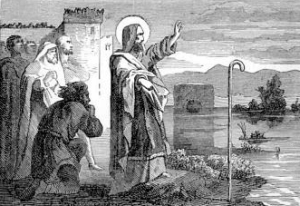
Saint Gregory, bishop of Neo-Caesarea in Pontus, was born in that city, of rich but heathen parents. He is called Thaumaturgus, or Worker of Wonders, on account of the many and great miracles which he wrought during his life. He was naturally inclined to be good, and was filled with an intense desire to gain knowledge; therefore, on coming to riper years, he went to Caesarea in Palestine, and thence to Alexandria, to study the liberal arts. The reading of heathen books disgusted him with paganism; for he learned by it how weak and unstable its doctrines are; and at the same time, becoming acquainted with the true faith by reading some Christian books, he began highly to esteem Christianity. He led a blameless life and especially abhorred the vice of unchastity, so general among the heathens. This displeased some of his fellow-students, and they persuaded a wicked woman, to ask him, in the presence of many others, the money that he had promised her. This was done at the moment when Gregory, in the presence of a great crowd of people, was disputing on some subject with some other learned men. All were startled at the woman’s words, as they had never heard anything wrong of Gregory. The latter best knew his own innocence, but would neither talk to the woman, nor allow himself to be disturbed in his disputation. He quietly requested one of his friends to give her as much money as she demanded; but she had hardly got it, when the Evil One took possession of her, and tormented her so that she howled terribly, made a public confession of her wickedness and begged Gregory’s pardon. The young man, although he had not received holy baptism, called with confidence on the God of the Christians and relieved the possessed. Thus did the Almighty save Gregory, and bring the wickedness of his enemies to shame. This incited him anew not to delay any longer to embrace Christianity. After he had been baptized, he endeavored to live in accordance with the promises he had made, and to conform his actions entirely to the maxims of the Christian faith. He continued his studies for several years, and then returned to his home, where he passed his time in solitude, prayer and meditation. To those who visited him he spoke rarely of other things than the blindness of idolatry, the truth of the Christian faith, the beauty of virtue, and the horror of vice, which caused him to be highly esteemed by the inhabitants of the city, although most of them were heathens. Phaedimus, bishop of Amasea, informed of this, resolved to consecrate Gregory bishop of Neo-Caesarea. The humble servant of the Lord endeavored to avoid this honor by flight; but Phaedimus was firm in his resolution and declared Gregory, in the presence of all the people, bishop of the city, and thus silenced all further objections. At that time, there were only seventeen Christians in the city and all the other inhabitants were idolaters. Before the new bishop commenced his functions, he retired for several days into solitude, where he prayed to God to bestow upon him, through the intercession of the Blessed Virgin, the grace to lead his small flock in the right path, and to increase its small number by converting the heathen. During his prayers the Virgin Mother appeared to him, in the night, accompanied by Saint John, whom she commanded to instruct Gregory, how to conduct himself and to teach others. Having received these instructions, Saint Gregory left his solitude, comforted and strengthened, and began to labor for the conversion of the heathens. The miracles he wrought had the happiest results. Before he entered the city, he was obliged to take shelter, with his companion, in the most celebrated heathen temple, where Satan, speaking through the idols, answered various questions. Gregory passed the whole night in prayer, and, making the sign of the cross over the whole building, he drove Satan away. When the chief of the idolatrous priests came, on the following day, with his sacrifice, he heard before the temple a terrible howling of the devils, who lamented that, driven away by Gregory, they could not return into their old dwelling. The heathens ran after the bishop and complained of what he had done. Gregory improved the opportunity, to explain to them the power of the Christian God, in whose name he had driven away Satan and his legions, but could also force him to return. Of this the heathen priest desired a proof. Gregory wrote on the tablet the word “Enter,” gave it to the idolatrous priest, and told him to lay it on the Altar, and then, he added, the devils will be obliged to return to the temple, in the name of Jesus. The heathen did as he was told, and as all happened as the bishop had said, he recognized the power of the Christian God, was converted with his wife and children, and received holy baptism. This first conversion was daily followed by others. As the number of the Christians greatly increased in this manner, the Saint resolved to build a church. The place was selected, but a high mountain prevented him from giving the building the dimensions he desired. In this emergency, the bishop had recourse to prayer, and the mountain, by the power of God, retired, in the presence of a multitude of heathens and Christians, as far back as was needed. This and many other miracles which the Saint almost daily wrought, had such influence over the minds of the pagans, that they came in crowds to be baptized, and in all their troubles they asked his advice. The river Lycus, which flowed by the city, was frequently so swollen, that the surrounding fields were overflowed, with great damage. Some of the sufferers came and asked the bishop to help them. Going with them, he first prayed; then he stuck his staff into the ground near the bank of the river. The staff took root immediately, and since that time, the river has never overstepped the place thus marked. Two brothers quarrelled on account of a pond abounding in fishes. Each desired to be the possessor of it, and they became so embittered, that they intended to kill each other. Gregory succeeded several times in calming them, but on seeing that this never lasted long, he prayed to God to end the contention, and in the same night, the whole pond so thoroughly dried up, that neither water nor fishes were to be seen. In this manner, peace was restored between the brothers. How highly the Saint was esteemed for these and other miracles can easily be supposed, although he endeavored to decline all honors, by ascribing his wonders to a holy relic which he always carried with him. But the more he fled from human praise, the more was he venerated and loved. Still there were some who disliked him and who even dared to mock him. Among these were two Jews, one of whom, pretending to be dead, laid himself down in a place where the Saint was to pass. The other remained standing there also, and when Gregory came, he began to weep and lament for his dear dead friend, begging the Saint to give him an alms to enable him to bury him. The intention of these deceivers was to deride the bishop on account of his miracles, and to make others laugh at him. Gregory, who had no money with him, gave the man his cloak and went on. Rejoiced at having thus deceived the Saint, the man called his pretended dead companion, telling him to rise; but found, to his horror, that the man was really dead. Many volumes would hardly suffice to contain all the miracles wrought by the holy man on the possessed and the sick, and to recount the labors he undertook to propagate the true faith. After a long, well spent and holy life, he felt, at last, that his end was approaching, and visiting once more his whole diocese, he redoubled his zeal in instructing his flock, admonished all to constancy, and endeavored to practice more good works then ever before. Soon after, he fell sick, and ended his days by a happy death. Shortly before closing his eyes, he asked if there were yet some in the city who had not received holy baptism. “Seventeen,” was the answer. The Saint, already in his agony, raised his eyes to heaven and said: “Thanks and praise to God! When I took possession of my See, I found only seventeen Christians. May God preserve all in the true faith, and give to all infidels, in the whole world, the light of the Saviour’s divine Word!” The death of Saint Gregory took place in the seventieth year of his age, and the 270th of the Christian Era.

Practical Considerations

Saint Gregory took especial care to keep the promise he had made when receiving holy baptism. In baptism, we renounce Satan and all his works, and make an alliance with God, by the promise that we will serve Him and keep His commandments. This alliance we break as often as we commit a mortal sin. How is it with you? Have you kept your promise? May not the words of Saint Bernard be applied to you? “You have renounced the devil and yet you serve him. You have renounced his works, and yet strive only after that which is evil.” You have promised to serve God alone and to keep His commandments; and yet you do in everything the contrary. Ah, be ashamed before your God and weep bitter tears for your perjury. Renew your baptismal vows and be in future true to them. “When the priest asked you: do you renounce the devil and all his works, what was your answer? I renounce them. Remember these words and let them never part from your memory,” says Saint Ambrose.

I will take this occasion to give you another instruction. Many who are not Catholics refuse to be converted, because they are told that they must not break their baptismal vows. But they ought to know that they do not break them by becoming Catholics; for, by their baptism they made an alliance with the true Christ and the true Church. This true Church is the Catholic Church only; hence by becoming Catholics, they only fulfill the vow they made. They broke it when, after coming to the use of reason, they gave their free consent to a false religion, and thus fell into heresy. By turning from this error and becoming Catholics, they renew their first alliance with the true Church of Christ, and thus fulfill the first promise made for them when they were baptized.

Father Francis Xavier Weninger, DD, SJ. “Saint Gregory, Thaumaturgus”. Lives of the Saints, 1876.

Saints and Saintly Dominicans – 17 November

detail of a painting of Saint Gregory Thaumaturgus; date unknown, artist unknown; San Gregorio side altar, parish church of Our Lady of the Rosary, Concadirame, Italy; photographed on 21 June 2012 by Threecharlie; swiped from Wikimedia Commons

Saint Gregory Thaumaturgus

The great Thaumaturgus is Jesus. “He worked” says Saint Thomas, “miracles relating to demons, to angels, to the heavens, to men, to animals, to the material elements. He wrought them by His own power and made them serve to manifest the better His heavenly doctrine.” But he has communicated this gift, more or less to His principle disciples, and in particular to Saint Gregory of Neocaesarea. That faith, which our Saviour so much praised when He said it was powerful enough to remove mountains is realized in him to the letter. By prayer alone, but prayer full of faith and seconded by penance, he displaced a mountain and caused it to draw back into the sea. This miracle and numberless others, procured him by excellence the surname of Thaumaturgus, and caused him to be compared by Saint Basil to Moses, to the Prophets and Apostles. The town of Neocaesarea, when he became its Bishop was entirely pagan, counting among them only seventeen Christians. He effected there so much good that at his death all the inhabitants excepting seventeen were believers. Above all he was distinguished by a profound humility, a rare modesty, a great love for the truth, resembling in this Saint Dominic, who said to his companions: “Let truth be dear to you above all else.” Hence his zeal to confute Paul of Samosata, who covertly attacked the Divinity of Jesus Christ. (266)

Prayer

Saint Gregory Thaumaturgus, obtain a new miracle – that of my conversion.

Practice

Examine if your prayers are made in a spirit of faith, asking in the name of Jesus Christ and in virtue of His infinite merits.

– taken from the book Saints and Saintly Dominicans, by Blessed Hyacinthe-Marie Cormier, O.P.

A Sectional Confession of Faith, by Saint Gregory Thaumaturgus

I – Most hostile and alien to the Apostolic Confession are those who speak of the Son as assumed to Himself by the Father out of nothing, and from an emanational origin; and those who hold the same sentiments with respect to the Holy Spirit; those who say that the Son is constituted divine by gift and grace, and that the Holy Spirit is made holy; those who regard the name of the Son as one common to servants, and assert that thus He is the first-born of the creature, as becoming, like the creature, existent out of non-existence, and as being first made, and who refuse to admit that He is the only-begotten Son, – the only One that the Father has, and that He has given Himself to be reckoned in the number of mortals, and is thus reckoned first-born; those who circumscribe the generation of the Son by the Father with a measured interval after the fashion of man, and refuse to acknowledge that the aeon of the Begetter and that of the Begotten are without beginning; those who introduce three separate and diverse systems of divine worship, whereas there is but one form of legitimate service which we have received of old from the law and the prophets, and which has been confirmed by the Lord and preached by the apostles. Nor less alienated from the true confession are those who hold not the doctrine of the Trinity according to truth, as a relation consisting of three persons, but impiously conceive it as implying a triple being in a unity (Monad), formed in the way of synthesis and think that the Son is the wisdom in God, in the same manner as the human wisdom subsists in man whereby the man is wise, and represent the Word as being simply like the word which we utter or conceive, without any hypostasis whatever.

II – But the Church’s Confession, and the Creed that brings salvation to the world, is that which deals with the incarnation of the Word, and bears that He gave Himself over to the flesh of man which He acquired of Mary, while yet He conserved His own identity, and sustained no divine transposition or mutation, but was brought into conjunction with the flesh after the similitude of man; so that the flesh was made one with the divinity, the divinity having assumed the capacity of receiving the flesh in the fulfilling of the mystery. And after the dissolution of death there remained to the holy flesh a perpetual impassibility and a changeless immortality, man’s original glory being taken up into it again by the power of the divinity, and being ministered then to all men by the appropriation of faith.

III – If, then, there are any here, too, who falsify the holy faith, either by attributing to the divinity as its own what belongs to the humanity – progressions, and passions, and a glory coming with accession – or by separating from the divinity the progressive and passible body, as if subsisted of itself apart, – these persons also are outside the confession of the Church and of salvation. No one, therefore, can know God unless he apprehends the Son; for the Son is the wisdom by whose instrumentality all things have been created; and these created objects declare this wisdom, and God is recognised in the wisdom. But the wisdom of God is not anything similar to the wisdom which man possesses, but it is the perfect wisdom which proceeds from the perfect God, and abides for ever, not like the thought of man, which passes from him in the word that is spoken and (straightway) ceases to be. Wherefore it is not wisdom only, but also God; nor is it Word only, but also Son. And whether, then, one discerns God through creation, or is taught to know Him by the Holy Scriptures, it is impossible either to apprehend Him or to learn of Him apart from His wisdom. And he who calls upon God rightly, calls on Him through the Son; and he who approaches Him in a true fellowship, comes to Him through Christ. Moreover, the Son Himself cannot be approached apart from the Spirit. For the Spirit is both the life and the holy formation of all things; and God sending forth this Spirit through the Son makes the creature like Himself.

IV – One therefore is God the Father, one the Word, one the Spirit, the life, the sanctification of all. And neither is there another God as Father, nor is there another Son as Word of God, nor is there another Spirit as quickening and sanctifying. Further, although the saints are called both gods, and sons, and spirits, they are neither filled with the Spirit, nor are made like the Son and God. And if, then, any one makes this affirmation, that the Son is God, simply as being Himself filled with divinity, and not as being generated of divinity, he has belied the Word, he has belied the Wisdom, he has lost the knowledge of God; he has fallen away into the worship of the creature, he has taken up the impiety of the Greeks, to that he has gone back; and he has become a follower of the unbelief of the Jews, who, supposing the Word of God to be but a human son, have refused to accept Him as God, and have declined to acknowledge Him as the Son of God. But it is impious to think of the Word of God as merely human, and to think of the works which are done by Him as abiding, while He abides not Himself. And if any one says that the Christ works all things only as commanded by the Word, he will both make the Word of God idle, and will change the Lord’s order into servitude. For the slave is one altogether under command, and the created is not competent to create; for to suppose that what is itself created may in like manner create other things, would imply that it has ceased to be like the creature.

V – Again, when one speaks of the Holy Spirit as an object made holy, he will no longer be able to apprehend all things as being sanctified in (the) Spirit. For he who has sanctified one, sanctifies all things. That man, consequently, belies the fountain of sanctification, the Holy Spirit, who denudes Him of the power of sanctifying, and he will thus be precluded from numbering Him with the Father and the Son; he makes nought, too, of the holy (ordinance of) baptism, and will no more be able to acknowledge the holy and august Trinity. For either we must apprehend the perfect Trinity in its natural and genuine glory, or we shall be under the necessity of speaking no more of a Trinity, but only of a Unity; or else, not numbering created objects with the Creator, nor the creatures with the Lord of all, we mast also not number what is sanctified with what sanctifies; even as no object that is made can be numbered with the Trinity, but in the name of the Holy Trinity baptism and invocation and worship are administered. For if there are three several glories, there must also be three several forms of cultus with those who impiously worship the creature; for if there is a distinction in the nature of the objects worshipped, there ought to be also with these men a distinction in the nature of the worship offered. What is recent surely is not to be worshipped along with what is eternal; for the recent comprehends all that has had a beginning, while mighty and measureless is lie who is before the ages. He, therefore, who supposes some beginning of times in the life of the Son and of the Holy Spirit, therewith also cuts off any possibility of numbering the Son and the Spirit with the Father. For as we acknowledge the glory to be one, so ought we also to acknowledge the substance in the Godhead to be one, and one also the eternity of the Trinity.

VI – Moreover, the capital clement of our salvation is the incarnation of the Word. We believe, therefore, that it was without any change in the Divinity that the incarnation of the Word took place with a view to the renewal of humanity. For there took place neither mutation nor transposition, nor any circumscription in will, as regards the holy energy of God; but while that remained in itself the same, it also effected the work of the incarnation with a view to the salvation of the world: and the Word of God, living on earth after man’s fashion, maintained likewise in all the divine presence, fulfilling all things, and being united properly and individually with flesh; and while the sensibilities proper to the flesh were there, the divine energy maintained the impassibility proper to itself. Impious, therefore, is the man who introduces the passibility into the energy. For the Lord of glory appeared in fashion as a man when He undertook the economy upon the earth; and He fulfilled the law for men by His deeds, and by His sufferings He did away with man’s sufferings, and by His death He abolished death, and by his resurrection He brought life to light; and now we look for His appearing from heaven in glory for the life and judgment of all, when the resurrection of the dead shall take place, to the end that recompense may be made to all according to their desert.

VII – But some treat the Holy Trinity in an awful manner, when they confidently assert that there are not three persons, and introduce (the idea of) a person devoid of subsistence. Wherefore we clear ourselves of Sabellius, who says that the Father and the Son are the same. For he holds that the Father is He who speaks, and that the Son is the Word that abides in the Father, and becomes manifest at the time of the creation, and thereafter reverts to God on the fulfilling of all things. The same affirmation he makes also of the Spirit. We forswear this, because we believe that three persons – namely, Father, Son, and Holy Spirit – are declared to possess the one Godhead: for the one divinity showing itself forth according to nature in the Trinity establishes the oneness of the nature; and thus there is a (divinity that is the) property of the Father, according to the word, “There is one God the Father;” and there is a divinity hereditary in the Son, as it is written, “The Word was God;” and there is a divinity present according to nature in the Spirit into wit, what subsists as the Spirit of God – according to Paul’s statement, “Ye are the temple of God, and the Spirit of God dwelleth in you.”

VIII – Now the person in each declares the independent being and subsistence. But divinity is the property of the Father; and whenever the divinity of these three is spoken of as one, testimony is borne that the property of the Father belongs also to the Son and the Spirit: wherefore, if the divinity may be spoken of as one in three persons, the trinity is established, and the unity is not dissevered; and the oneness Which is naturally the Father’s is also acknowledged to be the Son’s and the Spirit’s. If one, however, speaks of one person as he may speak of one divinity, it cannot be that the two in the one are as one. For Paul addresses the Father as one in respect of divinity, and speaks of the Son as one in respect of lordship: “There is one God the Father, of whom are all things, and we for Him; and one Lord Jesus Christ, by whom are all things, and we by Him.” Wherefore if there is one God, and one Lord, and at the same time one person as one divinity in one lordship, how can credit be given to (this distinction in) the words “of whom” and “by whom,” as has been said before? We speak, accordingly, not as if we separated the lordship from the divinity, nor as estranging the one from the other, but as unifying them in the way warranted by actual fact and truth; and we call the Son God with the property of the Father, as being His image and offspring; and we call the Father Lord, addressing Him by the name of the One Lord, as being His Origin and Begettor.

IX – The same position we hold respecting the Spirit, who has that unity with the Son which the Son has with the Father. Wherefore let the hypostasis of the Father be discriminated by the appellation of God; but let not the Son be cut off from this appellation, for He is of God. Again, let the person of the Son also be discriminated by the appellation of Lord; only let not God be dissociated from that, for He is Lord as being the Father of the Lord. And as it is proper to the Son to exercise lordship, for He it is that made (all things) by Himself, and now rules the things that were made, while at the same time the Father has a prior possession of that property, inasmuch as He is the Father of Him who is Lord; so we speak of the Trinity as One God, and yet not as if we made the one by a synthesis of three: for the subsistence that is constituted by synthesis is something altogether partitive and imperfect. But just as the designation Father is the expression of originality and generation, so the designation Son is the expression of the image and offspring of the Father. Hence, if one were to ask how there is but One God, if there is also a God of God, we would reply that that is a term proper to the idea of original causation, so far as the Father is the one First Cause. And if one were also to put the question, how there is but One Lord, if the Father also is Lord, we might answer that again by saying that He is so in so far as He is the Father of the Lord; and this difficulty shall meet us no longer.

X – And again, if the impious say, How will there not be three Gods and three Persons, on the supposition that they have one and the same divinity? – we shall reply: Just because God is the Cause and Father of the Son; and this Son is the image and offspring of the Father, and not His brother; and the Spirit in like manner is the Spirit of God, as it is written, “God is a Spirit.” And in earlier times we have this declaration from the prophet David: “By the word of the Lord were the heavens stablished, and all the power of them by the breath (spirit) of His mouth.” And in the beginning of the book of the creation it is written thus: “And the Spirit of God moved upon the face of the waters.” And Paul in his Epistle to the Romans says “But ye are not in the flesh, but in the Spirit, if so be that the Spirit of God dwell in you.” And again he says: “But if the Spirit of Him that raised up Jesus from the dead dwell in you, He that raised up Christ from the dead shall also quicken your mortal bodies by His Spirit that dwelleth in you.” And again: “As many as are led by the Spirit of God, they are the sons of God. For ye have not received the spirit of bondage again to fear; but ye have received the Spirit of adoption, whereby we cry, Abba, Father.” And again: “I say the truth in Christ, I lie not, my conscience also bearing me witness in the Holy Ghost.” And again: “Now the God of hope fill you with all joy and peace in believing, that ye may abound in hope, by the power of the Holy Ghost.”

XI – And again, writing to those same Romans, he says: “But I have written the more boldly unto you in some sort, as putting you in mind, because of the grace that is given to me of God, that I should be the minister of Jesus Christ to the Gentiles, ministering the Gospel of God, that the offering up of the Gentiles might be acceptable, being sanctified by the Holy Ghost. I have therefore whereof I may glory through Jesus Christ in those things which pertain to God. For I dare not to speak of any of those things which Christ hath not wrought by me, to make the Gentiles obedient, by word and deed, through mighty signs and wonders, by the power of the Holy Spirit.” And again: “Now I beseech you, brethren, for our Lord Jesus Christ’s sake, and by the love of the Spirit.” And these things, indeed, are written in the Epistle to the Romans.

XII – Again, in the Epistle to the Corinthians he says: “For my speech and my preaching was not in the enticing words of man’s wisdom, but in demonstration of the Spirit and of power; that your faith should not stand in the wisdom of men, but in the power of God.” And again he says: “As it is written, Eye hath not seen, nor ear heard, neither have entered into the heart of man, the things which God hath prepared for them that love Him. But God hath revealed them unto us by His Spirit: for the Spirit searcheth all things, yea, the deep things of God. For what man knoweth the things of a man, save the spirit of man which is in him? Even so the things of God knoweth no man, but the Spirit of God.” And again he says: “But the natural man receiveth not the things of the Spirit of God.”

XIII – Seest thou that all through Scripture the Spirit is preached, and yet nowhere named a creature? And what can the impious have to say if the Lord sends forth His disciples to baptize in the name of the Father, and of the Son, and of the Holy Spirit? Without contradiction, that implies a communion and unity between them, according to which there are neither three divinities nor (three) lordships; but, while there remain truly and certainly the three persons, the real unity of the three must be acknowledged. And in this way proper credit will be given to the sending and the being sent (in the Godhead), according to which the Father hath sent forth the Son, and the Son in like manner sends forth the Spirit. For one of the persons surely could not (be said to) send Himself; and one could not speak of the Father as incarnate. For the articles of our faith will not concur with the vicious tenets of the heresies; and it is right that our conceptions should follow the inspired and apostolic doctrines, and not that our impotent fancies should coerce the articles of our divine faith.

XIV – But if they say, How can there be three Persons, and how but one Divinity? – we shall make this reply: That there are indeed three persons, inasmuch as there is one person of God the Father, and one of the Lord the Son, and one of the Holy Spirit; and yet that there is but one divinity, inasmuch as the Son is the Image of God the Father, who is One, – that is, He is God of God; and in like manner the Spirit is called the Spirit of God, and that, too, of nature according to the very substance, and not according to simple participation of God. And there is one substance in the Trinity, which does not subsist also in the case of objects that are made; for there is not one substance in God and in the things that are made, because none of these is in substance God. Nor, indeed, is the Lord one of these according to substance, but there is one Lord the Son, and one Holy Spirit; and we speak also of one Divinity, and one Lordship, and one Sanctity in the Trinity; because the Father is the Cause of the Lord, having begotten Him eternally, and the Lord is the Prototype of the Spirit. For thus the Father is Lord, and the Son also is God; and of God it is said that “God is a Spirit.”

XV – We therefore acknowledge one true God, the one First Cause, and one Son, very God of very God, possessing of nature the Father’s divinity, – that is to say, being the same in substance with the Father; and one Holy Spirit, who by nature and in truth sanctifies all, and makes divine, as being of the substance of God. Those who speak either of the Son or of the Holy Spirit as a creature we anathematize. All other things we hold to be objects made, and in subjection, created by God through the Son, (and) sanctified in the Holy Spirit. Further, we acknowledge that the Son of God was made a Son of man, having taken to Himself the flesh from the Virgin Mary, not in name, but in reality; and that He is both the perfect Son of God, and the (perfect) Son of man, – that the Person is but one, and that there is one worship for the Word and the flesh that He assumed. And we anathematize those who constitute different worships, one for the divine and another for the human, and who worship the man born of Mary as though He were another than the God of God. For we know that “in the beginning was the Word, and the Word was with God, and the Word was God.” And we worship Him who was made man on account of our salvation, not indeed as made perfectly like in the like body, but as the Lord who has taken to Himself the form of the servant. We acknowledge the passion of the Lord in the flesh, the resurrection in the power of His divinity, the ascension to heaven, and His glorious appearing when He comes for the judgment of the living and the dead, and for the eternal life of the saints.

XVI – And since some have given us trouble by attempting to subvert our faith in our Lord Jesus Christ, and by affirming of Him that He was not God incarnated, but a man linked with God; for this reason we present our confession on the subject of the aforementioned matters of faith, and reject the faithless dogmas opposed thereto. For God, having been incarnated in the flesh of man, retains also His proper energy pure, possessing a mind unsubjectcd by the natural and fleshly affections, and holding the flesh and the fleshly motions divinely and sinlessly, and not only unmastered by the power of death, but even destroying death. And it is the true God unincarnate that has appeared incarnate, the perfect One with the genuine and divine perfection; and in Him there are not two persons. Nor do we affirm that there are four to worship, viz., God and the Son of God, and man and the Holy Spirit. Wherefore we also anathematize those who show their impiety in this, and who thus give the man a place in the divine doxology. For we hold that the Word of God was made man on account of our salvation, in order that we might receive the likeness of the heavenly, and be made divine after the likeness of Him who is the true Son of God by nature, and the Son of man according to the flesh, our Lord Jesus Christ.

XVII – We believe therefore in one God, that is, in one First Cause, the God of the law and of the Gospel, the just and good; and in one Lord Jesus Christ, true God, that is, Image of the true God, Maker of all things seen and unseen, Son of God and only-begotten Offspring, and Eternal Word, living and self-subsistent and active. always being with the Father; and in one Holy Spirit; and in the glorious advent of the Son of God, who of the Virgin Mary took flesh, and endured sufferings and death in our stead, and came to resurrection on the third day, and was taken up to heaven; and in His glorious appearing yet to come; and in one holy Church, the forgiveness of sins, the resurrection of the flesh, and life eternal.

XVIII – We acknowledge that the Son and the Spirit are consubstantial with the Father, and that the substance of the Trinity is one, – that is, that there is one divinity according to nature, the Father remaining unbegotten, and the Son being begotten of the Father in a true generation, and not in a formation by will, and the Spirit being sent forth eternally from the substance of the Father through the Son, with power to sanctify the whole creation. And we further acknowledge that the Word was made flesh, and was manifested in the flesh-movement received of a virgin, and did not simply energize in a man. And those who have fellowship with men that reject the consubstantiality as a doctrine foreign to the Scriptures, and speak of any of the persons in the Trinity as created, and separate that person from the one natural divinity, we hold as aliens, and have fellowship with none such. There is one God the Father, and there is only one divinity. But the Son also is God, as being the true image of the one and only divinity, according to generation and the nature which He has from the Father. There is one Lord the Son; but in like manner there is the Spirit, who bears over the Son’s lordship to the creature that is sanctified. The Son sojourned in the world, having of the Virgin received flesh, which He filled with the Holy Spirit for the sanctification of us all; and having given up the flesh to death, He destroyed death through the resurrection that had in view the resurrection of us all; and He ascended to heaven, exalting and glorifying men in Himself; and He comes the second time to bring us again eternal life.

XIX – One is the Son, both before the incarnation and after the incarnation. The same (Son) is both man and God, both these together as though one; and the God the Word is not one person, and the man Jesus another person, but the same who subsisted as Son before was made one with flesh by Mary, so constituting Himself a perfect, and holy, and sinless man, and using that economical position for the renewal of mankind and the salvation of all the world. God the Father, being Himself the perfect Person, has thus the perfect Word begotten of Him truly. not as a word that is spoken, nor yet again as a son by adoption, in the sense in which angels and men are called sons of God, but as a Son who is in nature God. And there is also the perfect Holy Spirit supplied of God through the Son to the sons of adoption, living and life-giving, holy and imparting holiness to those who partake of Him, – not like an unsubstantial breath breathed into them by man, but as the living Breath proceeding from God. Wherefore the Trinity is to be adored, to be glorified, to be honoured, and to be reverenced; the Father being apprehended in the Son even as the Son is of Him, and the Son being glorified in the Father, inasmuch as He is of the Father, and being manifested in the Holy Spirit to the sanctified.

XX – And that the holy Trinity is to be worshipped without either separation or alienation, is taught us by Paul, who says in his Second Epistle to the Corinthians: “The grace of our Lord Jesus Christ, and the love of God, and the communion of the Holy Ghost, be with yon all.” And again, in that epistle he makes this explanation: “Now He which stablisheth us with you in Christ, and hath anointed us, is God, who hath also sealed us, and given the earnest of the Spirit in our hearts.” And still more clearly he writes thus in the same epistle: “When Moses is read, the veil is upon their heart. Nevertheless when it shall turn to the Lord, the veil shall be taken away. Now the Lord is that Spirit; and where the Spirit of the Lord is, there is liberty. But we all with open face beholding as in a glass the glory of the Lord, are changed into the same image, from glory to glory, even as by the Spirit of the Lord.”

XXI – And again Paul says: “That mortality might be swallowed up of life. Now He that hath wrought us for the selfsame thing is God, who also hath given unto us the earnest of the Spirit.” And again he says: “Approving ourselves as the ministers of God, in much patience, in afflictions, in necessities,” and so forth. Then he adds these words: “By kindness, by the Holy Ghost, by love unfeigned, by the word of truth, by the power of God.” Behold here again the saint has defined the holy Trinity, naming God, and the Word, and the Holy Ghost. And again he says: “Know ye not that ye are the temple of God, and that the Spirit of God dwelleth in you? If any man defile the temple of God, him shall God destroy.” And again: “But ye are washed, but ye are justified in the name of our Lord Jesus, and by the Spirit of our God.” And again: “What! know ye not that your bodies are the temple of the Holy Ghost which is in you, which ye have of God?” “And I think also that I have the Spirit of God.”

XXII – And again, speaking also of the children of Israel as baptized in the cloud and in the sea, he says: “And they all drank of the same spiritual drink: for they drank of that spiritual Rock that followed them, and that Rock was Christ.” And again he says: “Wherefore I give you to understand, that no man speaking by the Spirit of God calleth Jesus accursed: and that no man can say that Jesus is the Lord, but by the Holy Ghost. Now there are diversities of gifts, but the same Spirit. And there are differences of administrations, but the same Lord. And there are diversities of operations, but it is the same God which worketh all in all. But the manifestation of the Spirit is given to every man to profit withal. For to one is given by the Spirit the word of wisdom; to another the word of knowledge by the same Spirit; to another faith by the sane Spirit; to another the gifts of healing by the same Spirit; to another the working of miracles; to another prophecy; to another discerning of spirits; to another divers kinds of tongues; to another the interpretation of tongues: but all these worketh that one and the selfsame Spirit, dividing to every man severally as He will. For as the body is one, and hath many members, and all the members of that one body, being many, are one body; so also is Christ. For by one Spirit are we all baptized into one body.” And again he says: “For if he who comes preaches another Christ whom we have not preached, or ye receive another spirit that ye have received not, or another gospel which ye have not obtained, ye will rightly be kept back.”

XXIII – Seest thou that the Spirit is inseparable from the divinity? And no one with pious apprehensions could fancy that He is a creature. Moreover, in the Epistle to the Hebrews he writes again thus: “How shall we escape, if we neglect so great salvation; which at the first began to be spoken by the Lord, and was confirmed unto us by them that heard Him; God also bearing them witness, both with signs and wonders, and with divers miracles, and gifts of the Holy Ghost?” And again he says in the same epistle: “Wherefore, as the Holy Ghost saith, Today, if ye will hear His voice, harden not your hearts, as in the provocation, in the day of temptation in the wilderness; when your fathers tempted me, proved me, and saw my works forty years. Wherefore I was grieved with that generation, and said, They do always err in their heart; for they have not known my ways: as I sware in my wrath, that they should not enter into my rest.” And there, too, they ought to give ear to Paul, for he by no means separates the Holy Spirit from the divinity of the Father and the Son, but clearly sets forth the discourse of the Holy Ghost as one from the person of the Father, and thus as given expression to by God, just as it has been represented in the before-mentioned sayings. Wherefore the holy Trinity is believed to be one God, in accordance with these testimonies of Holy Scripture; albeit all through the inspired Scriptures numberless announcements are supplied us, all confirmatory of the apostolic and ecclesiastical faith.

– text taken from The Ante-Nicene Fathers, v6, 1886, translated by S D F Salmond

Twenty-first Sunday after Pentecost

October 22, 2023 by Lena {JOYfilledfamily} Filed Under: Archbishop Lefebvre, Time after Pentecost Leave a Comment

Forgiveness of Injuries


“So also my heavenly Father will do to you, if you do not each forgive your brothers from your hearts” (Matt., 18:35)

Four of our five boys serving at the altar

The meaning of the parable in today’s Gospel is easy to understand. In fact, Our Lord Himself explained it, pointing out that, just as the master refused to condone the debt of his servant because he would not forgive a debt to his fellow-servant, so God will refuse His pardon to human beings who will not forgive the offences they receive from their fellow men.

That we must forgive those who offend us is one of the most definite teachings of Jesus Christ. He commanded: “Love your enemies, do good to those who persecute and calumniate you” (Matt., 5:44). In His own prayer He bids us to say: “Forgive us our trespasses as we forgive those who trespass against us.”

Theologians teach that even to those who wrong us we are obliged to show ordinary or common signs of friendship. Thus, we must greet them when we meet, and speak kindly to them. On the other hand, we are not obliged to show them extraordinary or special signs of friendship, such as conferring gifts on them or writing them affectionate letters.

It is not easy to forgive those who have treated us harshly, but with the aid of God’s grace we can do so. It is quite natural that the remembrance of what we have suffered should cause a feeling of resentment, but this is not necessarily an indication that we have not forgiven these persons. The best proof that we have forgiven them “from our hearts” (to use Our Lord’s expression) is the [act that we pray for them.

It is a well known fact that a person who allows hatred for another to abide in his soul not only offends God but also renders himself unhappy. He is soured and miserable. On the other hand, one who does not allow himself to be disturbed by the unkindness and injustice he receives from others is usually a very happy and contented person.

The most deplorable form of enmity occurs when the parties are intimate relatives, particularly if they dwell in the same house. It is indeed a sad violation of Christian charity when brothers and sisters keep up a feud for years, under the same roof. Often such a situation begins with a trifling incident, but with the passing of the years this is magnified into extravagant proportions. Such persons should remember the parable of the unforgiving servant.

Practical Application

If you receive unkindness or injustice from others, ask for the grace to forgive them in the spirit manifested by Our Lord when He prayed on the Cross: “Father, forgive them.”

St. Andrew Daily Missal, 1945
  • « Previous Page
  • 1
  • …
  • 10
  • 11
  • 12
  • 13
  • 14
  • …
  • 233
  • Next Page »

Hi! I'm Lena, mama of JOYfilledfamily.
We are a traditional Catholic family striving to live for Jesus Christ in everything we do. We pray to completely surrender our will to His and to become His servants. Our mission of this blog is to share our JOY.

This blog serves as a journal of us making good memories, living the liturgical year, and our spiritual journey.

Subscribe to our Newsletter

  • Home
  • About
  • Blog

Copyright © 2026 swank WordPress Theme <a PDCD