Abstinence on the Friday after Thanksgiving
There is often much confusion when it comes to observing the fast and abstinence laws of Holy Mother Church. I can’t say that we have it all figured out. But I will say that we have opted to stick with tradition (before certain conciliar changes were made) as far as we’re able. We continue to learn from holy shepherds who have not compromised the Faith and do better as we go.
The traditional observance for Fasting & Abstinence (observed since 1952) is as follows:
All persons over seven years of age must abstain. This means that they may not take fleshmeat, meat gravy, or meat soup at all on days of complete abstinence, which are all Fridays (except on holydays of obligation), Ash Wednesday, Holy Saturday (until noon), and the Vigils of the Immaculate Conception and Christmas. They may take meat, but only at the principal meal, on days of partial abstinence, which are Ember Wednesdays and Saturdays, and the Vigils of Pentecost and of All Saints’ Day.
All persons over twenty-one and under fifty-nine years of age must fast. This means that on a fast day they may have only one principal or full meal and two smaller meals. They may eat meat at this principal meal, except on days of complete abstinence. At the two smaller meals they may not have meat, but they may take sufficient food to maintain their strength. However, these two smaller meals together should be less than a full meal. Eating between meals is not permitted, but liquids, including milk and fruit juices, may be taken any time on a fast day. The days of fast are the weekdays of Lent including Holy Saturday (until noon), the Ember Days, and the Vigils of Pentecost, the Immaculate Conception, All Saints’ Day, and Christmas.
Those not bound to fast may eat meat as often as they wish, except on days of complete abstinence (when it may not be eaten at all), and on days of partial abstinence (when it may be eaten only at the principal meal). When a person’s health or ability to work would be seriously affected by fasting or, in even rarer cases, by abstaining, a traditional priest/confessor should be consulted to determine whether the law obliges.
In granting these concessions, the bishops urged the faithful:
- to attend daily Mass during the period of fast and abstinence [if this is not possible, one might say all or part of the Divine Office, the Little Office of the Blessed Virgin Mary, or the Most Holy Rosary]
- to receive Holy Communion often
- to take part more frequently in exercises of piety
- to give generously to works of religion and charity
- to perform acts of kindness toward the sick, the aged, and the poor
- to practice voluntary self-denial
- to pray more fervently
Given that the Friday after Thanksgiving is NOT a holy day, we observe the complete abstinence laws.
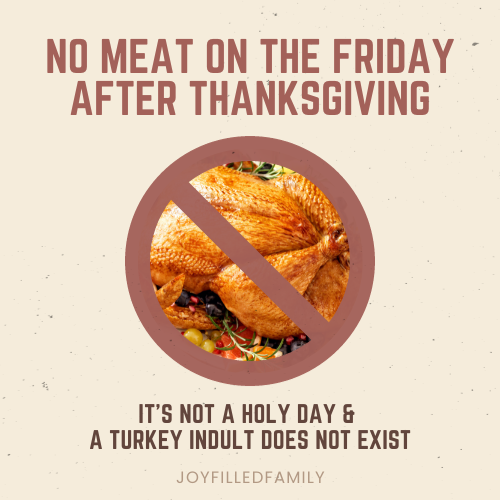
In regards to the “Thanksgiving Day Turkey Indult,” there does not seem to be one. You could learn more about that, here, here, or here (with a follow-up, here).
Benedic, Domine, nos et haec tua dona quae de tua largitate sumus sumpturi, per Christum Dominum nostrum. Amen.
Bless us, O Lord, and these Thy gifts which we are about to receive from Thy bounty, through Christ, Our Lord. Amen.
Here is a Pinterest Board that I created to give meal ideas using Thanksgiving leftovers.
Another one for general recipes for Friday Meals:
Agimus tibi gratias, omnipotens Deus, pro universis beneficiis tuis, qui vivis et regnas in saecula saeculorum. Fidelium animae, per misericordiam Dei, requiescant in pace. Amen.
We give Thee thanks, O Almighty God for these and all Thy benefits, Who livest and reignest world without end. And may the souls of the faithful departed, through the mercy of God, rest in peace. Amen.
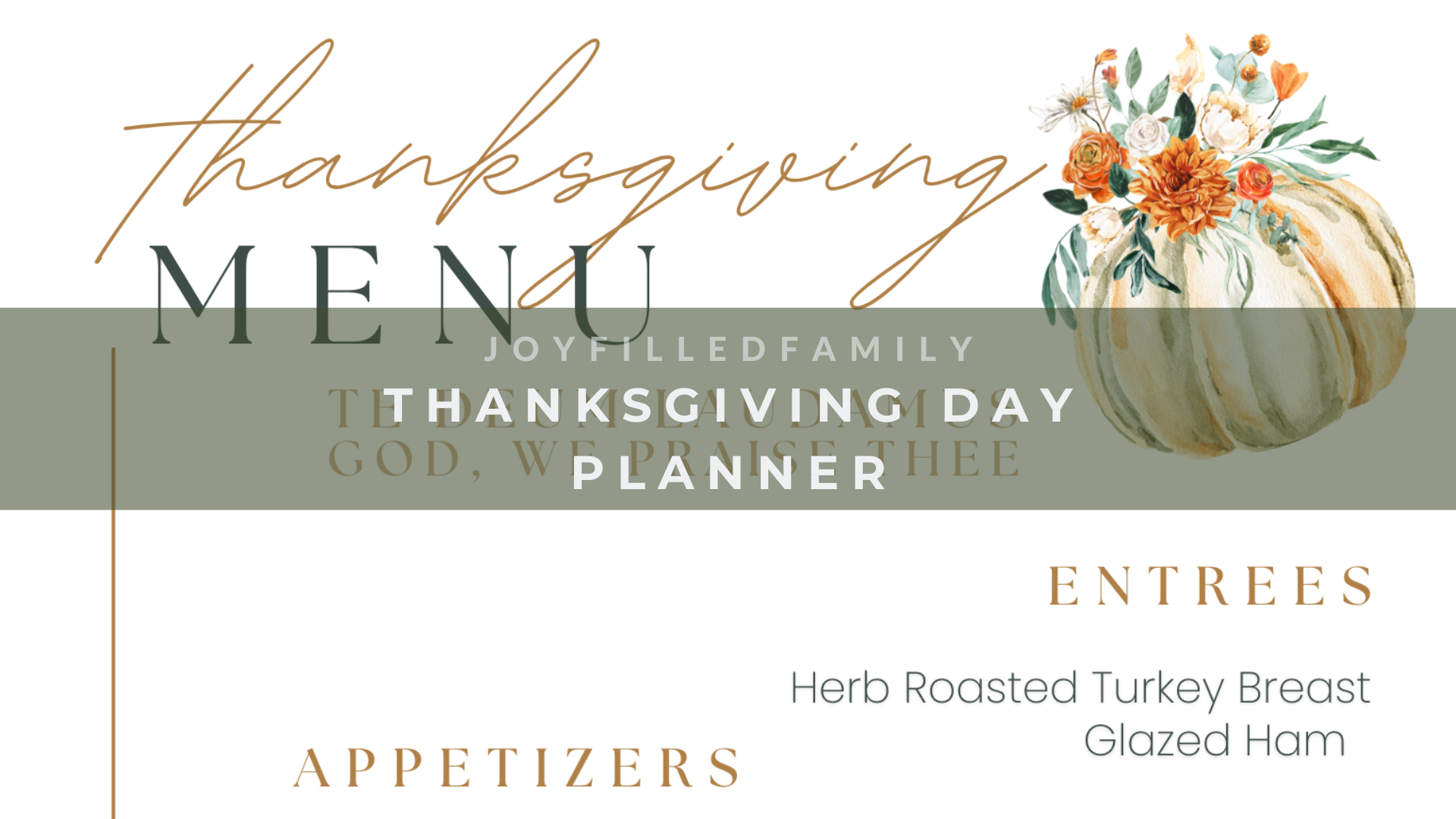
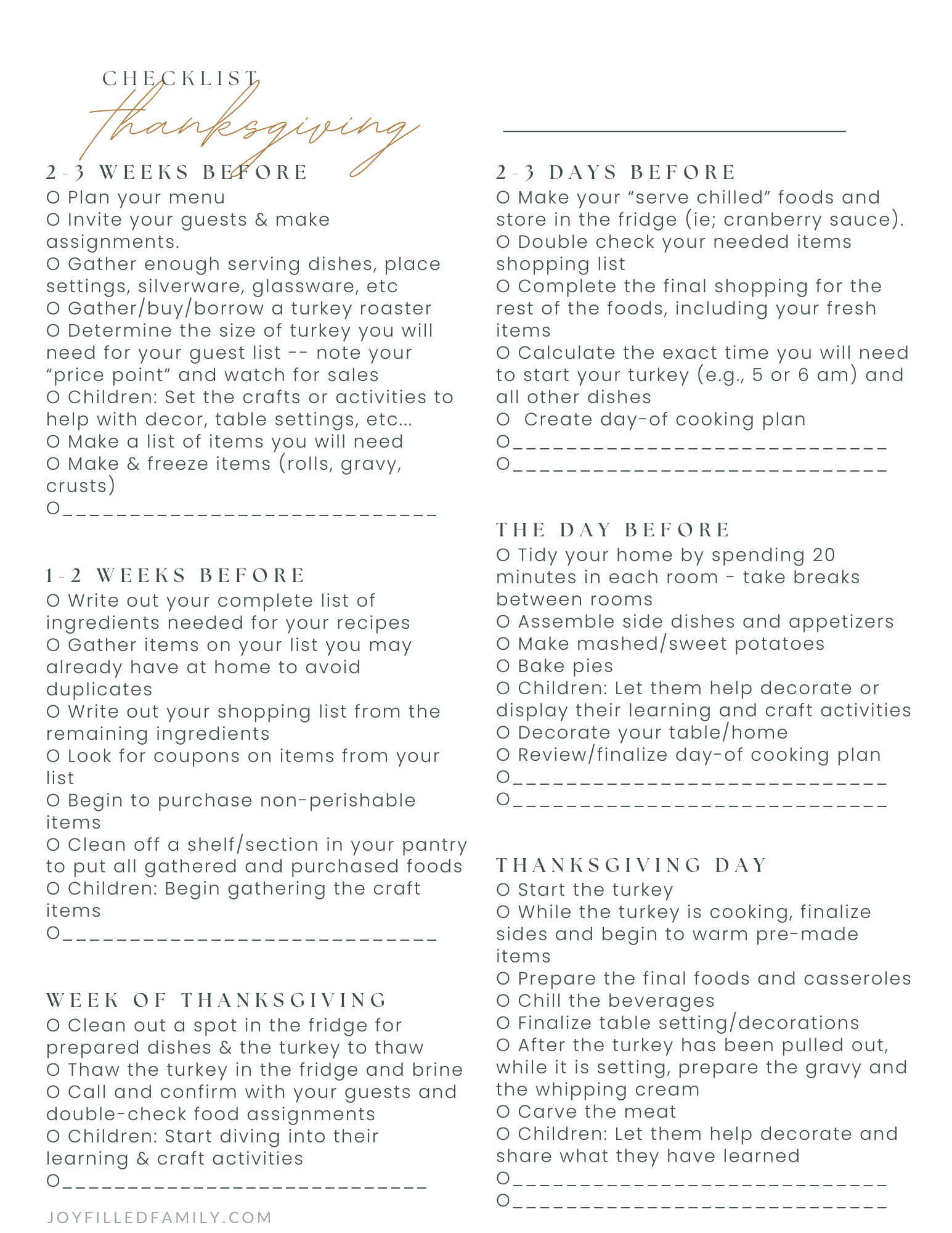
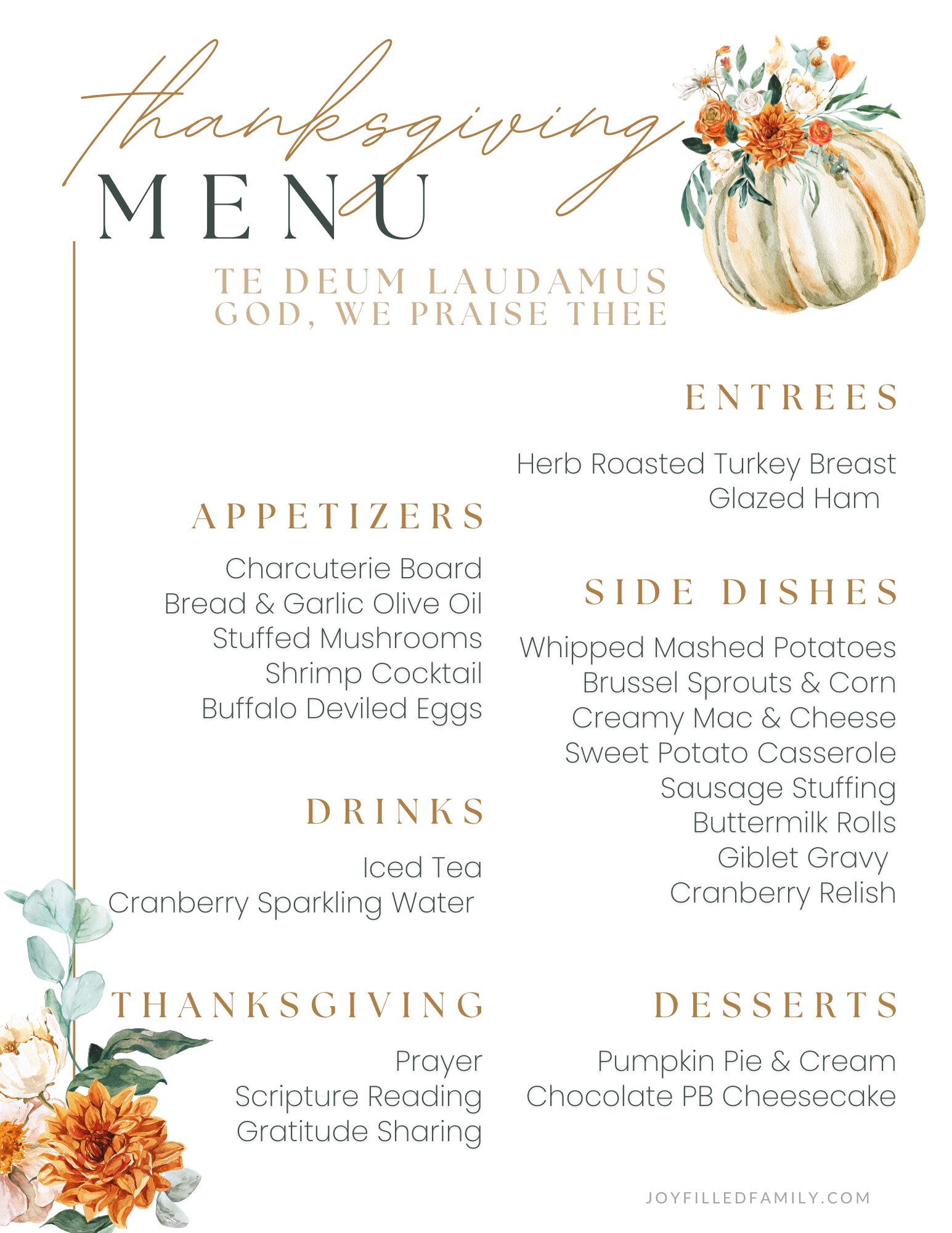
Thanksgiving Planner


Advent Planner
The Church commences, on this day, to contemplate the coming of the Redeemer, and with the prophets to long for Him; during the entire season of Advent she unites her prayers with their sighs, in order to awaken in her children also the desire for the grace of the Redeemer; above all to move them to true penance for their sins, because these are the greatest obstacles in the path of that gracious Advent; therefore she prays at the Introit of the day’s Mass: “To Thee, O Lord, have I lifted up my soul: in Thee, O my God, I put my trust; let me not be ashamed: neither let my enemies laugh at me: for none of them that wait on Thee shall be confounded. Show me, O Lord, Thy ways, and teach me Thy paths.” (Ps.XXIVJ
Goffine’s Devout Instruction, Imprimatur 1880
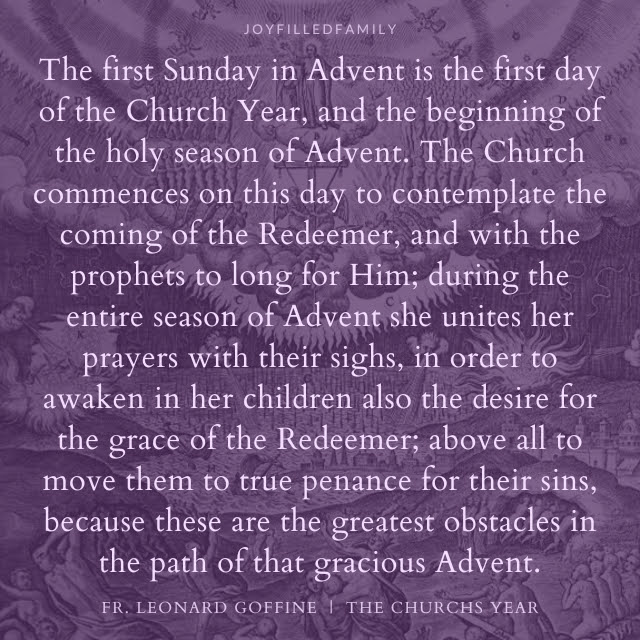
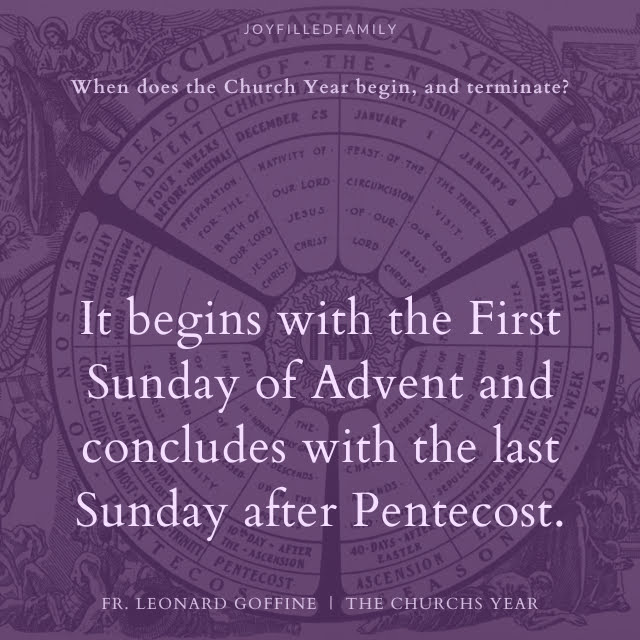
The first Sunday in Advent is December 3 Sunday, December 1 this year. It is the first day of the Ecclesiastical Year and the beginning of the holy season of Advent.
Some observe St. Martin’s Lent as the preparatory period for Advent as was once done. It is considered a time to prepare for the preparatory period of Advent in which we prepare for the ultimate feast.
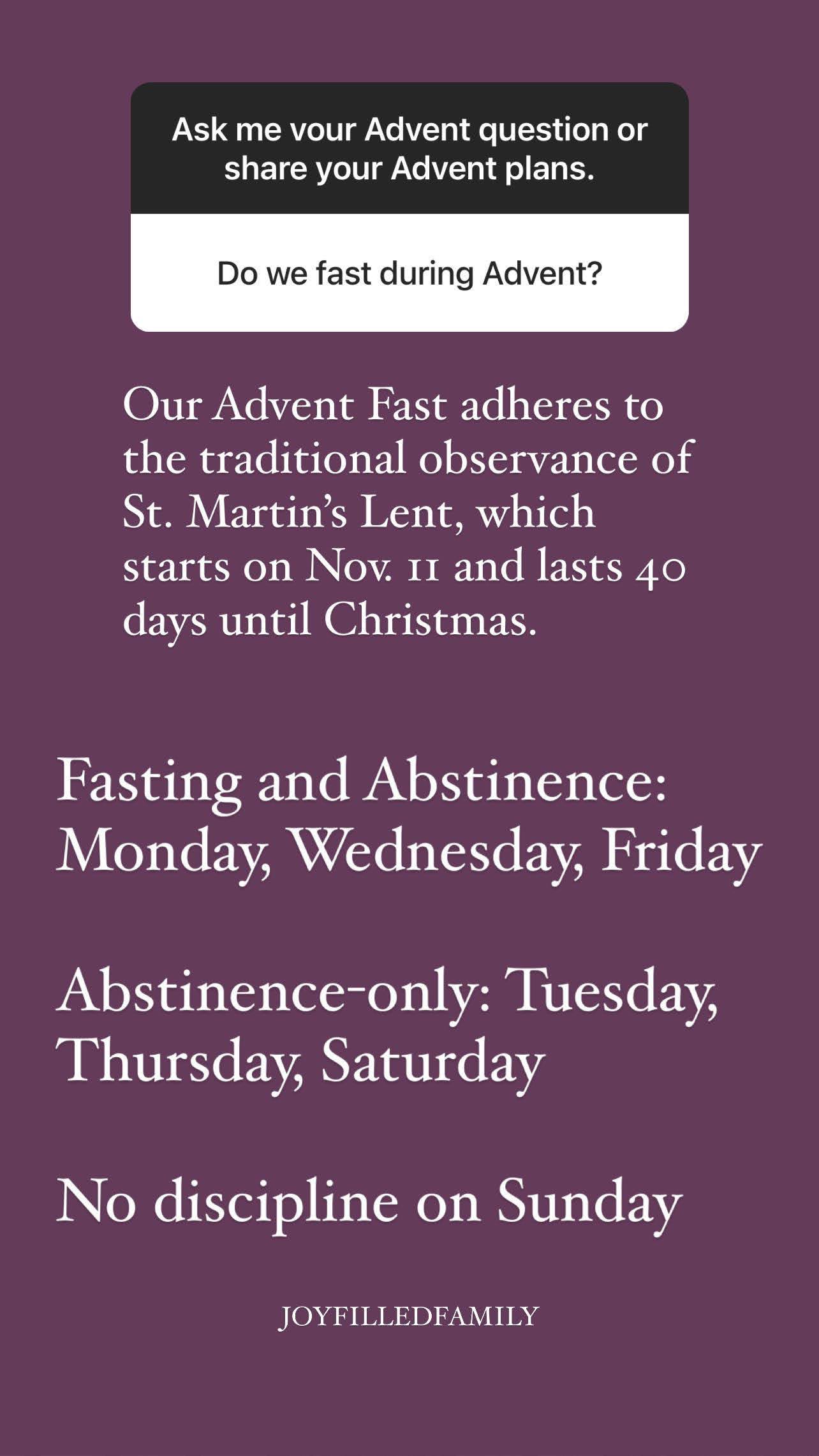
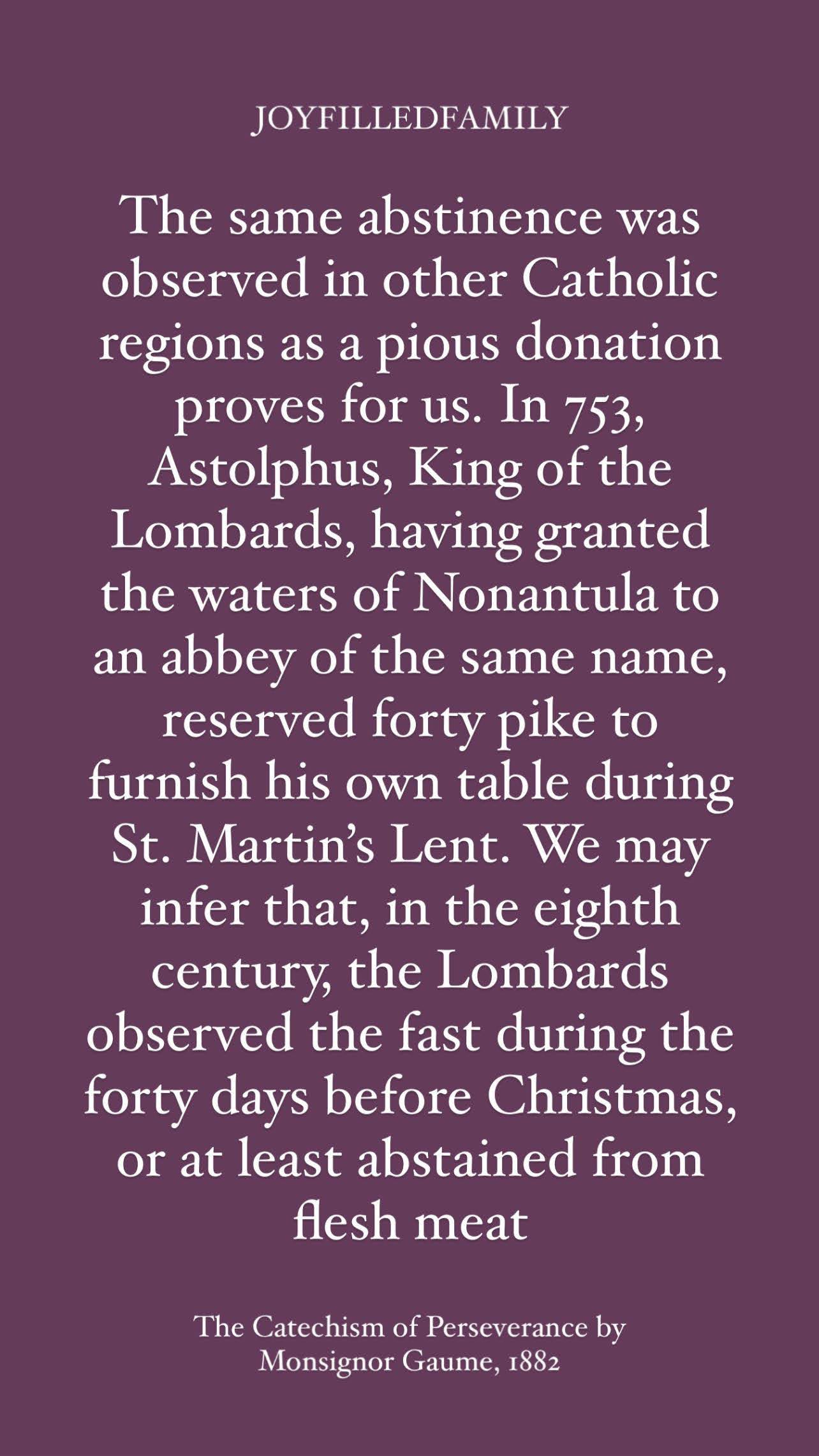
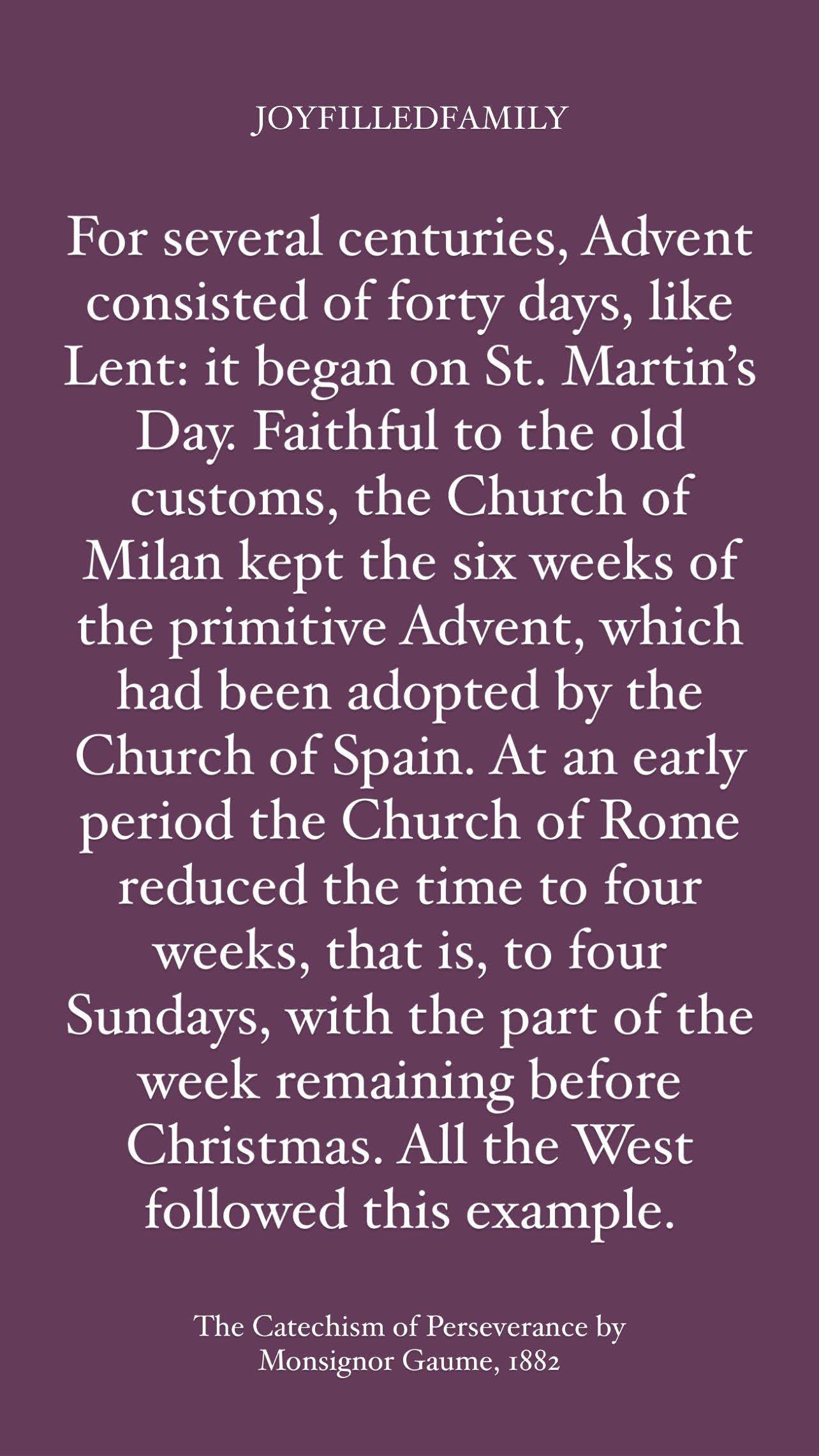
Whatever date you opt to begin your Advent observance, having a plan and set resources can be very helpful. Our Advent planner can be used as a stand-alone Advent resource, as a framework for you to lay out your own Advent program, or as a combination of both.

This Advent Planner includes printables that will help you keep track of your resolutions and plan throughout the Advent season, a “mini Lent.” I’ve also included the basic framework of our very simple Family Advent Plans with links to meditations, audio, Jesse Tree reflections, read-aloud stories for children, and videos.
This planner uses the Liturgical Calendar based on the most traditional form of the Roman Rite, before changes of 1950, 1956, 1960, and 1962. It corresponds to the fully traditional version of the Missale Romanum and the Breviarium Romanum in four volumes.
This resource is a labor of love. But well worth it as it is something that we use in our home to help us live out the Faith and tend to our Rule of Life within the Advent season.
May we restore our hearts & our children to Christ through every means we can.
In Christo Rege,

ADVENT PLANNER Includes:
- Advent Plan to document your resolutions – 2 pgs
- Advent Examination for the – 1 pg
- Advent Weekly Log to track resolutions – 4 pgs
- Liturgical Planner | Advent Feastday Planner – printed and used to help you plan for holy days & feastdays in the Advent season – 1 pg
- Advent & Christmas Liturgical Calendar – list form for easy reference. 2 pgs – 4 pages per sheet
- Advent Calendar – blank to use as needed – 2 pgs
- Family Advent Plans – This is what we use for a reference for our basic Advent plans – helping to ensure that we follow the liturgical calendar and tend to our devotions while keeping things in order. It includes links to FREE meditations, audio, Jesse Tree reflections, and read-aloud stories & videos for children. – 15 pgs
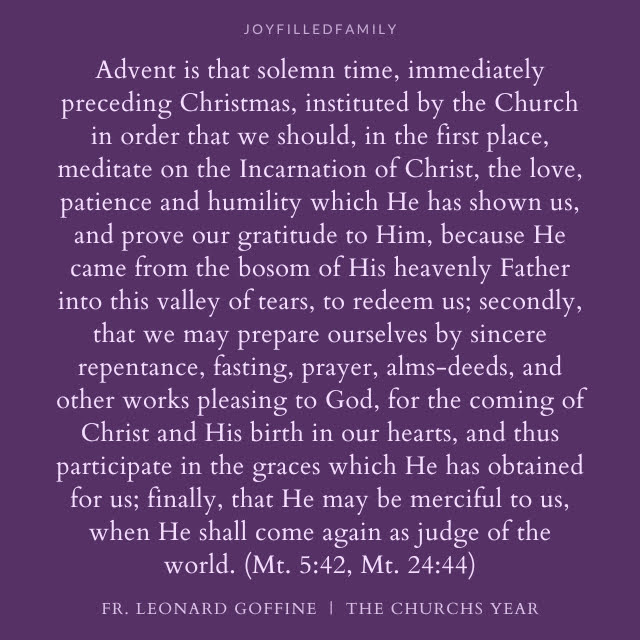
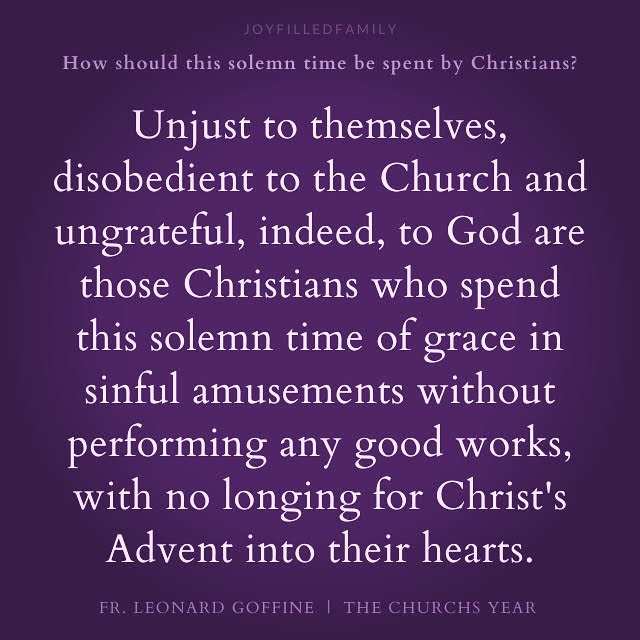
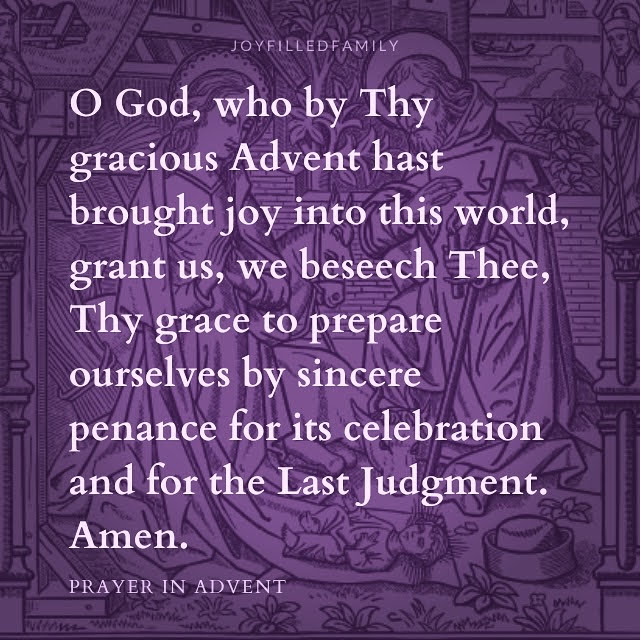
- Here are additional printables to record your Advent Plans.
- Keeping Advent Simple
- Advent Q & A with links
- Traditional Catholic Jesse Tree – devotion for families
St. Barbara
December 4 – St. Barbara
Commemoration of Saint Barbara, One of the Auxiliary Saints, Barbara is believed to have been martyred at Nicomedia under Emperor Maximinus of Thrace, about the year 235. She is invoked for the grace of preservation from sudden death.O God, one of the marvelous examples of Your power was granting the victory of martyrdom even to delicate womanhood. May the example of the Blessed virgin martyr Barbara, whose birthday we celebrate today, draw us closer to You. Through Our Lord . . .
Patronage:
- against death by artillery
- against explosions
- against fire
- against impenitence
- against lightning
- against mine collapse
- against storms
- against vermin
- ammunition magazines
- ammunition workers
- architects
- armourers
- arms manufacturers
- artillery
- artillerymen
- bell ringers
- boatmen
- bomb technicians
- brass workers
- brewers
- builders
- carpenters
- construction workers
- dying people
- explosives workers
- fire prevention
- firefighters
- fireworks
- fireworks manufacturers
- fortifications
- foundry workers
- geologists
- gravediggers
- gunners
- hatmakers
- hatters
- mariners
- martyrs
- masons
- mathematicians
- military engineers
- milliners
- miners
- ordnance workers
- prisoners
- quarrymen
- safety from storms
- sailors
- saltpetre workers
- smelters
- stone masons
- stonecutters
- storms
- sudden death
- tilers
- warehouses
- watermen
Pictorial Lives of the Saints – Saint Barbara, Virgin, Martyr

Saint Barbara was brought up a heathen. A tyrannical father, Dioscorus, had kept her jealously secluded in a lonely tower which he had built for the purpose. Here, in her forced solitude, she gave herself to prayer and study, and contrived to receive instruction and baptism by stealth from a Christian priest. Dioscorus, on discovering his daughter’s conversion, was beside himself with rage. He himself denounced her before the civil tribunal. Barbara was horribly tortured, and at last was beheaded, her own father, merciless to the last, acting as her executioner. God, however, speedily punished her persecutors. While her soul was being borne by angels to Paradise, a flash of lightning struck Dioscorus, and he was hurried before the judgment-seat of God.
Reflection – Pray often against a sudden and unprovided death; and, above all, that you may be strengthened by the Holy Viaticum against the dangers of your last hour.
“Saint Barbara, Virgin, Martyr”. Pictorial Lives of the Saints, 1922.
Fr. Weninger’s Lives of the Saints – Saint Barbara, Virgin and Martyr

The holy virgin and martyr, Saint Barbara, who, from the most ancient times, has been celebrated in the whole Christian world, was born of heathen parents in Nicomedia, of Bithynia. She was much beloved by her father, Dioscorus, on account of her unusual intelligence. He appointed a tower as a special place, well fitted up, for her dwelling, and chose the best masters to instruct her in art and science, but especially in paganism, as he feared she might be induced to unite herself to one not agreeable to him, or be seduced by the Christians, of whom he was a great enemy. But just this solicitude of her father gave her cause to think, and thus to arrive at the knowledge of the true God. She contemplated the heavens, the sun, moon and stars, in their regular course; she meditated on the changing of the seasons; looked on the wonderful creation of the world and its inhabitants, and justly concluded from it that there must be a Creator – that He alone must be the true God, and that the gods she worshipped had no power. To these contemplations she united prayers, and also led a most blameless life. The Almighty, who forsakes not one who aids himself, gave her opportunity to become instructed in the Christian religion, and to receive holy baptism, without the knowledge of her father. Meanwhile, a suitor for her hand came to her father and asked his consent. Dioscorus was not unwilling to grant the wish, as the young man was his equal in rank and wealth; but he would make his daughter acquainted with the offer he had received for her before he gave his word. Barbara had a great many objections; and her father, who did not desire that she should hastily give her consent, and would not coerce her, urged her no further; and as he was about to set out on a long journey, he thought it but right to give her some time for consideration. Barbara requested to have, for her greater comfort, a bathing-room added to her dwelling, which Dioscorus gladly granted her. The object of the holy virgin was, to have a special apartment where, with those who, like herself, were secretly Christians, she could pray to the true God. The father ordered two windows for the new room; Barbara, however, had a third added, in honor of the three Divine Persons in the mystery of the Holy Trinity. The room was, by the pagan’s order, adorned with idolatrous statues, with which the holy virgin would gladly have dispensed. Looking at them, she wept over the blindness of her father, who desired that she should worship them as gods. Going from one to another, she spat upon them, saying: “Those who honor you as gods are worthy to be turned into what you are made of – wood and stone.” After this, she went to a column of marble, and with her fingers pressed the sign of the cross upon it, as if it had been wax. After her death, the health of many infirm, who devoutly kissed this miraculous cross, was restored.
No sooner had her father returned from his journey, than he desired to know his daughter’s resolution. Already prepared by prayer for the approaching struggle, she said, unhesitatingly, that she would never consent to marry a pagan, as, being a Christian, she had chosen a much more noble spouse, Christ the Lord. Her father was speechless at this unexpected answer, and, when able to control himself, told her either to renounce Christ, or prepare herself for the most cruel death. The greater the wrath of the blind Dioscorus became, the more fearless was Barbara. This enraged him so greatly, that he seized his sword to take her life on the spot. Barbara, to escape his rage, fled, while her father, sword in hand, pursued her out of the city. According to an ancient legend, the fugitive virgin came to a rock, which miraculously opened, thus offering her a passage, and shielded her, for the moment, against her father’s wrath. The latter, however, was not touched by this visible miracle, but passed over the mountain and pursued the maiden, as the hound pursues the deer. Barbara had, meanwhile, taken refuge in a cave, and would not have been found had not two shepherds informed the infuriated father of her retreat Hastening towards the place, he found her praying. No tiger could assail his prey with more rage than this tyrant assailed his innocent child. He threw her on the ground, stamped upon her with his feet, beat her, and finally dragged her by the hair into the hut of a peasant, where he locked her up, until he had her brought back to his house by soldiers. Now began her martyrdom, which was so severe, that what she had before suffered was as nothing in comparison; for Dioscorus was determined to force her to deny Christ Seeing, at last that all was in vain, he gave her up to the governor, Martian, that she might be dealt with according to the laws of the land.
Martian at first showed compassion for the Saint, in consideration for her youth, and endeavored to win her by flattery and kind words. Not succeeding in this, he had recourse to severity, and had her whipped with scourges, until her whole body seemed to be but one great wound. After this, she was dragged to a dungeon, where she was left to die. The Almighty, however, who had destined her to still more glorious combats, sent an Angel during the night, who healed all her wounds, and encouraged her to perseverance, with the promise that she would overcome all tortures by Divine assistance. The following day she was again brought before Martian, who, not comprehending how Barbara had been healed, ascribed it to his gods. The virgin, however, said: “No, no, Martian! Wood and stone, of which your idols are made, have not this power. It is the work of the God of heaven and earth, whom I worship as the only true God, and for whose honor I am willing to die.” Martian, full of anger at these words, ordered her to be tormented more cruelly than on the previous day. After her body was all bruised and wounded, she was barbarously burned with torches, and at last both her breasts were cut off. The torture was very great, but the eagerness of Barbara to suffer for Christ’s sake was still greater. She gave no sign of pain, but turning her eyes to heaven, said: “Let not thy hand, O Lord, forsake me! In Thee I am full of strength; without Thee, I am powerless!” A new martyrdom followed after this. The tyrant commanded her to be scourged in public through all the streets of the city. This was more terrible to her than all her previous tortures; hence she turned to the Almighty, praying humbly that she might not be exposed to the eyes of the heathen. She was immediately surrounded by a bright lustre, that veiled her form from all eyes. The barbarous Dioscorus was present at the martyrdom of his holy daughter, from beginning to end, and not only looked with satisfaction at the whipping, burning, and cutting, but animated the executioners in their cruelties; and when Martian, at last, sentenced Barbara to be beheaded, he asked, as a favor, to be allowed to take the place of the executioner, and behead his daughter. Having obtained his request, Dioscorus took her to a neighboring mountain, followed by a great crowd of people. Barbara rejoiced to be thought worthy to die for Christ’s sake; and no sooner had she reached the mountain, than she again thanked God for all the graces that He had bestowed upon her, and begged Him to assist her to the end. A voice was heard from on high, which invited the undaunted martyr to come and receive the crown that awaited her. Kneeling down, she bared her neck, and received from her father the fatal stroke. She was hardly twenty years of age.
Juliana, a pious woman, who had been present at the martyrdom, burned with the holy desire to give her life, also, for Christ, and was beheaded on the same day, after she had suffered great torments. Her body was laid beside the body of Saint Barbara; but her soul followed the soul of the fearless virgin into heaven.
Quite different was the end of the inhuman father. Whilst he was descending from the mountain, with the blood of his innocent child still on his hands, a terrible thunder-storm arose, during which he was struck by lightning, and sank dead upon the ground. Thus the father went to hell on the same day on which his daughter ascended triumphantly to heaven. We must not omit to remark that Saint Barbara is especially invoked in the whole Christian world for the grace of receiving the last sacrament before death; and many facts have shown that this invocation has the desired effect.
Practical Considerations
• Saint Barbara was executed by her own father, because she would not obey him, and deny the Christian faith. Dioscorus, the father, became the murderer of his own daughter. Saint Barbara was right in not obeying her father; for when parents command anything that is against God, as the wicked Dioscorus did, children are not obliged to obey. In such circumstances, we must obey God, not our parents. Dioscorus’s deed in beheading his own daughter, because of her constancy in the Christian faith, was most wicked; and as he, to all appearances, died in his wickedness, he now justly suffers in hell. Still greater punishment shall those parents suffer in hell, who deprive their children of their eternal life, and kill their soul by preventing them from doing good, and tempting them, by words and by examples, to do evil: for the spiritual, the eternal life is so much more to be valued than that of the body. Parents, therefore, should take good care that they do not become spiritual murderers of their children; as, otherwise, the precious blood which ransomed those souls will cry for vengeance against them before the Judgment-seat of the Most High. “The wickedness of others has been our ruin; our parents have been our murderers. Thus, according to Saint Cyprian, will those children cry, standing before the eternal Judge. Children also, should be on their guard, and not allow their parents to lead them to sin, and consequently to destruction. To say before the Judgment-seat of the Almighty: “Our parents brought us to the path of sin,” will not be sufficient to excuse them, for, their own conscience will answer: “You knew that obedience was not required, when your parents commanded you to act contrary to the laws of God.”
• Saint Barbara is the special patroness of the dying. Her intercession has obtained for many, the grace not to die suddenly, or without having received the holy Sacraments. Try to obtain this grace, by honoring her and begging earnestly for it. But while doing this, do not neglect anything that you are obliged to do to obtain what you desire. Prepare yourself in time for death, and keep yourself in such a manner, that if anything should happen to you, you may not die unhappily; for, God has nowhere promised that these who ask the intercession of Saint Barbara, will be saved from a sudden death; but He has commanded you to keep yourself prepared for death, if you desire that your last hour should be calm and happy. It is the greatest folly to postpone preparation for death, penance, reformation of life, or perhaps even the confession of certain sins, from one day to another, from one year to another, from health to sickness, and in sickness to the very last hour of life, in the thought that we can always obtain pardon. Of those who act in such a manner, Saint Augustine says: “They seduce themselves, they deceive themselves, and play with death. It is highly dangerous, extremely foolish, and a horror to God, if we postpone anything on which our whole eternity depends, until the last convenient opportunity.” “If you tell me,” says Saint Chrysostom, “that God has given many sinners time to convert themselves at the end of their lives, then I will ask you: Will He give it also to you? where is your assurance of it?” And of how many do we know with certainty that they obtained pardon in their last hour? Saint Bernard says: “In the entire Scripture, only one is mentioned, the thief who was crucified with our Lord; one, that you may not despair; only one, that you may not presume.” Thinking of this one, think also of the other, who was crucified with Christ, but did not obtain pardon on that account.
It was on Good-Friday, and he hung next to the Heart of Jesus on the Cross, yet he obtained no grace, no mercy. It is true that he did not seek it; but who knows if you will seek it? A sudden death may deprive you of the privilege of seeking it. Confusion and despair may overwhelm you in such a manner that you may not desire to seek it. If you wish to be sure, prepare yourself in time. “Tarry not in the error of the ungodly; give glory before death. Praise perisheth from the dead as nothing.” (Eccl. 17) Confess before you are in danger of death, or before this danger is imminent. The confession of him who is half-dead, who has almost lost his consciousness, can not be trusted.
Father Francis Xavier Weninger, DD, SJ. “Saint Barbara, Virgin and Martyr”. Lives of the Saints, 1876.
The Liturgical Year: Saint Barbara, Virgin and Martyr

4 December
Although, in the Roman Liturgy, Saint Barbara is merely commemorated in the Office of Saint Peter Chrysologus, yet the Church has approved an entire Office for the use of those Churches which honour the memory of this illustrious Virgin in a special manner. The Legend which follows, although of considerable weight, has not, consequently, the authority of those which are promulgated for the use of the whole Church, in the Roman Breviary. Let us not, on this account, be the less fervent in honouring this glorious Martyr, so celebrated in the East, and whose feast has been for so many ages admitted, with more or less solemnity, into the Roman Church. The Acts of her martyrdom, though not of the highest antiquity, contain nothing in them but what redounds to the glory of God and the honour of the Saint. We have already shown the liturgical importance which attaches to Saint Barbara in the season of Advent. Let us admire the constancy wherewith this Virgin waited for her Lord, who came at the appointed hour, and was for her, as the Scripture speaks, a Spouse of blood, because he put the strength of her love of him to the severest of all tests.
About Saint Barbara
Barbara, a Virgin of Nicomedia, the daughter of Dioscorus, a nobleman, but a superstitious pagan, came readily, by the assistance of divine grace, from the contemplation of the visible things of creation to the knowledge of the invisible. Wherefore, she devoted herself to God alone and to the things of God. Her father, desirous to preserve her from all danger of insult, to which he feared her great beauty might expose her, shut her up in a tower. There the pious virgin passed her days in meditation and prayer, studying to please God alone, whom she had chosen as her Spouse. She courageously rejected several offers of marriage, which were made to her, through her father, by rich nobles. But her father hoped, that by separating himself by a long absence from his child, her intentions would easily change. He first ordered that a bath should be built for her in the tower, so that she might want for nothing; and then he set out on a journey into distant countries.
During her father’s absence, Barbara ordered that to the two windows already in the tower a third should be added, in honour of the blessed Trinity; and that on the edge of the bath the sign of the most holy Cross should be drawn. When Dioscorus returned home, and saw these changes, and was told their meaning, he became so incensed against his daughter, that he went in search of her with a naked sword in his hand, and, but for the protection of God, he would cruelly have murdered her. Barbara had taken to flight: an immense rock opened before her, and she found a path by which she reached the top of a mountain, and there she hid herself in a cave. Not long after, however, she was discovered by her unnatural father, who savagely kicked and struck her, and dragging her by the hair over the sharp rocks, and rugged ways, he handed her over to the governor Marcian, that he might punish her. He, therefore, having used every means to shake her constancy, and finding that all was in vain, gave orders that she should he stripped and scourged with thongs, the wounds to be then scraped with potsherd, and so dragged to prison. There Christ, surrounded by an immense light, appearing to her, strengthened her in a divine manner for the sufferings she was yet to endure. A matron, named Juliana, who witnessed this, was converted to the faith, and became her companion in the palm of martyrdom.
At length Barbara had her body torn with iron hooks, her sides burnt with torches, and her head bruised with mallets. During these tortures she consoled her companion, and exhorted her to fight manfully to the last. Both of them had their breasts cut off, were dragged naked through the streets, and beheaded. The head of Barbara was cut off by her own father, who in his excessive wickedness had hardened his heart thus far. But his ferocious cruelty was not long left unpunished, for instantly, and on the very spot, he was struck dead by lightning. The Emperor Justinus had the body of this most holy virgin translated from Nicomedia to Constantinople. It was afterwards obtained by the Venetians from the Emperors Constantine and Basil; and having been translated from Constantinople to Venice, was deposited with great solemnity in the Basilica of Saint Mark. Lastly, at the earnest request of the Bishop of Torcello and his sister, who was abbess, it was translated in the year of grace 1009, to the Nuns’ Church of Saint John the Evangelist, in the diocese of Torcello; where it was placed in a worthy sepulchre, and from that time has never ceased to be the object of most fervent veneration.
Such is the account of the life and martyrdom of the courageous Virgin of Nicomedia. She is invoked in the Church against lightning, on account of the punishment inflicted by divine justice on her execrable father. This same incident of the Saint’s history has suggested several Catholic customs: thus, her name is sometimes given to the hold of men-of war where the ammunition is stowed; she is the Patroness of Artillery-men, Miners, etc; and she is invoked by the faithful against the danger of a sudden death. Of the Liturgical pieces, used in our Western Churches, in honour of Saint Barbara, we will content ourselves with the following beautiful Antiphon, composed in the days of chivalry.
Antiphon
O immeasurable mercy of divine goodness, which did enlighten Barbara with the brightness of the true light, making her worthy, by her contempt for what was dazzling in earthly grandeur, to be admitted to a union with God! As the lily among thorns, as light in darkness, so shone Barbara. Alleluia.
Antiphon
The Greek Church is profuse in its praises of Saint Barbara. We will take from the Menaea a few out of the many Strophes which are sung in honour of the holy Martyr.
Hymn of the Greek Church
When welcome death came before you, O venerable Martyr Barbara! joyously and nimbly did you run your course, and being immolated by the wicked hands of an impious parent, you wast offered a victim to God. Now, therefore, are you in the choir of the truly wise Virgins, and contemplate the beauty of your Spouse.
This lamb of yours, O Jesus, cries to you with a loud voice: You, O my Spouse, do I desire, you do I seek by my combat; I am immolated and buried in your baptism; I suffer for you, that I may reign with you; I die for you, that I may live in you; receive me, therefore, as an unreserved sacrifice lovingly sacrificed to you. Save our souls, O merciful Jesus, by her prayers.
Glorious Barbara! most sacred rose grown from a thorny stem, sweetly perfuming the Church, and ruddy by the blood of your battle! we this day most fervently proclaim you blessed.
Neither the sweetness of luxury, nor the flower of beauty, nor riches, nor the pleasures of youth, could rob you of your energy, O glorious Barbara, most fair Virgin, espoused to Christ.
All stood in amazement at witnessing your combat; for you didst endure the tortures, and chains, and cruelties, of your persecutors, O Barbara, of wide-world fame! Therefore, did God give you the crown you did covet; you did run your course with courage, and he healed you.
Full of love for Jesus your Spouse, your bright lamp was well trimmed, and your virtues shed forth their splendour, O Virgin, worthy of praise! Therefore didst you enter in with Christ to the marriage-feast, and he wreathed you with the crown of your combat. We celebrate your memory, O Barbara! Deliver us from danger.
By those three apertures, which you would have to your bath, you did symbolise, O Barbara, the mystery of Baptism, which, by the light of the Trinity, imparts to our souls a cleansing that illuminates.
Fleeing the terrible violence of her father, a rock immediately opened a reception of safety to Barbara, as happened heretofore to the illustrious Protomartyr of her sex, Thecla, for whom Christ worked a like miracle.
O Martyr Barbara! you wast sacrificed with a sword, by your father, like in this to Abraham; but his devotedness was to the devil.
Jesus appeared to you, O Barbara, in your prison: he was surrounded by light inaccessible, but he came to animate your confidence, heal your wounds and make you glad: this gave wings to your love of your Lord.
When for Christ’s sake you were stripped of your garments, O venerable Barbara! a bright Angel clothed you, as a bride, with a splendid robe, which covered your wounds; for you have put on the stole which gives creatures a divine transformation.
Your prophecy, Christ, has been evidently fulfilled: for the father delivers his daughter up to death, nay himself becomes her murderer; but this cruel parent of your Martyr is, in a wonderful manner, consumned by fire from heaven.
You, most honoured Virgin, having entered the path of combatants, did resist your father’ demands and, as a wise virgin bearing her lamp, you went into the mansion of your Lord: he gave you, O generous Martyr, the power to drive away pestilence; pray to God for us who hymn your praises, and deliver us from our spiritual diseases.
Antiphon
To this the voice of so many Churches we join ours, O faithful Virgin! and though we are unworthy, yet do we offer you our praise and our prayers. Behold! our Lord cometh, and the darkness of the night is upon us; give to our lamp both the light which will guide us, and the oil which will keep in the light. You know that he who came for love of you, and with whom you are now united for all eternity, is coming to visit us too; pray for us that nothing may keep us from receiving him. May we go towards him courageously and swiftly as you did, and being once with him, may we never be separated from him again, for he is the centre where we creatures find our only rest. Pray also, glorious Martyr, that the faith in the Blessed Trinity may be ever increasing in this world. May our enemy, Satan, be confounded by every tongue’s confessing the Threefold light, and the triumphant Cross which sanctifies the waters of Baptism. Remember, O blessed Barbara, you Spouse of Jesus, that he has put in your gentle hands the power not of hurling but of staying and averting the thunderbolt. Protect our ships against the fires of heaven and of war. Shield by your protection the arsenals where are placed the defence of our country. Hear the prayers of them that invoke you, whether in the fierceness of the storm, or in the dark depths of the earth; and save us all from the awful chastisement of a sudden death.
– The Liturgical Year: Advent, by the Very Reverend Dom Prosper Gueranger, Abbot of Solesmes, translated from the French by the Revered Dom Laurence Shepherd, Monk of the English-Benedictine Congregation, 2nd edition; published in Dublin Ireland by James Duffy, 15 Wellington-Quay, 1870
- « Previous Page
- 1
- …
- 8
- 9
- 10
- 11
- 12
- …
- 233
- Next Page »